
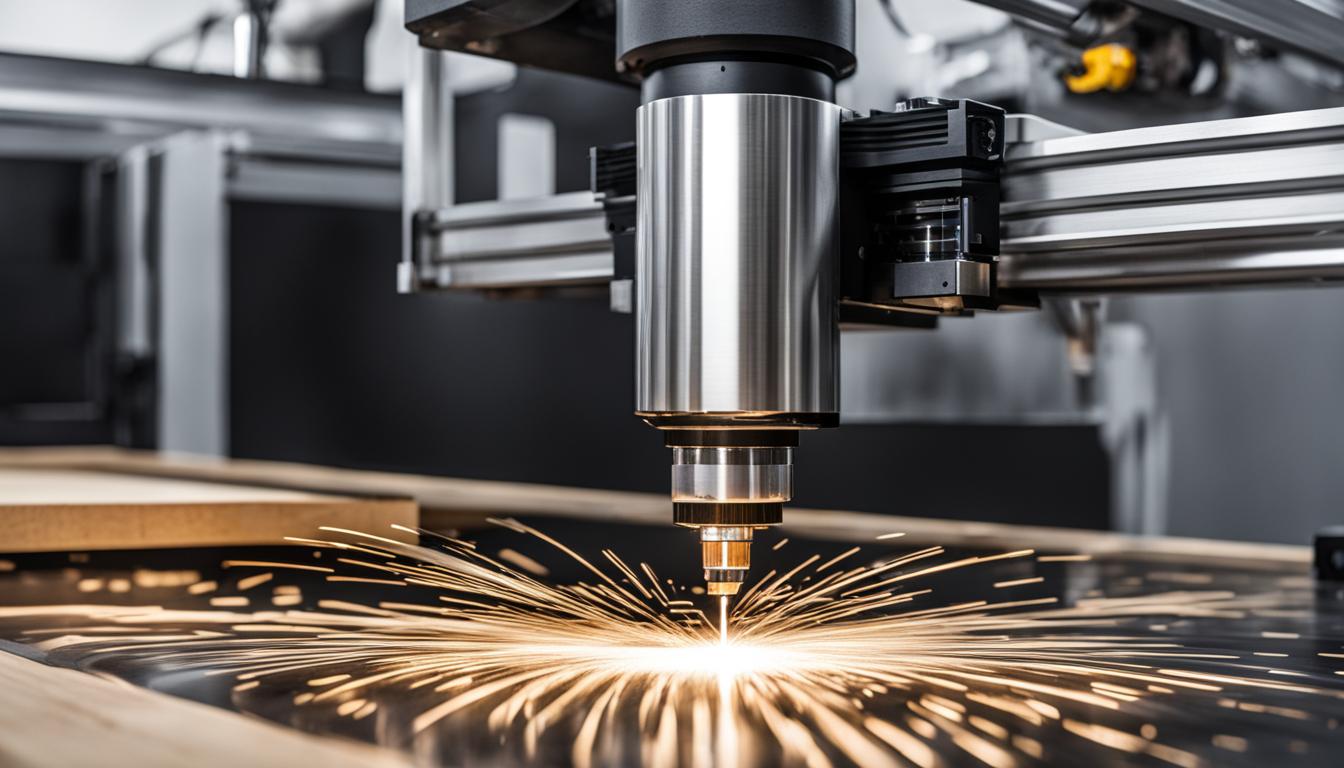
Industrial Computer Numerical Control (CNC) routers from Laguna Tools represent a significant advancement in woodworking, offering unparalleled precision, repeatability, and efficiency for diverse applications. These robust machines are engineered to handle demanding production environments, transforming raw material into finished components with minimal human intervention. Their heavy-duty, all-welded structural steel frames ensure stability and longevity, crucial for maintaining tight tolerances over extended operational periods.
Laguna’s SmartShop series, for instance, includes models like the SmartShop M, SmartShop 2 Pro, and SmartShop 3 Excel, each designed to meet varying production scales and complexity. The SmartShop M serves as an entry point with a 5.5HP Hiteco spindle, while the SmartShop 2 Pro and Elite models feature a 12HP HSD spindle, increasing rapid travel speeds and positional consistency. The top-tier SmartShop 3 Excel boasts a 12-position tool changer and 3,000 IPM rapid travel, making it ideal for high-volume manufacturing where cycle time is critical.
Optimizing Material Hold-Down with Vacuum Suction Beds
Effective material hold-down is paramount for achieving precise cuts and preventing workpiece movement during CNC routing operations. Laguna CNC routers frequently integrate advanced vacuum suction hold-down beds, which secure workpieces firmly to the table surface. These systems typically feature a universal grid phenolic vacuum table with multiple independently controlled zones, allowing operators to activate suction only where material is present.
The efficiency of a vacuum hold-down system is influenced by several factors, including the integrity of the MDF spoilboard, material porosity, and workpiece size. A clean spoilboard and workpiece surface are essential for creating a strong vacuum seal, as dust and chips can compromise suction power. For materials smaller than a single vacuum zone, or those that don’t fully cover a zone, scrap material can be used to block off exposed areas, maximizing vacuum effectiveness.
Laguna’s Swift Vacuum CNC router, for example, offers 4-zone or 6-zone vacuum phenolic tables, depending on the machine’s work envelope. For smaller or irregularly shaped parts, Laguna also provides T-slot pod vacuum systems that fit directly into the table’s T-slots, utilizing an air compressor and Venturi system to create localized suction. This versatility ensures secure clamping for a wide array of woodworking projects.
Smart Shop Wood Processing and Automation
| Material Type | Spindle RPM (approx.) | Feed Rate (IPM / m/min) | Chip Load (IPT) |
|---|---|---|---|
| Hardwood (1/4″ 2-flute bit) | 16,000 – 18,000 | 80 – 120 IPM | 0.003 – 0.004 |
| MDF | 16,000 – 18,000 | 100 – 150 IPM | 0.003 – 0.005 |
| Melamine/Laminate | 14,000 – 16,000 | 80 – 100 IPM | 0.003 – 0.004 |
| Softwood (along grain) | 18,000 – 20,000 | 8 – 12 m/min | Varies by bit |
Integrating smart shop wood processing and automation into a manufacturing workflow significantly enhances productivity, reduces material waste, and improves product consistency. CNC technology, at its core, automates precise cutting, routing, and shaping, translating digital designs into physical components with high accuracy and repeatability.
Modern woodworking machinery is designed to streamline operations, from digital shop drawings to automated material handling. Software solutions like CAD/CAM systems enable designers to create detailed models and generate toolpaths, which are then executed by the CNC machine. This digital workflow minimizes human error and allows for rapid adaptation to design changes, crucial for both custom and mass manufacturing.
Automation in millwork shops can lead to substantial returns on investment through increased labor efficiency, reduced waste, and faster turnaround times. Optimized nesting algorithms, for instance, can cut material waste by up to 20%. Furthermore, the integration of robotics for tasks like material loading and unloading, as seen with solutions like the HOMAG FEEDBOT D-310, further reduces manual labor and increases overall production consistency.
Advanced Auto Tool Changer Spindles for Efficiency
Automatic Tool Changer (ATC) spindles are a cornerstone of modern CNC woodworking, dramatically improving efficiency by eliminating manual tool changes. These systems allow the CNC router to automatically select and load different router bits as dictated by the program, facilitating complex operations without operator intervention. Laguna’s industrial routers, such as the SmartShop II and SmartShop 3 Excel, feature robust ATC systems with capacities ranging from 8 to 12 positions.
Spindle power and speed are critical parameters for effective material removal and surface finish. Laguna machines often incorporate high-performance HSD or Hiteco spindles, with power ratings up to 12 HP and maximum speeds reaching 24,000 RPM. This high RPM range is essential for woodworking, where router bits typically have fewer flutes and require high surface speeds to achieve optimal chip load and prevent burning.
Proper feeds and speeds are crucial for maximizing tool life and cut quality. For general-purpose cutting with 1/4-inch bits in hardwood, a starting point of 16,000-18,000 RPM with a feed rate of 80-120 IPM is recommended, targeting a chip load of 0.003-0.004 IPT. For MDF, RPMs between 16,000-18,000 and feed rates of 100-150 IPM are typical, with a chip load of 0.003-0.005 IPT. Adjusting RPM and feed rate proportionally is key to maintaining chip load and avoiding tool rubbing or burning.
Specialized Cabinet Manufacturing Tools and Practices
Cabinet manufacturing demands high precision and efficient material utilization, areas where Laguna CNC routers excel. These machines are instrumental in producing components like cabinet doors, drawer boxes, and carcases with consistent accuracy. The ability to perform complex joinery, such as dados, rabbets, and mortise-and-tenon joints, automatically reduces assembly time and improves structural integrity.
A variety of specialized router bits are employed for cabinet production. Compression bits are frequently used for nesting operations on veneered plywood and melamine, providing clean cuts on both the top and bottom surfaces. Up-cut spiral bits are effective for chip evacuation, while down-cut spirals are preferred for achieving a clean top edge. Ball nose bits are essential for 3D carving and intricate decorative elements often found in custom cabinetry.
Standard tolerances for CNC-routed parts in woodworking typically range from ±0.1 mm to ±0.2 mm, though some applications may require tighter precision down to ±0.025 mm for critical features. Achieving these tolerances relies on machine rigidity, proper tool selection, and optimized feeds and speeds. Modern practices also involve using software for toolpath optimization and nesting to maximize material yield and minimize waste, which is particularly beneficial in cabinet production.
- Compression Bits: Ideal for double-sided laminates and veneered panels, providing chip-free edges on both surfaces.
- Up-Cut Spiral Bits: Excellent for efficient chip evacuation, preventing chip re-cutting, and achieving clean bottom edges.
- Down-Cut Spiral Bits: Preferred for producing clean top edges on materials prone to chipping, such as melamine.
- V-Groove Bits: Used for creating decorative V-grooves, chamfers, and for sign making.
- Dado and Rabbeting Bits: Essential for precise joinery in cabinet construction, ensuring strong and accurate connections.