
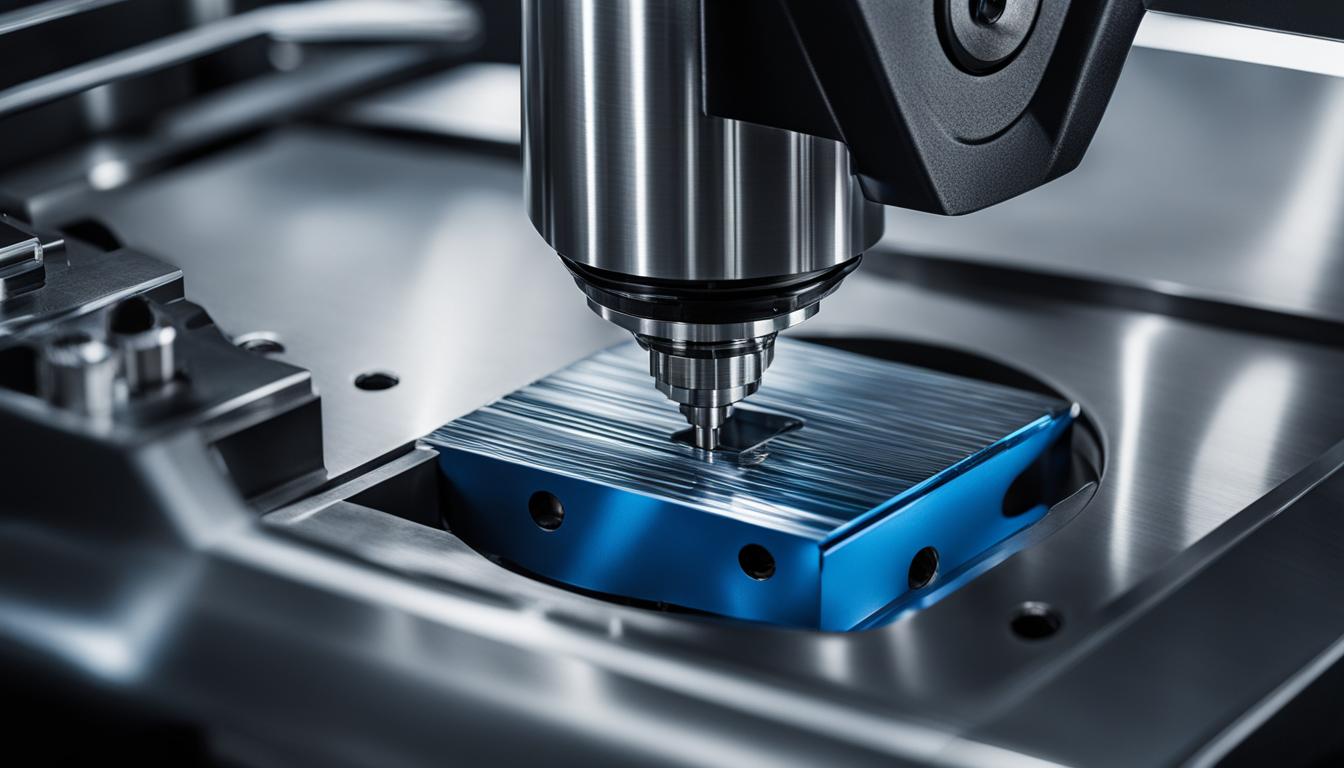
Industrial manufacturing demands robust and precise machinery to meet stringent production requirements. Phantom CNC routers, engineered for heavy-duty operations, provide the foundational accuracy necessary for high-volume, complex part fabrication. These systems integrate advanced motion control with rigid structural designs.
Achieving superior output in modern workshops relies on equipment that can consistently perform under demanding conditions. Phantom CNC technology offers the durability and precision essential for continuous operation, minimizing downtime and maximizing throughput across diverse materials. Their design prioritizes stability and long-term reliability.
Heavy-Duty Phantom CNC Routers
Heavy-duty Phantom CNC routers are purpose-built for high-efficiency, high-precision, and continuous production environments. These industrial-grade machines feature stronger frames, larger working areas, and higher spindle power compared to standard models. They are designed to withstand prolonged operational hours while maintaining consistent machining quality.
These robust systems often incorporate stress-annealed, welded steel frames and structural steel gantry beams to ensure maximum rigidity. This construction is critical for handling challenging CNC machining applications across various materials, including wood, plastics, acrylics, and aluminum.
Many industrial Phantom routers come equipped with advanced features like automatic tool changers, multi-head systems, and sophisticated dust collection. These enhancements streamline workflows, reduce manual labor, and improve overall production efficiency, supporting both mass production and customized manufacturing.
High-Precision Gantry Milling Systems
| Material / Process | Standard Tolerance | High-Precision Tolerance |
|---|---|---|
| CNC Routing (General) | ±0.13 mm (±0.005 in) | ±0.051 mm (±0.002 in) |
| Aluminum Milling (General) | ±0.05 mm | ±0.01 mm |
| Wood Machining (General) | ±0.1 mm (typical) | ±0.05 mm (for critical features) |
| Gantry Milling (Dimensional) | ±0.03 mm | ±0.005 mm |
| Angular Tolerances | ±0.5° | ±0.25° |
High-precision gantry milling machines are characterized by their distinctive overhead bridge structure, where the cutting head moves along a horizontal bridge supported by two vertical columns. This configuration provides exceptional stability and accuracy for machining oversized workpieces.
Achieving tight tolerances in gantry milling requires meticulous attention to machine rigidity, ballscrew quality, and backlash compensation. Positioning accuracy for gantry mills can reach ±0.01 mm/m, with repeat positioning accuracy as fine as ±0.005 mm, crucial for consistent batch production.
Dimensional tolerances for high-precision gantry milling can be as tight as ±0.005 mm, while surface roughness (Ra) can achieve 0.8 μm or better for applications like mold parts. These machines are indispensable in industries such as aerospace and automotive, where large, complex components demand micron-level accuracy.
Industrial Sheet Nesting Optimization
Industrial sheet nesting is a critical process for maximizing material utilization and minimizing waste in panel processing. Advanced nesting software intelligently arranges multiple parts onto a raw material sheet, such as wood or aluminum, to achieve the most efficient layout.
Nesting algorithms consider factors like part geometry, panel size, cutting tool paths, and even grain direction for materials like veneered panels. This optimization significantly reduces scrap material, leading to substantial cost savings, especially with expensive or scarce materials.
Modern nesting software offers features like ‘true shape nesting’ for irregular parts, ‘rotational nesting’ when grain direction permits, and ‘common line cutting’ to further enhance material yield. These strategies also optimize cutting paths, reducing tool travel and extending tool life.
Automation plays a significant role in nesting optimization, allowing manufacturers to implement cutting plans quickly and accurately with CNC machines. This integration improves accuracy, reduces errors, and speeds up production, resulting in a streamlined manufacturing process.
Servo-Driven Router Tables for Dynamic Control
Servo-driven router tables utilize advanced servo motors to provide precise and dynamic control over axis movements. Unlike stepper motors, servo systems operate in a closed-loop, continuously monitoring and adjusting position, speed, and torque via encoders or resolvers.
This closed-loop feedback ensures exceptional accuracy and repeatability, preventing lost steps and maintaining precise positioning even under varying load conditions. Servo motors offer higher peak torque for rapid acceleration and deceleration, contributing to faster cycle times and smoother motion.
Industrial servo motors typically offer rated speeds from 2,000 to 6,000 RPM and continuous power output up to 11 kW. Their ability to maintain constant torque to base speed and constant power above it makes them ideal for demanding CNC routing applications.
Integrating servo drives with low-backlash helical planetary gearheads and hardened rack and pinion systems ensures smooth motion and excellent edge finishes. This combination is vital for achieving the high precision expected from Phantom CNC router tables.
Wood and Aluminum Routing Expertise
Routing wood and aluminum on Phantom CNC machines requires specific tooling and parameter considerations to achieve optimal results. Wood, being anisotropic and heat-sensitive, demands careful selection of RPM and feed rates to prevent burning and tear-out.
For hardwoods like oak or maple, typical RPM ranges from 16,000-18,000 with feed rates of 80-120 IPM, targeting a chip load of 0.003-0.004 IPT. Plywood can handle slightly faster feeds, 100-140 IPM, often utilizing compression bits for clean cuts on both top and bottom layers.
Aluminum routing benefits from higher spindle speeds, often between 8,000-12,000 RPM for general machining, and up to 20,000-30,000 RPM for smaller tools to maintain optimal surface footage. Appropriate chip load for aluminum with a 2-flute end mill is typically 0.001-0.003 inches.
Selecting the correct router bit geometry is paramount. Single-flute bits are excellent for softwoods and plastics, while two-flute bits balance well for wood and MDF. For aluminum, three- and four-flute bits with a 30°-45° helix angle and sharp edges are preferred for smoother finishes.
Standard Machining Tolerances
Achieving precise dimensions is fundamental in CNC machining. Tolerances define the allowable variation from a part’s nominal dimensions, ensuring components fit and function as intended. Unnecessarily tight tolerances increase costs without always improving functionality.
For aluminum, standard milling tolerances typically range from ±0.05 mm, with high-precision applications achieving ±0.01 mm. Factors like material properties, machine precision, tool condition, and thermal control significantly influence achievable tolerances.
Wood machining generally operates with standard tolerances around ±0.1 mm, though tighter specifications can be met for critical assembly features. Understanding these distinctions allows engineers to specify realistic tolerances, balancing precision with manufacturing cost and efficiency.