
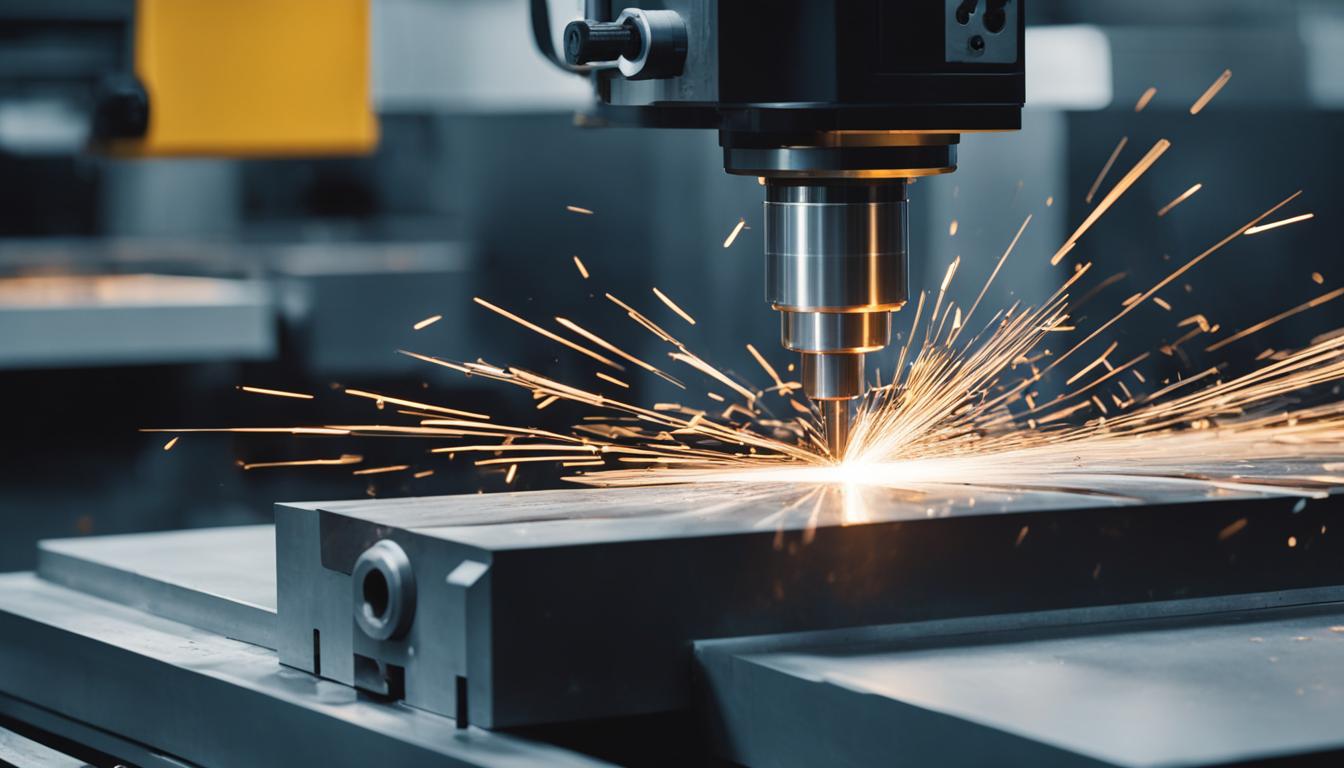
Houston, Texas, stands as a critical hub for advanced manufacturing, particularly in precision CNC machining services. The city’s robust industrial base, heavily influenced by the energy sector, demands exceptionally accurate and reliable components. Machine shops in Houston leverage state-of-the-art CNC technology to produce parts that meet stringent performance and safety requirements across various demanding applications.
These specialized facilities provide comprehensive machining solutions, from rapid prototyping to high-volume production runs. Their capabilities extend beyond general-purpose machining, focusing on the tight tolerances and complex geometries essential for critical components. This expertise ensures that parts function flawlessly in extreme conditions, minimizing downtime and enhancing operational efficiency.
Precision CNC Machining for Oil and Gas Components
The oil and gas industry, a cornerstone of Houston’s economy, relies heavily on precision CNC machining for its critical components. Operating in harsh environments, these parts must withstand immense pressures, extreme temperatures, and corrosive fluids. Materials like Inconel, Monel, Duplex Stainless Steel, and various alloy steels are commonly machined due to their superior strength and corrosion resistance.
Specialized machine shops in Houston produce a wide array of oil and gas components, including wellhead equipment, downhole tools, valve bodies, connectors, and turbine parts. These components are vital for exploration, drilling, extraction, transportation, and refining processes. The accuracy and repeatability offered by CNC machining are indispensable for ensuring the safety and efficiency of these operations.
Achieving the required precision for oil and gas applications often involves maintaining extremely tight tolerances, sometimes as low as ±0.0005 inches (±0.0127 mm) for critical features. Surface finishes are equally crucial, particularly for sealing surfaces, where roughness values typically range from Ra 0.1 to 0.4 micrometers. Advanced multi-axis machining, including 5-axis capabilities, is frequently employed to create complex geometries and reduce setup times.
Heavy Metal Turning Capabilities in Houston
| Parameter | Typical Precision Machining | Oil & Gas Critical Components | Heavy Metal Turning (Inconel 625) |
|---|---|---|---|
| Linear Tolerance | ±0.001″ – ±0.002″ (±0.0254 mm – ±0.0508 mm) | ±0.0001″ – ±0.0005″ (±0.0025 mm – ±0.0127 mm) | ±0.001″ – ±0.002″ (±0.0254 mm – ±0.0508 mm) |
| Surface Roughness (Ra) | 0.8 – 1.6 μm | 0.1 – 0.4 μm (sealing surfaces) | 0.8 – 3.2 μm (application dependent) |
| Inconel 625 Turning Speed | N/A | 100-120 SFM (carbide tools) | 100-120 SFM (carbide tools) |
| Inconel 625 Turning Feed Rate | N/A | 0.006-0.008 IPR (carbide tools) | 0.006-0.008 IPR (carbide tools) |
Heavy metal turning is a specialized discipline within CNC machining, focusing on large, often heavy, cylindrical workpieces. Houston machine shops are equipped with substantial turning centers, including horizontal and vertical lathes, capable of handling significant dimensions and weights. These machines are essential for producing components such as large shafts, casings, and turbine components.
Typical heavy turning operations involve materials like large diameter steel, superalloys, and other high-performance metals. Machines can accommodate parts with diameters exceeding 930 mm and lengths up to 4000 mm, with some specialized vertical boring mills handling diameters up to 20 feet and weights up to 20 tons.
Machining these large components presents unique challenges, including managing significant cutting forces, controlling thermal expansion, and mitigating vibration. Experienced machinists utilize robust tooling, optimized feeds and speeds, and advanced workholding strategies to maintain dimensional accuracy and surface integrity. For instance, turning Inconel 625 often requires conservative cutting speeds of 100-120 surface feet per minute (SFM) and feed rates of 0.006-0.008 inches per revolution (IPR) to manage work hardening and heat.
ISO Certified Houston Machine Shops
Adherence to international quality standards is paramount in precision machining, especially for industries with critical applications. Many Houston machine shops are ISO 9001:2015 certified, demonstrating a commitment to consistent quality management systems and continuous improvement. This certification ensures rigorous process control, traceability, and customer satisfaction.
Beyond ISO 9001, some facilities also hold AS9100D certification, which is specific to the aerospace industry, or ISO 13485 for medical devices. These certifications signify an even higher level of quality assurance, crucial for components where failure can have severe consequences. Comprehensive inspection methods, including Coordinate Measuring Machines (CMMs), optical comparators, and surface roughness testers, are integral to maintaining these standards.
Quality control begins from the initial design phase through material selection, machining, and final inspection. Documented procedures and calibrated equipment ensure that every part meets the specified requirements. This systematic approach to quality is a key differentiator for Houston’s leading precision machining providers.
Custom Valve and Pump Milling
Custom valve and pump components are essential for precise fluid control in numerous industrial applications, particularly within the energy sector. Houston’s machine shops possess extensive expertise in milling these intricate parts, often from challenging materials like stainless steels, nickel-based alloys, and specialized metals.
Milling processes for valves and pumps frequently involve multi-axis CNC machines to achieve complex internal geometries, precise porting, and critical sealing surfaces. The ability to machine intricate contours and maintain tight tolerances is vital for ensuring leak-free reliability and optimal flow dynamics.
Surface finish requirements for valve seats and sealing interfaces are exceptionally stringent, often demanding values below Ra 0.1 μm to prevent leakage and enhance durability. Specialized finishing techniques like lapping and polishing are employed to achieve these mirror-like finishes, which are critical for sustained performance under high-pressure conditions.
Large Capacity Machining for Industrial Scale Projects
Houston’s industrial landscape frequently necessitates machining components of considerable size and weight. Large capacity machining services cater to these demands, utilizing specialized equipment such as gantry mills, large horizontal boring mills, and expansive vertical machining centers. These machines are designed to handle workpieces that exceed the capabilities of standard CNC equipment.
Maximum dimensions for large capacity milling machines can reach X-axis travel of 11000 mm, Y-axis travel of 4700 mm, and Z-axis travel of 2450 mm, with table capacities up to 43,000 kg. Such capabilities are crucial for manufacturing large turbine housings, structural components for heavy machinery, and oversized industrial equipment.
Challenges in large capacity machining include maintaining thermal stability across vast workpieces, managing long tool reach, and ensuring precise alignment over extended travel distances. Advanced CAD/CAM software is integrated to program complex tool paths and simulate machining operations, optimizing efficiency and accuracy for these industrial-scale projects.