
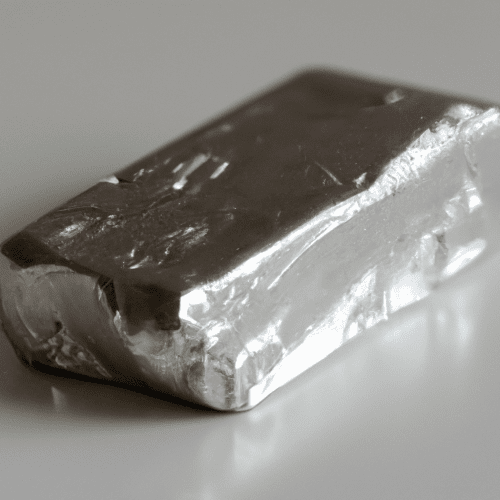
Unalloyed aluminum, often referred to as commercially pure aluminum, forms the 1000 series of aluminum alloys. These materials are distinguished by their high aluminum content, typically 99% or more, with minimal alloying elements. This purity dictates a unique set of mechanical, electrical, and corrosion resistance properties that make them indispensable in specific industrial sectors.
The Aluminum Association’s classification system designates these alloys with a ‘1xxx’ series code, where the first digit signifies a minimum of 99% aluminum. Common grades within this series include 1050, 1060, 1070, and 1100, each with slight variations in their trace element composition.
Understanding 1000 Series Aluminum
The 1000 series aluminum alloys are characterized by their high purity, which directly influences their performance characteristics. These alloys are non-heat-treatable, meaning their strength cannot be significantly enhanced through thermal processes. Instead, any strength gains are achieved primarily through cold working.
For instance, 1050 aluminum alloy contains a minimum of 99.5% aluminum, with trace amounts of iron, silicon, and copper. Similarly, 1100 aluminum alloy, often considered ‘commercial grade aluminum,’ boasts a minimum of 99.0% aluminum, making it the most heavily alloyed within the 1000 series while still retaining high purity.
These materials are known for their excellent workability, ductility, and formability, allowing them to be easily shaped, bent, and stamped into complex geometries. This makes them ideal for applications requiring intricate forming operations or deep drawing processes.
High Electrical Conductivity
| Property | Value | Unit |
|---|---|---|
| Aluminum Content (min) | 99.0 – 99.95 | % |
| Density | 2.70 | g/cm³ |
| Tensile Strength (Ultimate) | 90 – 110 | MPa |
| Yield Strength (0.2% Offset) | 34 – 80 | MPa |
| Elongation at Break | 15 – 40 | % |
| Electrical Conductivity | 59 – 65 | % IACS |
| Thermal Conductivity | 220 – 230 | W/m·K |
| Melting Point (Solidus) | 640 – 650 | °C |
A defining characteristic of unalloyed aluminum is its exceptional electrical conductivity. This property is a direct result of its high purity, as alloying elements generally reduce conductivity.
Pure aluminum typically exhibits an electrical conductivity of 59-65% IACS (International Annealed Copper Standard), with some grades like 1350 (EC-0) reaching up to 62% IACS. While lower than copper’s 100% IACS, aluminum’s significantly lighter weight (approximately one-third the weight of copper) makes it a compelling alternative for large-scale electrical applications.
This high conductivity, combined with its lower cost and weight, positions 1000 series aluminum as a preferred material for power transmission lines, electrical cables, busbars, and transformer windings. Engineers often choose aluminum where weight reduction and cost-effectiveness are critical design factors.
Low Mechanical Strength
Despite its many advantages, unalloyed aluminum is inherently soft and possesses relatively low mechanical strength compared to other aluminum alloy series. Its tensile strength typically ranges from 70 to 130 MPa, and yield strength is often between 7 and 11 MPa for pure aluminum.
This low strength means 1000 series aluminum is generally not suitable for high-stress structural applications where significant load-bearing capability is required. For instance, 6061-T6 aluminum, a common structural alloy, has a tensile strength of around 310 MPa, significantly higher than pure aluminum.
While cold working can improve its strength to some extent, it remains a material chosen for its other properties rather than its robust mechanical performance. Its ductility and formability are directly linked to this lower strength, allowing for easy fabrication.
Superior Corrosion Resistance
Unalloyed aluminum exhibits superior corrosion resistance, a property that makes it highly valuable in various environments. This resistance stems from the rapid formation of a thin, dense, and self-repairing passive oxide layer (Al₂O₃) on its surface when exposed to air or oxygen.
This protective film acts as an effective barrier, preventing further oxidation and degradation of the underlying metal. If the oxide layer is damaged, it reforms almost instantly in the presence of oxygen, ensuring continuous protection.
The 1000 series alloys, particularly those with higher purity, offer the best corrosion resistance among all aluminum alloys. This makes them suitable for applications exposed to moisture, chemicals, and even some harsh atmospheric conditions, including marine environments.
Pure Aluminum Applications
The unique combination of high electrical conductivity, superior corrosion resistance, and excellent workability makes unalloyed aluminum suitable for a diverse range of applications, particularly where strength is not the primary concern.
In the electrical industry, 1000 series aluminum is extensively used for power transmission lines, electrical conductors, busbars, and heat sinks due to its efficiency in conducting both electricity and heat. Its lightweight nature also reduces installation costs and structural requirements.
For chemical and food processing industries, its non-toxicity and resistance to corrosion are paramount. Applications include chemical equipment, storage tanks, food handling equipment, and various forms of packaging, such as foil and containers.
Other notable applications include decorative trim, lighting equipment, architectural facades, and heat exchangers. The material’s ability to be anodized further enhances its surface properties and aesthetic appeal for architectural and consumer goods.