
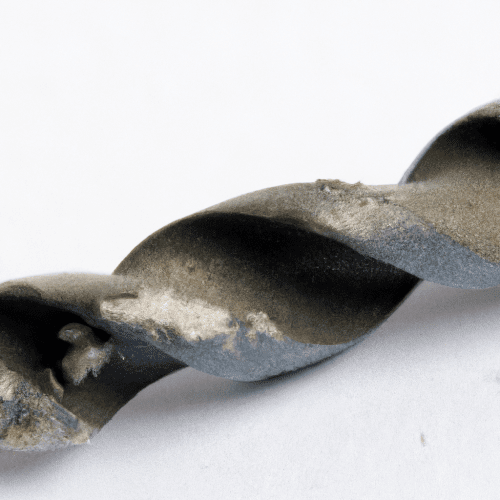
Concrete drill bits are engineered for abrasive materials, possessing distinct geometries and material compositions that render them largely ineffective and potentially damaging when used on wood. Their primary design objective is to pulverize hard, brittle substrates rather than cleanly sever wood fibers.
Fundamental Design Differences and Cutting Inefficiency
The fundamental distinction lies in the cutting mechanism. Concrete drill bits, often referred to as masonry bits, feature a carbide tip brazed onto a steel shank. This tip is designed for impact and abrasion, effectively crushing and grinding through concrete, brick, or stone.
These bits typically have a blunt, chisel-like cutting edge with a negative rake angle, which is ideal for breaking down mineral aggregates. Unlike wood-specific bits, they lack the sharp spurs or brad points necessary to initiate a clean cut and prevent ‘walking’ on the wood surface.
Wood drill bits, conversely, are designed with sharp cutting edges, often incorporating a brad point or spur to precisely locate the hole and score the wood fibers before the main cutting lips remove material. Their flutes are optimized for efficient chip evacuation, preventing clogging and heat buildup.
The helical flutes on a masonry bit are primarily for removing pulverized dust, not for lifting long, continuous wood chips. This design mismatch significantly impedes material removal in wood, leading to excessive friction and poor performance.
Elevated Temperatures and Wood Burning Hazards
| Feature | Concrete/Masonry Drill Bit | Wood Drill Bit (e.g., Brad Point) |
|---|---|---|
| Cutting Material | Carbide tip (Tungsten Carbide) | High-Speed Steel (HSS), Carbon Steel |
| Cutting Edge | Blunt, chisel-like, negative rake | Sharp, pointed, positive rake |
| Tip Design | Chisel point, often with two cutting edges | Brad point or spur for centering and scoring |
| Flute Design | Narrow, helical for dust evacuation | Wide, open for chip evacuation |
| Primary Action | Pulverizing, grinding, crushing | Shearing, cutting, scoring |
| Optimal Speed | Slow to medium (with impact) | Medium to high (no impact) |
| Hole Quality in Wood | Poor: burnt, splintered, rough | Excellent: clean, precise, smooth |
Attempting to drill wood with a concrete bit inevitably leads to significantly elevated temperatures. The blunt carbide tip, instead of cleanly cutting, essentially scrapes and rubs against the wood fibers. This friction generates substantial heat, which can quickly char and burn the wood.
Operating at slow drilling speeds, often recommended for masonry, exacerbates this issue in wood. While slow speeds reduce impact, they prolong the contact time of the inefficient cutting edge, allowing heat to build up excessively. This can result in a smoking hole, a burnt smell, and a hardened, carbonized surface within the drilled area.
The thermal degradation of wood not only creates an unpleasant odor and smoke but also weakens the surrounding material. A burnt hole compromises the structural integrity of the wood, making it less suitable for fasteners or joinery. Furthermore, the risk of igniting sawdust or wood shavings increases with extreme heat.
Even with cooling measures, the inherent design of a concrete bit makes it prone to overheating in wood. The lack of effective chip evacuation means that fine wood dust remains in the hole, acting as an insulator and further contributing to heat retention.
Compromised Hole Quality and Material Damage
The pulverizing action of a concrete drill bit is fundamentally incompatible with the fibrous structure of wood, leading to severely compromised hole quality. Instead of a clean, precise cut, users will typically observe significant tear-out and splintering around the entry and exit points.
The blunt carbide tip tears and rips wood fibers rather than shearing them cleanly, resulting in ragged, uneven edges. This can create an oversized or irregularly shaped hole that does not meet standard tolerances for woodworking applications.
For applications requiring aesthetic appeal or precise fitment, such as dowel joints or hardware installation, holes drilled with a masonry bit are entirely unacceptable. The damage extends beyond the immediate hole, potentially weakening the surrounding wood and making it prone to cracking or splitting, especially in thinner stock.
Achieving a clean exit hole is particularly challenging, as the bit’s design offers no support to the wood fibers on the underside, leading to substantial blow-out. This necessitates extensive post-drilling cleanup or repair, which is often impractical or impossible without further damaging the workpiece.
Emergency Alternatives and Mitigation Strategies
In an absolute emergency, when no other suitable wood drill bit is available, a concrete drill bit *can* be used on wood, but with extreme caution and acceptance of poor results. This should be considered a last resort for non-critical applications where hole quality is irrelevant.
To minimize damage, operate the drill at the slowest possible speed setting. Apply very light, consistent pressure, allowing the bit to slowly abrade its way through the material. Avoid any impact drilling functions, as this will only exacerbate splintering and damage.
Frequent retraction of the bit is crucial to clear accumulated wood dust and allow for some cooling. This ‘pecking’ motion helps prevent excessive heat buildup and reduces the chance of the bit binding in the hole. Consider using a sacrificial backer board to mitigate exit tear-out.
Even with these precautions, expect a rough, burnt, and imprecise hole. The process will be slow and inefficient, and the bit itself may dull prematurely due to the abrasive nature of wood fibers when subjected to grinding rather than cutting. This method is not recommended for any project requiring precision or structural integrity.
Comparative Analysis of Drill Bit Geometries
Understanding the distinct geometries of drill bits is essential for proper material processing. Wood bits, such as brad point, spur, or twist drills, feature sharp cutting edges and often a central point for accurate positioning. Their wide, open flutes are designed to efficiently evacuate wood chips.
Conversely, masonry bits are characterized by their robust carbide tips, which are significantly harder than high-speed steel (HSS) typically used for wood bits. These tips are designed to withstand the compressive and abrasive forces encountered when drilling through concrete and stone.
The following table highlights key differences:
Selecting the correct drill bit for the material is a fundamental principle in machining and woodworking. Using a concrete bit on wood is a clear deviation from best practices, leading to suboptimal results and potential damage to both the workpiece and the tool.