
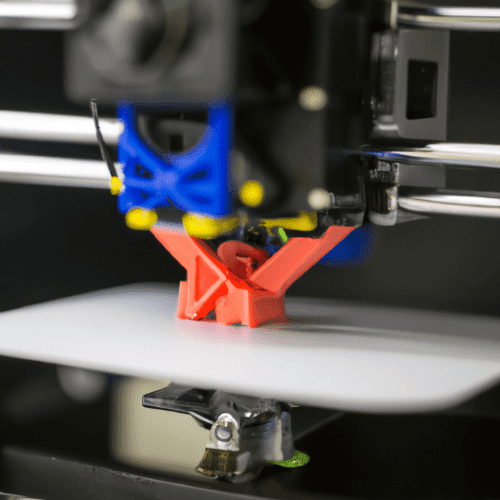
Additive manufacturing has transformed product development, offering unparalleled design freedom and rapid iteration capabilities. Engineers and designers frequently require access to advanced 3D printing technologies for prototyping, tooling, and even end-use parts. Understanding the various avenues for obtaining 3D prints is crucial for optimizing project timelines and budgets.
Selecting the appropriate 3D printing service depends heavily on project requirements, including material specifications, dimensional tolerances, desired surface finish, and production volume. Each service type, from online platforms to university labs, presents distinct advantages and operational considerations.
Online 3D Printing Services
Online 3D printing services provide a streamlined, accessible pathway for obtaining custom parts, often featuring instant quoting and rapid turnaround times. Companies like Protolabs, Xometry, JLC3DP, Craftcloud, and Shapeways offer a broad spectrum of additive manufacturing technologies, including FDM, SLA, SLS, MJF, and various metal AM processes.
These platforms are particularly beneficial for rapid prototyping and low-volume production, allowing engineers to upload CAD files and receive parts within days. Lead times for plastic parts can range from overnight to 12 business days, while metal prints typically require 5 to 10 business days due to complex post-processing.
Many online services also offer extensive material libraries, encompassing standard thermoplastics like PLA and ABS, engineering-grade nylons, and high-performance resins and metal alloys. They often provide design analysis tools and expert support to ensure manufacturability, which is critical for achieving optimal part performance.
Local Maker Spaces and Community Hubs
| Parameter | FDM (Fused Deposition Modeling) | SLA (Stereolithography) | SLS (Selective Laser Sintering) / MJF (Multi Jet Fusion) | Metal AM (e.g., DMLS/SLM) |
|---|---|---|---|---|
| Typical Dimensional Tolerance | ±0.2–0.5 mm | ±0.05–0.1 mm | ±0.3 mm | ±0.1–0.2 mm (pre-machining) |
| Surface Finish | Visible layer lines, rougher | Very smooth, fine detail | Slightly grainy, uniform | Rough, requires post-processing |
| Common Materials | PLA, ABS, PETG, Nylon, TPU | Standard, Tough, Flexible, Castable Resins | Nylon PA11, PA12, TPU | Stainless Steel, Aluminum, Titanium, Inconel |
| Typical Lead Time (Business Days) | 3–10 days | 3–8 days | 4–10 days | 6–14 days |
| Cost per Part (Relative) | Low | Medium | Medium-High | High |
Local maker spaces and community hubs offer an accessible entry point into 3D printing, particularly for hobbyists, small businesses, and educational purposes. These facilities typically house FDM and sometimes SLA printers, providing hands-on experience and fostering collaborative environments.
Access to equipment often requires an orientation or training session to ensure safe and proper operation. Users are usually responsible for their own designs and may need to bring their own materials, though some spaces provide basic filaments like PLA and PETG at a nominal cost.
While maker spaces are excellent for learning and small-scale projects, they generally have limitations on print size, duration, and material variety compared to industrial services. Print jobs are often capped at 8 to 24 hours, and commercial use might be restricted.
Specialized Prototyping Bureaus
Specialized prototyping bureaus, such as Stratasys Direct Manufacturing and FATHOM, focus on delivering high-quality, functional prototypes and low-volume production parts. These bureaus often possess a wider array of industrial-grade 3D printing technologies, including advanced FDM, PolyJet, SLA, SLS, and DMLS.
These services cater to industries requiring stringent quality control, certified materials, and complex geometries, such as aerospace, medical devices, and automotive. They frequently offer additional services like design assistance, material selection guidance, and various post-processing options.
Prototyping bureaus are ideal for projects demanding tight tolerances, superior surface finishes, and specific mechanical properties. Their expertise in Design for Additive Manufacturing (DfAM) helps optimize part performance and reduce potential failures.
On-Demand Manufacturing Hubs
On-demand manufacturing hubs represent a significant evolution in additive manufacturing, integrating 3D printing with other digital fabrication methods like CNC machining and sheet metal fabrication. Platforms such as Xometry, Fictiv, and MakerVerse connect customers with a global network of vetted manufacturing partners.
These hubs are designed for scalability, offering solutions from rapid prototyping to full-scale production runs without the need for significant capital investment in in-house equipment. They leverage AI-powered platforms for instant quoting, material matching, and lead time estimation.
The primary advantage of on-demand manufacturing is its agility, enabling businesses to react quickly to changing market demands and supply chain disruptions. This model supports the production of low-to-mid volume goods precisely when and where they are needed.
University Fab Labs and Research Facilities
University fabrication laboratories (fab labs) and research facilities provide access to advanced 3D printing technologies, often supporting academic, research, and sometimes external community projects. Institutions like the University of Oklahoma, University of Arizona, and UW–Madison offer services ranging from FDM to metal additive manufacturing.
These labs are invaluable for exploring cutting-edge materials, experimental geometries, and complex scientific models. Access is typically prioritized for students, faculty, and staff, with external access often available through specific submission processes or collaborative agreements.
While offering advanced capabilities, university labs may have longer lead times due to academic schedules and research priorities. They often provide expert consultations, assisting users with design optimization and material selection for specialized applications.
Technical Parameters and Considerations
Engineers must consider several technical parameters when selecting a 3D printing service, including material properties, dimensional tolerances, and typical lead times. These factors significantly influence part functionality, cost, and project schedule. Understanding these distinctions is crucial for successful additive manufacturing.
Material selection is paramount, with options ranging from common plastics like PLA and ABS to high-performance polymers such as Nylon and engineering resins, and various metal alloys. Each material possesses unique mechanical, thermal, and chemical properties suitable for specific applications.
Design for Additive Manufacturing (DfAM) principles are essential for maximizing the benefits of 3D printing. This involves consolidating parts, adding lattices for weight reduction, optimizing overhangs for self-support, and considering post-processing requirements from the initial design phase.