
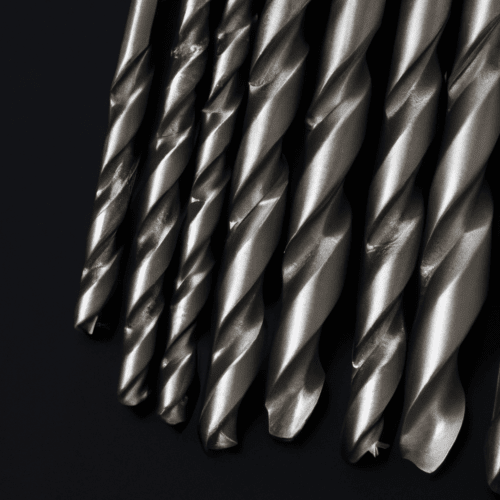
Titanium Nitride (TiN) coatings significantly enhance the performance and longevity of drill bits in various machining applications. This gold-colored ceramic layer, applied through a Physical Vapor Deposition (PVD) process, transforms standard high-speed steel (HSS) or carbide drills into more efficient and durable tools.
The application of TiN coating is not merely aesthetic; it imparts critical properties that directly impact drilling operations. These properties include increased surface hardness, improved wear resistance, and enhanced thermal stability, all contributing to superior machining outcomes.
The Science of Titanium Nitride Coating
Titanium Nitride is an extremely hard ceramic material formed from a chemical compound of titanium and nitrogen. It is typically applied to drill bits using a Physical Vapor Deposition (PVD) process.
During PVD, titanium atoms are vaporized and combined with nitrogen gas in a vacuum chamber, forming a thin, uniform TiN layer on the tool’s surface. This low-temperature deposition process, usually between 200°C and 450°C, is crucial as it prevents alteration of the substrate’s temper or geometry, especially for HSS tools.
The resulting TiN coating boasts a Vickers hardness typically ranging from 2,000 to 2,500 HV, which is significantly harder than uncoated HSS. This hardness provides exceptional protection against abrasive wear and mechanical stress during drilling.
TiN layers are generally thin, ranging from 1 to 7 microns (0.00004 to 0.0002 inches), yet they form a strong metallurgical bond with the substrate, resisting flaking, blistering, and chipping. This robust adhesion ensures the coating remains effective throughout the tool’s life.
Friction Reduction Advantages
| Property | Uncoated HSS Drill | TiN Coated HSS Drill |
|---|---|---|
| Hardness (Vickers HV) | ~600-900 HV (HSS) | 2,000-2,500 HV |
| Coefficient of Friction (vs. Steel) | Higher (e.g., 0.58 for low-carbon steel) | 0.40-0.67 |
| Max Operating Temperature | ~300-400°C (HSS softening) | 550-600°C (1100°F) |
| Typical Tool Life Increase | Reference | 3-6x longer (up to 500% or more) |
| Typical Speed Increase | Reference | 1.1-1.3x (for HSS) |
| Coating Thickness | N/A | 1-7 microns (0.00004-0.0002″) |
A primary benefit of Titanium Nitride coating is its ability to significantly reduce the coefficient of friction between the drill bit and the workpiece material. This reduction is critical for efficient material removal.
The typical coefficient of friction for TiN against steel ranges from 0.40 to 0.67, which is considerably lower than that of uncoated steel. This lower friction minimizes heat generation at the cutting edge and along the flutes.
Reduced friction directly translates to improved chip evacuation. Chips slide more easily along the flutes, preventing built-up edge (BUE) formation, especially when drilling ferrous materials. This leads to smoother operations and better hole quality.
Furthermore, the ‘non-stick’ properties of TiN help prevent workpiece material from adhering to the drill, which is particularly advantageous in materials prone to galling. This maintains the cutting edge’s sharpness and reduces the likelihood of drill bit breakage.
Superior Heat Resistance and Thermal Stability
Drilling generates substantial heat, which can quickly degrade uncoated tools, leading to premature wear and failure. TiN coatings provide a crucial thermal barrier, significantly improving the drill bit’s heat resistance.
Titanium Nitride coatings maintain their integrity and properties at elevated temperatures, with oxidation typically beginning around 550-600°C (1100°F). This allows for more aggressive cutting parameters without compromising tool performance.
The coating’s thermal stability means that heat generated during cutting is more effectively dissipated into the chips and workpiece rather than being absorbed by the tool itself. This keeps the drill bit cooler internally, preserving the hardness and temper of the HSS substrate.
This enhanced heat resistance is particularly beneficial when drilling harder materials like stainless steel or cast iron, where high temperatures are unavoidable. It allows the drill to maintain its sharpness and cutting efficiency for longer periods.
Extending Drill Lifespan and Tool Economy
The combination of increased hardness, reduced friction, and superior heat resistance directly contributes to a substantially extended drill lifespan for TiN-coated tools. This translates into significant cost savings and improved operational efficiency.
TiN-coated drills can last anywhere from three to six times longer than their uncoated HSS counterparts, with some applications seeing increases of 500% or more in abrasive conditions. This dramatically reduces the frequency of tool changes and associated downtime.
The coating’s excellent wear resistance protects the cutting edges from abrasion, helping the drill maintain its geometry and consistent performance over extended production runs. This is crucial for maintaining hole accuracy and surface finish quality.
For manufacturers, this extended tool life means fewer purchases of replacement drills, lower inventory costs, and more predictable production schedules. The initial investment in TiN-coated drills is quickly recouped through increased productivity and reduced tooling expenses.
Achieving Higher Drilling Speeds and Productivity
The enhanced properties of TiN-coated drills enable machinists to utilize higher cutting speeds and feed rates compared to uncoated tools. This directly boosts overall productivity and throughput in manufacturing operations.
With reduced friction and improved heat dissipation, the drill can operate at faster surface feet per minute (SFM) without overheating or experiencing rapid wear. This allows for quicker penetration into the workpiece.
While specific increases vary by material and application, TiN coatings can allow for a 1.1 to 1.3 times increase in cutting speeds for HSS drills in certain materials. This is a significant gain in production environments.
The ability to drill faster and more efficiently means more parts can be produced in less time, optimizing machine utilization and reducing cycle times. This makes TiN-coated drills a valuable asset for high-volume production and demanding projects.
Standard tolerances for HSS twist drill bits typically involve a manufacturing tolerance of around +0/-0.02 to -0.08 mm on the diameter, with the actual hole produced often being 0.02-0.15 mm larger due to factors like runout and material spring-back.