
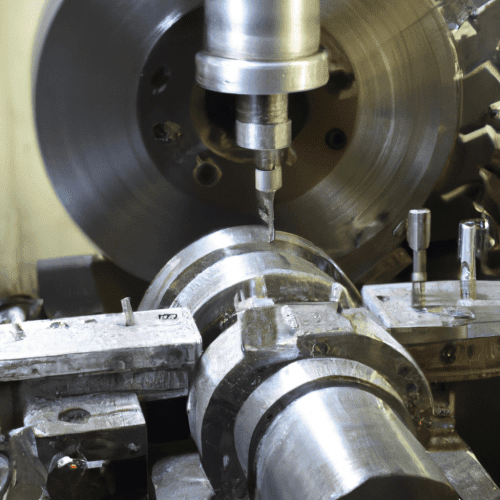
Advanced subtractive manufacturing represents the foundational process for creating high-precision components across diverse industries, from aerospace to medical devices. This methodology involves removing material from a solid workpiece to achieve a desired geometry, contrasting with additive processes that build parts layer by layer.
The current landscape of manufacturing heavily relies on these sophisticated material removal techniques, which have evolved significantly with digital integration and automation.
The demand for increasingly complex parts with stringent accuracy requirements has propelled subtractive manufacturing into an era of advanced capabilities. Modern practices incorporate artificial intelligence (AI) for toolpath optimization and predictive maintenance, alongside digital twin technology for simulating entire production lines.
This integration enhances efficiency, reduces material waste, and ensures consistent quality, particularly in high-volume production environments.
Advanced Subtractive Manufacturing Principles
Subtractive manufacturing, at its core, encompasses processes like milling, turning, drilling, and grinding, where material is systematically removed. Contemporary advancements have transformed these traditional methods through the adoption of high-speed machining, dry machining, and minimum quantity lubrication (MQL) systems, which contribute to more sustainable operations.
Hybrid manufacturing, blending subtractive and additive processes, is also gaining momentum, allowing for the creation of near-net-shape parts that are then machined to tight tolerances.
The effectiveness of advanced subtractive techniques is measured by their ability to produce parts with exceptional accuracy, repeatability, and surface finish. Achieving these outcomes requires a deep understanding of material properties, cutting tool mechanics, and machine kinematics.
Industries like automotive, medical, and aerospace rely on these capabilities to produce critical components that meet rigorous performance standards.
Computer Numerical Control: the Core of Automation
| Material | Typical Standard Tolerance (mm) | Typical Precision Tolerance (mm) | Recommended Carbide SFM (m/min) | Recommended Chip Load (mm/tooth) |
|---|---|---|---|---|
| Aluminum Alloys (e.g., 6061) | ±0.05 | ±0.0127 | 200-600 | 0.02-0.15 |
| Steel Alloys (e.g., 1018) | ±0.08 | ±0.051 | 100-300 | 0.05-0.20 |
| Stainless Steel | ±0.10 | ±0.051 | 80-250 | 0.04-0.18 |
| Titanium Alloys | ±0.13 | ±0.051 | 50-150 | 0.03-0.10 |
| Engineering Plastics | ±0.15 to ±0.25 | ±0.051 | Varies widely | Varies widely |
Computer Numerical Control (CNC) machines form the backbone of modern subtractive manufacturing, translating digital designs into precise physical movements. A CNC system comprises a controller, servo drives, motors, and feedback systems that work in unison to execute programmed toolpaths.
The evolution of CNC technology has seen a shift from basic 3-axis machines to highly complex multi-axis systems, offering unparalleled versatility and precision.
Current CNC technology incorporates AI-native controls, which are becoming a standard feature on leading machines. These intelligent controls integrate machine learning for adaptive toolpath optimization, predictive maintenance alerts, and real-time process parameter adjustments.
This level of automation significantly reduces human intervention, minimizes errors, and allows for ‘lights-out’ machining operations, thereby boosting productivity and consistency.
Precision Tooling and Material Science
Precision tooling systems are critical enablers of high-quality machining, directly influencing surface finish, dimensional accuracy, and tool life. Cutting tools are manufactured from advanced materials such as cemented carbides, ceramics, cubic boron nitride (CBN), and polycrystalline diamond (PCD), each selected for its specific hardness, toughness, and heat resistance properties.
Tool coatings represent a significant advancement, acting as thermal barriers and reducing friction at the cutting edge. Modern coatings like titanium aluminum nitride (TiAlN), aluminum titanium nitride (AlTiN), and multi-layer nano-composite coatings allow tools to operate at higher speeds and temperatures, extending tool life and improving surface quality.
Furthermore, sensor-equipped tooling provides real-time data on temperature, vibration, and tool wear, enabling on-the-fly optimization of cutting conditions.
Standard machining tolerances typically range from ±0.05 mm to ±0.13 mm for most metals, depending on the specific process and material. Achieving tighter tolerances, such as ±0.0127 mm (±0.0005 inches) for reamed holes, often necessitates specialized equipment, slower machining speeds, and climate-controlled environments to mitigate thermal expansion effects.
Repeatability, the machine’s ability to consistently return to the same position, is often more critical than absolute accuracy, as predictable errors can be compensated for through software offsets.
Multi-Axis Motion Control for Complex Parts
Multi-axis motion control systems enable CNC machines to synchronize movements across more than three axes, typically including rotational axes (A, B, C) in addition to linear (X, Y, Z). This advanced coordination allows for simultaneous machining from multiple directions, producing complex surfaces and 3D geometries in a single setup without manual repositioning.
Five-axis milling, for instance, represents a pinnacle of current cutting technology, capable of creating intricate curved surfaces with ultra-high surface finishes.
The fundamental control architecture of multi-axis systems involves sophisticated trajectory generators that convert high-level G-code commands into axis-specific position commands. These systems perform dynamic calculations in real-time, adjusting tool movements to maintain perfect alignment and micron-level tolerances.
Deterministic timing and real-time communication protocols, such as EtherCAT or PROFINET IRT, are indispensable for achieving the sub-microsecond synchronization required for precise multi-axis coordination.
CAD/CAM Integration: Bridging Design and Production
CAD/CAM integration forms a seamless digital workflow that connects computer-aided design (CAD) with computer-aided manufacturing (CAM), streamlining the entire product development cycle. This integration eliminates the need for manual data transfers and reinterpretation, significantly reducing errors and accelerating the design-to-machine process.
When CAD and CAM are part of the same system, design changes automatically flow into manufacturing workflows, ensuring toolpaths are always aligned with the latest design intent.
Modern CAD/CAM software, such as Mastercam 2026, incorporates AI-enabled intelligence to optimize toolpaths, suggest machining strategies, and predict potential issues before they occur. This not only enhances productivity but also reduces programming time and minimizes shop floor bottlenecks.
Digital twin integration within CAD/CAM systems further allows for real-time monitoring and simulation of machining processes, enabling manufacturers to optimize operations and predict potential failures before they cause downtime.