
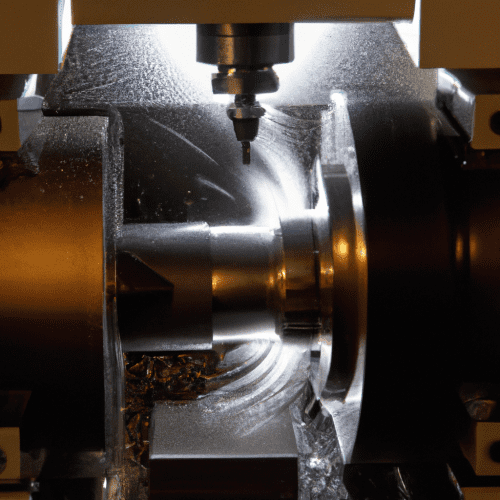
Accurately calculating the cost of CNC turning is essential for effective project budgeting and competitive quoting. Numerous variables influence the final price, extending beyond simple machine time to encompass setup, material, batch volume, and tooling expenses. A comprehensive understanding of these factors allows engineers and procurement specialists to optimize designs and production strategies for maximum cost efficiency.
Machine Hourly Rates
CNC turning machine hourly rates in the United States for 2026 typically range from $50 to $100 per hour for standard lathe operations. More advanced multi-axis or Swiss-type machines command higher rates, often between $100 and $250 per hour, reflecting their increased complexity and precision capabilities.
Several factors contribute to these hourly rates, including the machine’s initial investment, depreciation, and ongoing maintenance. Labor costs for skilled CNC turning operators, averaging around $23.65 per hour in the US as of August 2026, are also integrated into the overall hourly charge.
Overhead expenses, such as facility rent, utilities, software licenses, and general shop operations, are amortized into the machine’s hourly rate. This comprehensive ‘burden rate’ ensures that all operational costs are covered, not just the direct energy consumption or operator wages.
The complexity of the part design, required tolerances, and the material being machined significantly influence the effective hourly cost. Tighter tolerances and intricate geometries necessitate slower feed rates and more precise tooling, extending machining time and increasing the per-part cost.
Setup Time Charges
| Material Type | Estimated Price Range (per pound, August 2026) | Machinability Impact |
|---|---|---|
| 6061 Aluminum | $2.00 – $6.00 | Low-Moderate (Easy) |
| 1018 Cold Finished Steel | $0.71 – $0.86 | Moderate (Good) |
| 303 Stainless Steel | $5.00 – $15.00 | High (Challenging) |
| Delrin (POM) | Lower than metals | Low (Very Easy) |
Setup time represents a fixed cost incurred at the beginning of any CNC turning project, irrespective of the number of parts produced. This includes programming the machine, loading material, installing and aligning tooling, and performing initial test cuts.
For relatively simple parts requiring minimal programming, setup fees can range from $50 to $150. However, complex components with multiple features, intricate geometries, or specialized fixturing can incur significantly higher setup charges, potentially reaching $500 to $1,000 or more.
Typical setup durations for CNC turning operations range from 0.5 to 2 hours per setup. If a part requires multiple setups to access different features, these costs accumulate, directly impacting the overall project expense.
Many shops also bill separately for CAD/CAM programming and non-recurring engineering (NRE) activities, which can range from $35 to $75 per hour. This ensures that the intellectual labor involved in preparing a job is appropriately compensated, distinct from the machine’s operational time.
Material Bar Stock Costs
Raw material bar stock costs are a substantial component of CNC turning expenses, often accounting for 20% to 40% of the total project budget. The choice of material directly impacts both the purchase price and the machinability, which in turn affects machining time and tool wear.
Common materials like 6061 aluminum are relatively inexpensive and easy to machine, keeping both material and cycle times in check. Conversely, materials such as stainless steel or titanium are significantly more costly per pound and require slower cutting speeds, increasing both material and machining expenses.
Material usage efficiency is also critical; minimizing scrap through optimized nesting and part design can reduce overall expenses. Larger parts inherently require more raw material, contributing to higher base costs.
The following table provides estimated current prices for common bar stock materials used in CNC turning:
Batch Volume Pricing
Batch volume significantly influences the per-part cost in CNC turning due to the principle of economies of scale. Fixed costs, such as machine setup and programming, are amortized over the entire production run.
For prototype or low-volume orders (e.g., 1-10 pieces), the setup costs are spread across very few parts, resulting in a higher unit price, often ranging from $30 to $300 per part. As the quantity increases, this fixed cost per unit decreases dramatically.
Production runs of 250 parts or more can see per-part costs drop to $5-$60, with very large orders (over 1,000 parts) potentially reducing unit prices by five to ten times compared to single prototypes. Increasing an order from one to five units can effectively halve the unit price.
Bulk purchasing of raw materials for larger batches often yields discounts from suppliers, further contributing to cost reductions. Strategic planning of batch sizes is crucial for optimizing overall project expenses and achieving competitive pricing.
Tool Wear Costs
Tool wear and replacement are integral components of CNC turning costs, directly impacting both hourly rates and per-part expenses. Cutting tools, particularly carbide inserts, are consumables that degrade over time and require periodic replacement to maintain machining accuracy and surface finish.
Carbide inserts are the predominant choice in modern turning applications due to their high hardness, excellent wear resistance, and ability to operate at elevated cutting speeds. These inserts typically consist of a carbide cutting tip brazed or clamped to a steel shank.
The lifespan of a carbide insert varies significantly based on several factors, including the workpiece material, cutting conditions, and insert quality. On average, carbide inserts can last anywhere from 20 to 200 hours of actual CNC cutting time.
Machining harder or more abrasive materials like stainless steel or high-temperature alloys accelerates tool wear, necessitating more frequent insert changes. Optimized cutting speeds, feed rates, depth of cut, and effective coolant usage are critical for extending tool life and minimizing replacement costs.