
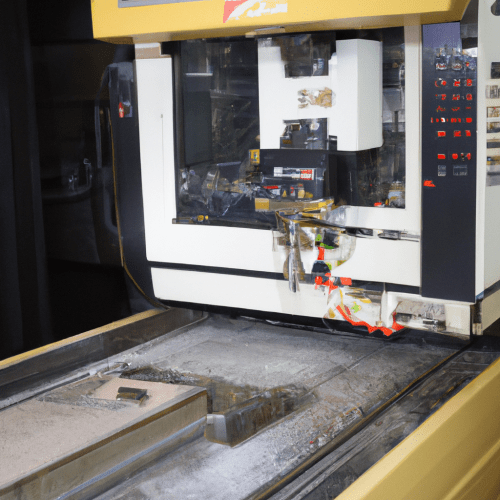
Investing in a Computer Numerical Control (CNC) milling machine requires a thorough understanding of the associated costs, which vary significantly based on machine type, capabilities, and intended application. From hobbyist routers to industrial vertical machining centers, each category presents a distinct financial outlay. This guide details the current market pricing, essential ancillary expenses, and critical factors influencing the total investment for August 2026.
Hobby CNC Router Pricing
Entry-level CNC routers, designed for enthusiasts and small-scale projects, typically range from $200 to $5,000 in 2026. Machines like the Genmitsu 3018-PROVer V2 can be found for as low as $256, offering a basic 3-axis platform for cutting wood, plastics, and engraving various materials.
More capable hobbyist models, such as the Genmitsu PROVerXL 4030 V2, are priced around $1,189 and provide a larger work area and increased rigidity suitable for producing sellable items. These machines are ideal for learning CNC fundamentals, creating signs, or fabricating small components. Many entry-level options are available between $2,380 and $5,080, often featuring a small workbench.
Some advanced hobby or ‘prosumer’ desktop CNC routers, like those from Onefinity, start around $2,000 for entry-level models, with more advanced versions reaching $3,000 or more. These machines offer enhanced capabilities and larger work areas, bridging the gap between casual use and light commercial applications. The overall cost for most makers and small businesses typically falls between $1,500 and $15,000.
Benchtop Mill Expenses
| Material | Tool Material | Surface Speed (SFM) | Feed per Tooth (IPT) |
|---|---|---|---|
| Aluminum Alloys | HSS | 100-400 | 0.003-0.005 |
| Aluminum Alloys | Carbide | 250-1000+ | 0.004-0.008 |
| Mild Steel | HSS | 90-150 | 0.002-0.004 |
| Mild Steel | Carbide | 200-500+ | 0.003-0.006 |
Benchtop CNC mills represent a step up in precision and material capability compared to hobby routers, with prices generally ranging from $3,000 to $15,000. These compact machines are often chosen by small shops, educational institutions, and serious prototypers who require higher rigidity for machining softer metals like aluminum, as well as various plastics and composites.
These machines typically feature more robust construction, higher spindle power, and improved accuracy, often holding tolerances around ±0.005 inches (±0.13 mm) for milling operations. While not as powerful as industrial VMCs, they offer a significant upgrade in performance and reliability for continuous operation over extended periods. The investment in a benchtop mill often includes considerations for more specialized tooling and workholding solutions.
Industrial VMC Investment
Industrial Vertical Machining Centers (VMCs) represent a substantial capital expenditure, with prices varying widely based on size, features, and precision. In 2026, a new VMC can range from $35,000 for basic entry-level models to over $300,000 for high-precision, multi-axis production cells. Mid-range production VMCs typically fall between $70,000 and $145,000.
High-end and specialized VMCs, costing $160,000 and above, offer nanometer-level accuracy, high-speed spindles (20,000+ RPM), linear motors, and integrated 5-axis capabilities for complex geometries. These machines are critical for aerospace, medical, and mold-making industries where stringent tolerances and high throughput are paramount. The total cost reflects not just the hardware but also advanced software integration, often including AI-driven control systems and real-time digital twin capabilities.
Entry-level 3-axis VMCs are generally priced between $45,000 and $75,000, while mid-range production models are in the $80,000 to $150,000 range. High-end and multi-axis machines can exceed $180,000, reaching upwards of $350,000. These industrial machines often require a stable three-phase power supply, typically 220V or 380V/400V/415V, with a frequency of 50Hz or 60Hz.
The repeatability accuracy for industrial VMCs can reach 0.005 mm, with testing standards often twice as high as industry norms. Modern VMCs are expected to integrate seamlessly with robotic arms and cloud-based ERP systems, making the initial investment a strategic decision for long-term profitability.
Tooling and Enclosure Costs
Beyond the machine itself, tooling and enclosures represent significant additional investments. An initial tooling package for a new VMC can add an estimated 20% of the machine’s purchase price. This includes essential items such as end mills, drills, workholding vises, and tool holders.
Individual carbide end mills can range from $13.55 to over $30, while sets of HSS or carbide end mills can cost anywhere from $19.60 to over $1,000, depending on the material, coating, and quantity. For instance, a YG-1 ALU-POWER High Performance Carbide (HPC) End Mill Kit is priced at $1,075.00, while a 6-piece HSS 4-flute end mill set might be $112.44.
Workholding solutions, such as vises, clamps, and fixtures, are crucial for securing parts during machining and can range from a few hundred to several thousand dollars depending on complexity and precision. Coolant systems, often integrated into industrial machines, may require additional investment for standalone units or upgrades, ensuring optimal chip evacuation and tool life. Enclosures, particularly for hobby and benchtop machines, can be DIY solutions or pre-fabricated units, adding to safety and dust control.
Consider the following typical feeds and speeds for common materials:
These parameters are starting points; actual values depend on machine rigidity, spindle power, and specific tool geometry. Carbide tools generally allow for significantly higher speeds and feeds compared to High-Speed Steel (HSS) tools.
Delivery and Setup Fees
The logistical challenges of transporting and installing CNC machinery contribute substantially to the overall cost. Shipping a CNC machine can range from $1,000 to $15,000, influenced by size, weight, distance, and handling requirements. Custom crating is often a critical investment to prevent damage during transit.
Professional rigging services are essential for safe and precise placement of heavy industrial machines. A local move for a standard Vertical Machining Center (VMC) typically costs between $1,500 and $3,500. Relocating larger Horizontal Machining Centers (HMCs) or moving equipment across state lines can exceed $15,000. Rigging companies often have minimum charges, such as a four-hour or eight-hour minimum, even for shorter jobs.
Electrical installation is another critical expense. Most CNC machines require 30-40 amps at 220V single-phase or slightly less amperage at 208V three-phase, though requirements vary based on spindle and motor size. Industrial machines often demand stable three-phase power supplies (e.g., 220V, 380V, 400V, or 415V) at 50Hz or 60Hz. Wire sizing must adhere to National Electrical Code (NEC) requirements, often requiring conductors sized for 125% of the full-load ampacity.
Air source requirements for industrial CNC machining centers typically involve a stable and dry compressed air supply at 5-7 MPa, equipped with an oil filter and gas-water separator. This ensures proper operation of pneumatic components like chucks and tool changers. The total cost of ownership also includes ongoing software licenses, particularly for advanced ‘Smart’ features that may operate on a Software as a Service (SaaS) model, and specialized operator training, which can cost $3,000–$5,000 per staff member for complex controllers.