
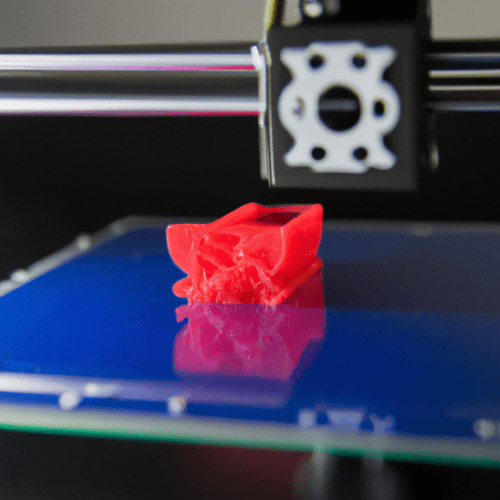
Determining the precise cost of a 3D printed part involves evaluating several key technical factors. These include the duration of the printing process, the specific material consumed, any associated machine setup fees, and the labor required for post-processing. Understanding these variables is crucial for accurate budgeting and project planning in additive manufacturing.
Print Time Calculations
Print time is a primary cost driver, directly influenced by the model’s complexity, size, and chosen print settings. Larger objects inherently demand more material and layers, significantly extending the overall printing duration. This scaling means a twofold increase in dimensions can lead to an eightfold increase in material usage and print time.
Layer height is arguably the most impactful setting on print duration; halving the layer height roughly doubles the print time due to the increased number of layers. For instance, reducing layer height from 0.2mm to 0.1mm will approximately double the print time. Engineers often balance desired surface quality against production speed by adjusting this parameter.
Infill density also plays a significant role in print time and material consumption. Higher infill percentages, while increasing part strength, necessitate more material deposition per layer, thus extending print duration. For non-functional prototypes or decorative items, lower infill percentages (e.g., 10-20%) are often sufficient and reduce both time and material.
Print speed, measured in millimeters per second (mm/s), directly affects how quickly material is extruded and deposited. While faster speeds reduce print time, they can compromise print quality if exceeding the printer’s volumetric flow rate or mechanical stability. Optimizing print speed requires careful consideration of material properties and desired part resolution.
Material Cost per Gram
| Parameter | FDM (Fused Deposition Modeling) | SLA (Stereolithography) | SLS (Selective Laser Sintering) |
|---|---|---|---|
| Typical Layer Height | 0.1 mm – 0.4 mm (0.2 mm common) | 25 µm – 100 µm (50 µm common) | 80 µm – 120 µm (100 µm common) |
| Dimensional Tolerance | ±0.5% (min ±0.5 mm) | ±0.05 mm – ±0.15 mm (for parts < 100mm) | ±0.3 mm or ±0.3% (whichever is greater) |
| Typical Print Speed | 40 mm/s – 150+ mm/s | Generally faster for small, detailed objects | Process time 4-7 business days |
| Minimum Wall Thickness | 1.0 mm | 0.8 mm | 0.8 mm – 1.0 mm |
| Minimum Detail Size | 0.6 mm | Not explicitly stated, but high detail | Not explicitly stated, but fine details possible |
Material selection profoundly impacts the overall cost, with prices varying significantly across different filament and resin types. Standard FDM filaments like PLA typically cost between $15-$30 per kilogram, translating to approximately $0.02-$0.05 per gram. PETG and ABS are slightly higher, ranging from $20-$35/kg.
Engineering-grade filaments, such as Nylon or carbon-fiber composites, command higher prices, often $30-$60 per kilogram. Industrial materials like PEEK and PEI are substantially more expensive, reaching $300-$500 per kilogram, requiring specialized high-temperature printers. These advanced materials offer superior mechanical properties for demanding applications.
SLA resins also exhibit a broad price spectrum; standard resins cost $25-$50 per liter, while tough or engineering resins are $50-$80/L. Specialty resins, such as castable jewelry resins or FDA-cleared dental resins, can range from $80-$150/L and $200-$500/L, respectively. A typical 10ml miniature print might cost $0.40 in standard resin.
For powder-bed fusion technologies like SLS, nylon powder (PA12) is a common material. While specific per-gram costs for SLS powder are less commonly quoted for individual parts, service bureaus typically price SLS, MJF, and metal printing from $1-$10 per cubic centimeter. This reflects the specialized equipment and processes involved.
Machine Setup Fees
Machine setup fees encompass the preparatory work required before a print job commences. This often includes loading the correct material, preparing or leveling the build platform, and ensuring proper material conditioning. These initial steps are critical for print success and mechanical reliability.
For service bureaus, setup fees can range from $3-$10 per part for FDM and resin prints. This charge covers the labor involved in file preparation, machine calibration, and initial print configuration. Complex geometries or specific orientation requirements may incur additional preparation time and cost.
CAD file preparation is another potential setup cost, especially if the model requires optimization for additive manufacturing. This could involve ensuring minimum wall thickness, appropriate clearances for interlocking parts, or adding necessary support structures. Proper file preparation minimizes print failures and post-processing.
Post-Processing Labor
Post-processing is an essential phase that transforms raw 3D prints into finished, functional parts, often involving significant labor. For FDM prints, this typically includes manual removal of support structures, which can be time-consuming and may leave marks. Subsequent steps like sanding, deburring, and gap filling further refine the surface.
SLA prints require washing to remove uncured resin and subsequent UV curing to achieve optimal mechanical properties. Support removal is also necessary, similar to FDM, but the resin cleanup process often demands specialized solutions and proper disposal. These steps are critical for both part quality and safety.
SLS parts, emerging from a powder bed, primarily require depowdering and media blasting to remove excess material and achieve a desired surface finish. While SLS generally produces parts with fewer support structures, dyeing, polishing, or coating can be applied for aesthetic or functional enhancements. These processes add to the overall labor cost.
The extent of post-processing labor varies greatly depending on the desired surface finish and functional requirements. A basic cleanup might take minutes, while achieving a mirror-smooth finish or applying specialized coatings can extend to several hours. This labor directly contributes to the final cost of the 3D printed component.
Order Volume Pricing
Order volume significantly influences the unit cost of 3D printed parts, with economies of scale often leading to price reductions. Service bureaus typically offer discounts for larger quantities, as fixed setup costs can be amortized across more units. A single item might incur full price, while 5-10 copies could see a 10-20% discount per unit.
Batch production allows for more efficient use of machine time and materials, reducing the per-part cost. For example, printing multiple small miniatures in a single resin vat run can lower the individual material and consumable overhead. This optimization is a key advantage for larger production runs.
Higher volumes also streamline post-processing, as technicians can develop more efficient workflows for repetitive tasks. This can lead to reduced labor costs per unit compared to processing individual, unique parts. Consequently, unit cost reductions of 20-30% or more are common for orders exceeding ten copies.
Negotiating volume pricing with 3D printing service providers is a standard practice for engineers and businesses. Understanding the cost structure, including material, print time, and post-processing, enables informed discussions to secure favorable rates for larger projects. This strategic approach optimizes overall project budgets.