
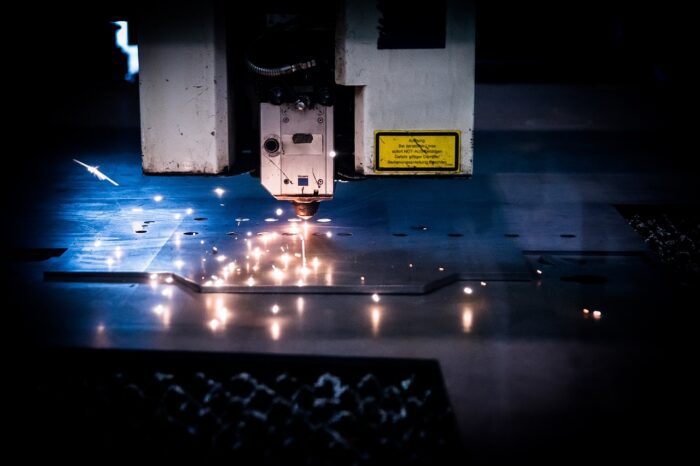
Choosing a CNC plasma table involves evaluating several critical engineering parameters to ensure optimal performance and return on investment. The machine’s design directly impacts cut quality, operational efficiency, and long-term reliability in a fabrication environment. Understanding these technical distinctions is paramount for any tooling engineer.
Modern plasma cutting systems offer diverse configurations, each tailored for specific production demands. Factors such as fume extraction methods, torch height control precision, structural integrity, and software integration collectively define a system’s capabilities and suitability for various applications.
Fume Extraction: Water Table versus Downdraft
Effective fume and dust control is a primary consideration for any CNC plasma cutting operation, crucial for both operator safety and equipment longevity. Two predominant methods exist: water tables and downdraft extraction systems. Each presents distinct advantages and disadvantages in terms of performance, maintenance, and environmental impact.
Water tables submerge the cutting area, trapping smoke, sparks, and molten particulates directly into the water. This method can capture 90-95% of fumes and dust, significantly reducing airborne contaminants and noise levels in the workshop. Water also helps cool the material rapidly, minimizing warpage and reducing the heat-affected zone on parts.
However, water tables require regular cleaning to remove accumulated dross and can pose challenges with certain materials. Cutting aluminum in water, for instance, may generate hydrogen gas bubbles, necessitating aeration systems to prevent ignition hazards. Water tables generally have a lower initial cost compared to downdraft systems, as they do not require extensive external dust collectors or ductwork.
Downdraft tables operate by drawing air downward through the cutting bed, pulling fumes and dust away from the workpiece and out of the facility via a ventilation system. These systems typically capture 70-80% of dust and smoke. While often having a higher initial cost due to the need for high-capacity industrial dust collectors, blowers, and ductwork, downdraft tables are generally cleaner to maintain without the presence of water.
Downdraft systems prevent material warping by mitigating heat distortion, similar to water tables, but without the associated water management. They also allow for easier retrieval of dropped parts. A potential drawback is the continuous extraction of conditioned shop air, which can lead to higher utility bills, especially in climate-controlled environments.
Precision Control with Torch Height Control (THC)
| Feature | Water Table | Downdraft Table |
|---|---|---|
| Fume/Dust Capture Efficiency | 90-95% | 70-80% |
| Initial Cost | Lower | Higher (due to external equipment) |
| Maintenance | Regular dross removal, water treatment | Cleaner, no water management |
| Part Warpage | Reduced (water cooling) | Reduced (airflow) |
| Material Considerations | Caution with aluminum (hydrogen gas) | Generally versatile |
| Shop Air Impact | Minimal | Removes conditioned air, higher utility costs |
Torch Height Control (THC) is an indispensable automated system for CNC plasma tables, maintaining a consistent standoff distance between the plasma torch and the workpiece. This precise Z-axis regulation is critical for achieving high-quality cuts, extending consumable life, and maximizing productivity. Without THC, manual adjustments would be necessary, leading to inconsistent results and increased material waste.
THC systems primarily operate by monitoring the plasma arc voltage, which is directly proportional to the torch-to-workpiece distance. As the material heats up or warps, especially with thin materials like aluminum or stainless steel, the THC instantly adjusts the torch height to compensate, ensuring a uniform kerf width and preventing torch collisions. This dynamic adaptation is vital for maintaining angular consistency and reducing dross.
Two common types of THC sensing mechanisms are arc voltage control (AVC) and ohmic sensing. AVC measures the plasma arc voltage to infer the torch height, providing fast response times. Ohmic sensing systems use electrical conductivity to precisely locate the material’s surface, often employed for initial plate sensing before the arc is struck.
Advanced THC features include ‘anti-dive protection,’ which prevents the torch from crashing into the material during intricate cuts or small hole operations. Integrated THC systems, often found in high-definition plasma setups, automatically set parameters based on material, thickness, and consumables, further streamlining operations and enhancing cut quality.
Frame Rigidity and Weight for Sustained Accuracy
The structural integrity of a CNC plasma table’s frame and gantry is fundamental to its cutting accuracy and long-term performance. A robust, rigid frame minimizes vibrations and deflection during the cutting process, directly translating to tighter tolerances and superior edge quality. Underbuilt tables often exhibit chatter in curves, inconsistent hole quality, and variations when cutting thicker plate.
Machine build quality affects every cut, with frame design influencing rigidity, alignment, and resistance to distortion over time. Heavy-duty construction, often utilizing materials like heavily ribbed Meehanite cast iron or robust steel, provides the necessary stability for demanding production environments. Precision ground linear guides and helical rack and pinion drives are critical components that ensure smooth, accurate motion across the cutting bed.
While a heavier gantry can enhance stability, it must be balanced with appropriate motor sizing to maintain optimal cutting speeds, especially during rapid direction changes and intricate curves. An overly heavy gantry with insufficient motor power can compromise cut quality by failing to maintain consistent travel speeds. The best quality tables are engineered for consistency, performing reliably across various duty cycles and material thicknesses.
Cutting Bed Size Capacity for Current and Future Needs
Selecting the appropriate cutting bed size is a critical decision that impacts material handling, nesting efficiency, and future production capabilities. The bed dimensions should align with the typical sheet sizes processed in your facility, with common sizes including 4×4 feet, 4×8 feet, and 5×10 feet. These dimensions often correspond to standard metal sheet stock available from suppliers.
For general fabrication, a 4×8-foot table is a popular choice, accommodating standard sheet sizes efficiently. Larger operations or those planning for growth might consider 5×10-foot or even 6×12-foot tables to handle bigger sheets and higher volumes. While smaller tables, such as 2×2 feet, exist, they are often quickly outgrown due to their limiting capacity and difficulty in sourcing appropriately sized material.
Considering future projects and potential material size requirements is essential to avoid premature obsolescence. The cost difference between various table sizes is often less significant than the cost of the electronics, controllers, and plasma power source, making it prudent to invest in a slightly larger table if budget allows. An adequately sized bed optimizes material utilization through efficient nesting, reducing scrap and improving overall profitability.
Seamless Operation Through Software Compatibility
The software ecosystem supporting a CNC plasma table is as vital as the hardware itself, encompassing CAD, CAM, nesting, and machine control functionalities. Seamless compatibility across these platforms ensures an efficient workflow from design to finished part. Integrated CAD/CAM nesting software solutions are widely used, offering comprehensive tools for drawing, toolpath generation, and material optimization.
CAD (Computer-Aided Design) modules provide intuitive drawing tools or allow for importing designs from formats like DXF. CAM (Computer-Aided Manufacturing) software then translates these designs into machine-readable G-code, incorporating critical parameters such as lead-ins, lead-outs, and kerf compensation. Advanced CAM features include true-shape nesting, which intelligently arranges parts on a sheet to maximize material utilization and minimize waste.
Leading software packages like Hypertherm ProNest, SigmaNest, FlashCut, and AJANCAM offer robust capabilities, often with features like automatic error detection, part connection programming, and stock management. The machine controller, which interprets the G-code, must be fully compatible with the chosen CAM software and the plasma power source. Many controllers offer wizards to automatically set THC parameters based on material and consumables, simplifying setup.
Modern software also integrates advanced cutting technologies, such as ‘Smart 360™ hole cutting’ for improved hole quality, even with air plasma, and support for various plate sensing technologies like ohmic and pressure sensing. This comprehensive software integration is key to unlocking the full potential of a CNC plasma cutting system, ensuring precision, efficiency, and adaptability for diverse manufacturing tasks.