
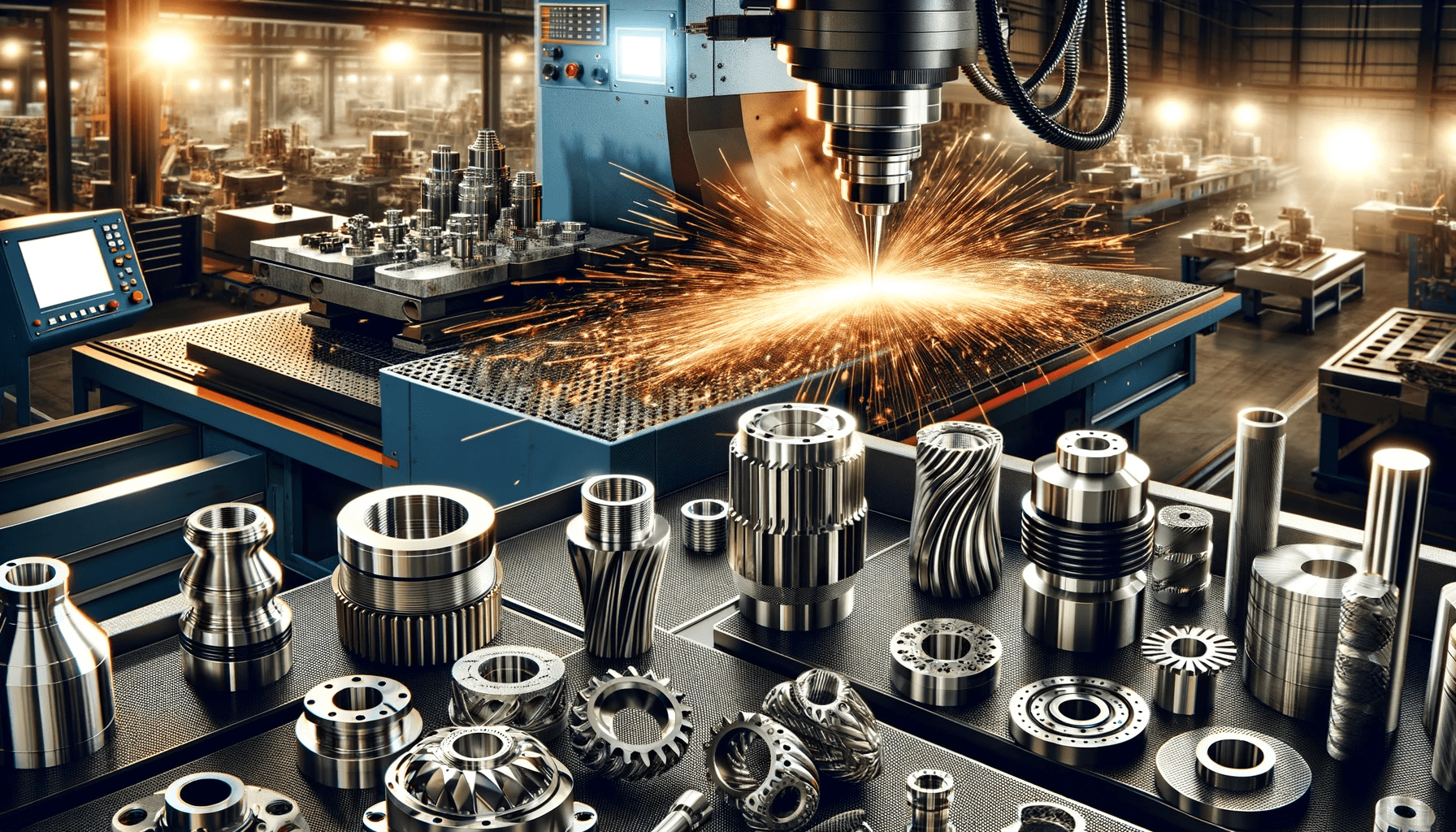
The integration of novel materials into manufacturing processes significantly expands the capabilities of CNC machining. These advanced alloys and composites present unique challenges and opportunities for precision engineering. Modern production demands increasingly rely on components fabricated from materials exhibiting superior strength-to-weight ratios, enhanced thermal resistance, or exceptional wear properties.
Achieving optimal results with these innovative materials requires a deep understanding of their unique properties and the development of specialized machining strategies. Traditional approaches often prove inefficient or detrimental, leading to premature tool wear, poor surface finishes, and compromised part integrity. Engineers must adapt tooling, parameters, and machine rigidity to harness the full potential of these advanced substances.
Machining Titanium Aluminides
Titanium aluminides (TiAl) are intermetallic compounds prized for their high strength-to-weight ratio, excellent stiffness, and superior high-temperature strength, making them ideal for aerospace and automotive applications. However, their low ductility at room temperature and high chemical reactivity at elevated temperatures pose significant machining challenges.
Machining TiAl alloys generates considerable heat, which can lead to rapid tool wear and surface integrity issues like ‘white layer’ formation. Effective cooling strategies, such as high-pressure coolant or cryogenic machining, are crucial to manage thermal effects. Tooling selection typically involves carbide inserts with specialized geometries and advanced coatings.
Recommended cutting tools for titanium alloys often include AlTiN or nACo (aluminum titanium nitride with silicon nitride added) coatings, which enhance lubricity and reduce temperatures at higher cutting speeds, extending tool life. Feeds and speeds must be carefully balanced; generally, lower cutting speeds and moderate feed rates are preferred to minimize heat generation and tool wear.
Fiber-Reinforced Polymers: Precision and Challenges
| Material Type | Typical Hardness (HRC) | Recommended Tooling Material | Primary Coating Recommendation | Typical Surface Speed (SFM) |
|---|---|---|---|---|
| Titanium Aluminides | ~30-40 | Carbide | AlTiN, nACo | 150-300 |
| CFRP | N/A (Abrasive) | Diamond-Coated Carbide | DLC | 300-700 |
| Ultra-High-Temp Ceramics (e.g., SiC) | >60 | Diamond, CBN | N/A (Tool is superhard) | Varies, often grinding |
| Hardened Steel | 45-68 | Solid Carbide, PCBN, Ceramic | AlTiN, TiAlN | 200-400+ |
Fiber-reinforced polymers (FRPs), particularly carbon fiber-reinforced polymers (CFRPs), offer exceptional strength-to-weight ratios and corrosion resistance, making them indispensable in aerospace, automotive, and sporting goods industries. Machining these composite materials, however, presents unique difficulties due to their anisotropic and abrasive nature.
Delamination, fiber pull-out, and rapid tool wear are common issues when machining FRPs. The abrasive carbon fibers quickly dull conventional cutting tools, while the resin matrix is susceptible to heat degradation. Maintaining structural integrity and achieving precise tolerances requires specialized tooling and optimized machining parameters.
Diamond-coated carbide tools are highly recommended for machining CFRPs, as they offer superior wear resistance against the abrasive fibers. For drilling, specific composite drills with unique geometries are crucial to prevent delamination at entry and exit points. High spindle speeds combined with low feed rates are generally advised to minimize stress on the material and reduce heat buildup. Effective dust extraction is also paramount, as carbon fiber dust is hazardous and electrically conductive.
Ultra-High-Temperature Ceramics: Extreme Machining
Ultra-high-temperature ceramics (UHTCs), such as silicon carbide (SiC) and boron nitride (BN), are engineered for extreme environments, offering exceptional hardness, wear resistance, and thermal stability up to 2000°C in inert atmospheres. These properties, while beneficial in application, make them notoriously difficult to machine with conventional methods.
The extreme hardness and inherent brittleness of UHTCs lead to rapid tool wear and a high risk of chipping or cracking during machining. Traditional mechanical machining often results in severe surface and subsurface damage. Therefore, specialized abrasive machining techniques are typically employed for precision shaping and finishing.
Diamond tools, including diamond grinding wheels, diamond wire saws, and cubic boron nitride (CBN) tools, are essential for effectively cutting and shaping UHTCs. Boron nitride, often referred to as ‘white graphite,’ is machinable to tight tolerances using standard carbide-tipped tooling for most grades, though ZSBN grades may require diamond-tipped tools. For silicon carbide, resin-bonded and metal-bonded diamond cutting blades are used for precision and complex shapes, respectively.
Specialized Tooling Coatings for Demanding Applications
Advanced tooling coatings are critical enablers for machining innovative materials, significantly extending tool life and improving surface finish. These coatings act as thermal barriers and reduce friction, allowing for more aggressive cutting parameters and enhanced productivity.
Physical Vapor Deposition (PVD) and Chemical Vapor Deposition (CVD) are primary methods for applying these thin films. Coatings like Aluminum Titanium Nitride (AlTiN) and Titanium Aluminum Nitride (TiAlN) are widely used for machining tough materials such as hardened steels, high-temperature alloys, and titanium. AlTiN, in particular, forms a protective aluminum oxide layer when heated, increasing its hardness and heat resistance.
Other specialized coatings include Titanium Carbonitride (TiCN) for improved hardness and lubricity over TiN, and Diamond-Like Carbon (DLC) for non-ferrous materials and composites, known for its low friction and high hardness. The selection of the appropriate coating depends heavily on the workpiece material, machining conditions (wet or dry), and desired tool performance.
Hard Metal Milling: Strategies and Performance
Milling hard metals, defined as materials with hardness typically ranging from 45 to 68 HRC, demands robust strategies and specialized tooling to prevent rapid wear and ensure part integrity. These materials, including hardened tool steels and superalloys, generate immense heat and cutting forces during machining.
Successful hard milling relies on highly rigid CNC machines, short tool overhangs, and stable workholding. Cutting tools made from solid carbide, Polycrystalline Cubic Boron Nitride (PCBN), or ceramics are essential. PCBN and ceramic inserts are particularly effective for finishing operations on hardened steels, with CBN excelling in achieving tight tolerances.
Feeds and speeds for hard metal milling are generally lower than for softer materials. For hardened steels, cutting speeds are often 25% to 30% of those used for non-hardened materials, with feed rates significantly reduced to prevent excessive heat and tool wear. Maintaining a positive chip load is critical to avoid rubbing, which can lead to work hardening and premature tool failure.