
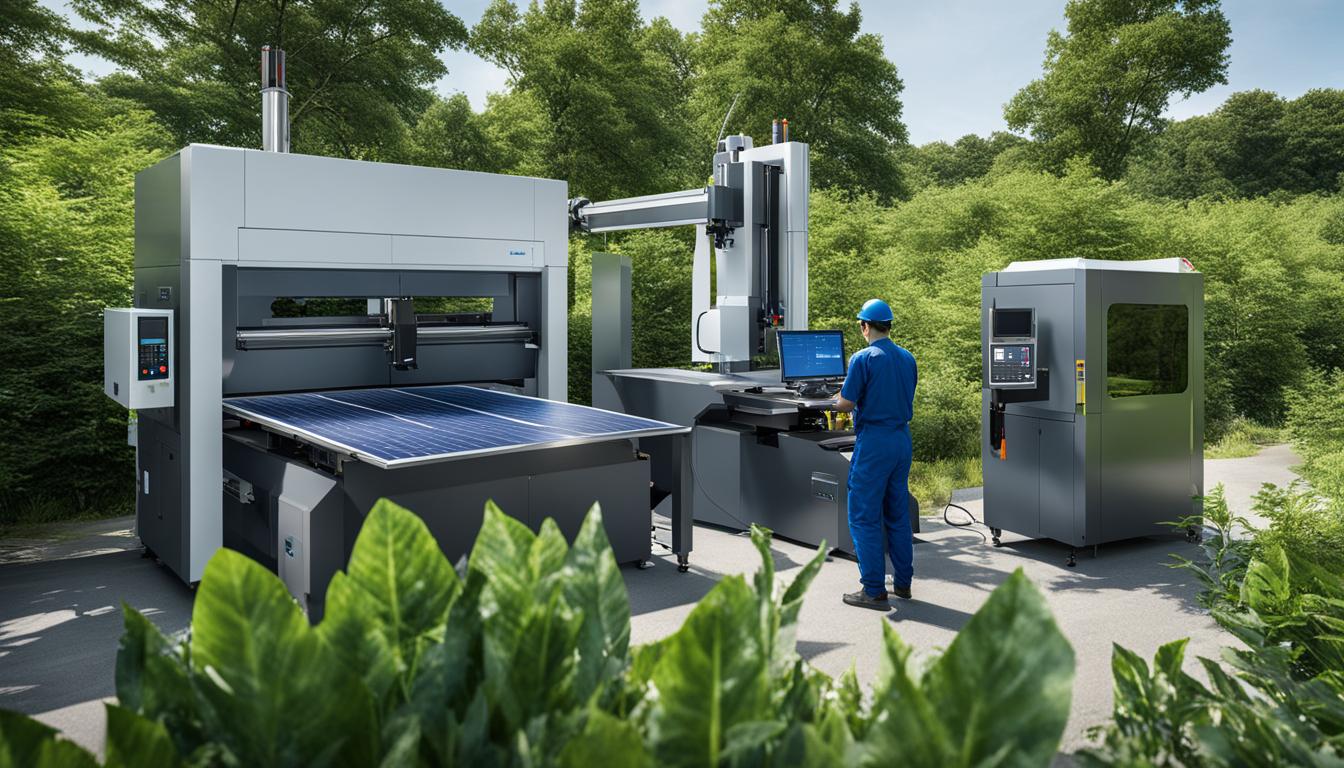
Modern CNC machining operations are increasingly adopting sustainable practices to mitigate environmental impact and enhance operational efficiency. This industry-wide shift, particularly prominent in 2024, focuses on reducing waste, conserving energy, and minimizing hazardous emissions throughout the manufacturing lifecycle.
Optimizing Coolant Delivery for Environmental Impact
Traditional flood cooling systems, while effective for heat dissipation and chip evacuation, consume vast quantities of fluid and generate significant waste. These systems often require extensive maintenance, including monitoring concentration levels, filtration, and periodic disposal, which contributes to high operational costs and environmental concerns. Improper disposal can lead to water and soil contamination, posing serious ecological risks.
Minimum Quantity Lubrication (MQL) systems represent a substantial advancement in sustainable coolant delivery. MQL applies a minuscule, precise amount of lubricant directly to the cutting zone, often as an aerosolized mist, significantly reducing fluid consumption compared to flood cooling. This method can decrease coolant-related costs by up to 15% and reduce overall manufacturing costs by eliminating fluid treatment, recycling, and disposal expenses.
MQL operates by atomizing lubricant into an airflow, delivering it to the tool-workpiece interface to reduce friction and heat generation. This targeted lubrication extends tool life, improves surface finish, and often allows for faster feed rates, enhancing productivity. While MQL is highly effective for materials like aluminum and cast iron, it can be less efficient for mass heat transfer in hard metals such as steel, where flood cooling might still offer advantages.
Beyond MQL, CO₂-based cooling systems, such as Fusion Coolant Systems’ Pure-Cut®, offer a ‘zero coolant waste’ solution. These systems leverage supercritical CO₂ (scCO₂) as a cooling medium, which evaporates harmlessly after use, eliminating residue and disposal needs. Such innovations drastically improve workplace air quality by reducing airborne particles and coolant mist, creating a cleaner and safer environment for operators.
Even with advanced low-emission systems, some mist generation is inherent to CNC machining, especially with high-speed operations or high-pressure coolant delivery. High-performance coolant mist collectors are therefore crucial for maintaining air quality, capturing fine droplets, and preventing their release into the atmosphere. These collectors protect worker health by minimizing exposure to hazardous airborne particles and extend machine longevity by preventing mist from settling on components.
Implementing Advanced Closed-Loop Water Management
| Feature | Minimum Quantity Lubrication (MQL) | Traditional Flood Coolant |
|---|---|---|
| Fluid Consumption | Minimal (milliliters/hour) | High (large volumes) |
| Environmental Impact | Low (biodegradable oils, less waste) | High (disposal costs, contamination risk) |
| Cooling Mechanism | Friction reduction, targeted lubrication | Mass heat transfer, quenching |
| Chip Quality | Clean, near-dry, higher recycling value | Wet, contaminated, lower recycling value |
| Maintenance | Lower (no large reservoir, less bacterial growth) | Higher (monitoring, filtration, disposal) |
| Health Risks | Lower (reduced mist, non-toxic oils) | Higher (mist inhalation, skin irritation) |
| Suitability | Aluminum, cast iron, precision applications | Hard metals (steel, stainless steel), heavy-duty |
Closed-loop water systems are fundamental to sustainable CNC machining, significantly reducing water consumption and minimizing environmental impact. Unlike open systems that continuously draw and discharge water, closed-loop setups recirculate the same cooling medium within a sealed circuit. This design drastically cuts down on the need for fresh water replenishment, supporting broader water conservation goals.
These systems offer precise temperature control, which is critical for maintaining consistent machining performance and extending equipment life. By isolating the cooling medium from external contaminants, closed-loop systems ensure high cleanliness, preventing the buildup of scale, corrosion, and biological fouling that can plague open systems. This enhanced control over fluid quality also reduces maintenance requirements and associated costs.
Effective coolant recycling systems are integral to closed-loop operations, especially for water-based coolants. These systems collect used coolant, chips, and debris, then employ multi-stage filtration, tramp oil separation, and purification processes to make the coolant reusable. Advanced filtration can remove particulates down to one micron and separate tramp oils, significantly extending coolant life and reducing disposal volumes.
While highly beneficial, closed-loop systems require careful management of coolant chemistry. The continuous recirculation can lead to a buildup of salts, metals, and treatment chemicals, necessitating real-time monitoring of parameters like pH and inhibitor levels. Proper selection of additives, such as corrosion inhibitors and biocides, is crucial to prevent degradation and ensure the system’s long-term efficacy and environmental safety.
Maximizing Energy Efficiency in CNC Machine Operation
Reducing energy consumption in CNC machining extends beyond active cutting, encompassing idle periods and auxiliary systems. Modern CNC machines incorporate advanced features designed to minimize power draw during non-operational phases, contributing significantly to overall energy savings. Implementing smart standby modes and automated shutdown protocols are crucial for mitigating ‘phantom loads’ that can account for 15% to 25% of a facility’s total energy consumption.
CNC machines now feature optimized servo motors and variable frequency drives (VFDs) that dynamically adjust power consumption based on actual load requirements. Regenerative braking systems further enhance efficiency by capturing and reusing kinetic energy generated during deceleration, effectively converting it back into electrical energy. These innovations can reduce energy consumption by up to 30% compared to older models.
Implementing intermediate standby states, rather than a simple on/off approach, allows CNC centers to power down components selectively for short pauses versus overnight shutdowns. For instance, a 5kW servo drive can still draw 250-750W when idle, highlighting the importance of granular energy management. Automated end-of-shift sequences ensure consistent power-down procedures, eliminating reliance on manual operator actions.
Adopting an ISO 50001-compliant energy management system provides a structured framework for organizations to systematically improve energy performance. This international standard helps identify significant energy uses, set reduction targets, and implement continuous improvement strategies, leading to lower operating costs and reduced greenhouse gas emissions. Real-time monitoring of energy consumption data through IoT-enabled systems allows for proactive adjustments and predictive maintenance, further optimizing efficiency.
Strategic Recycling of Machining Byproducts
Recycling metal chips, particularly aluminum, is a cornerstone of sustainable CNC machining, transforming what was once considered waste into a valuable resource. Aluminum recycling requires only about 5% of the energy needed for primary production from bauxite ore, resulting in substantial reductions in greenhouse gas emissions. This energy efficiency directly lowers operational costs and minimizes the environmental footprint of manufacturing.
Aluminum chips generated during CNC operations, such as milling, turning, and drilling, represent a significant untapped resource. Properly collected and processed, these chips can yield up to 50% of the original raw stock price per kilogram, offering considerable economic value. The global metal recycling market, valued at USD 850.0 billion in 2023, is projected to grow, with aluminum dominating the market share.
Effective chip management involves several critical steps to maximize recycling value. Sorting chips by material type is paramount, as mixing different alloys can significantly diminish their resale value. Advanced techniques like centrifugation and magnetic separation remove contaminants such as oil and other additives, ensuring the recycled material meets stringent quality criteria for reuse.
Compacting loose chips into briquettes dramatically reduces their volume by up to 90%, minimizing storage, handling, and transportation costs. This process also recovers residual coolants and oils, which can be returned to the recycling cycle. Briquetting improves melting behavior, leading to higher yields in remelting processes due to less burning and oxide formation.
Current scrap aluminum prices vary based on purity and alloy, with clean aluminum extrusions reaching up to $0.85 per pound and cast aluminum around $0.50 per pound as of early 2026. Investing in automated chip processing lines, from in-floor collection to furnace feed systems, ensures optimal efficiency in energy consumption and human resources, aligning with regulatory compliance and sustainability initiatives.
Holistic Eco-Conscious Manufacturing Integration
Eco-conscious manufacturing in CNC operations extends beyond individual components, embracing a holistic approach that integrates advanced technologies and circular economy principles. This involves leveraging Industry 4.0, Artificial Intelligence (AI), and the Internet of Things (IoT) to optimize production processes in real time, minimizing waste and energy consumption. Smart factories, for instance, utilize predictive analytics and real-time monitoring to ensure efficient resource use and reduce carbon footprints.
A significant trend in sustainable CNC machining is the increasing adoption of renewable energy sources. Many manufacturing facilities are integrating solar panels and wind turbines to power their operations, reducing reliance on fossil fuels and minimizing pollution. Government incentives and tax credits further encourage businesses to transition to these cleaner, more sustainable power solutions.
The selection of materials and coolants plays a crucial role in eco-conscious manufacturing. There is a growing emphasis on using recyclable materials and eco-friendly lubricants and coolants, such as biodegradable options that are free of chlorinated paraffin and sulfur. These innovative coolants offer superior cooling performance, extended service life, and reduced health risks for operators, while minimizing environmental impact during disposal.
Precision machining, inherent to CNC technology, also contributes to sustainability by minimizing material waste through optimized cutting paths and reduced rework. Achieving tight tolerances, often within ±0.001 inches (±0.025 mm) for precision work, ensures components fit and function flawlessly, reducing the need for scrapped parts. This level of accuracy is critical in industries like aerospace and medical devices, where even slight deviations can cause significant issues.
The integration of additive manufacturing (3D printing) with traditional subtractive CNC processes offers a hybrid approach to further reduce material waste and energy consumption. This synergy allows for the creation of complex geometries with improved material properties, shortening production cycles and enhancing overall resource efficiency. Such comprehensive strategies are vital for achieving a truly circular economy in manufacturing.