
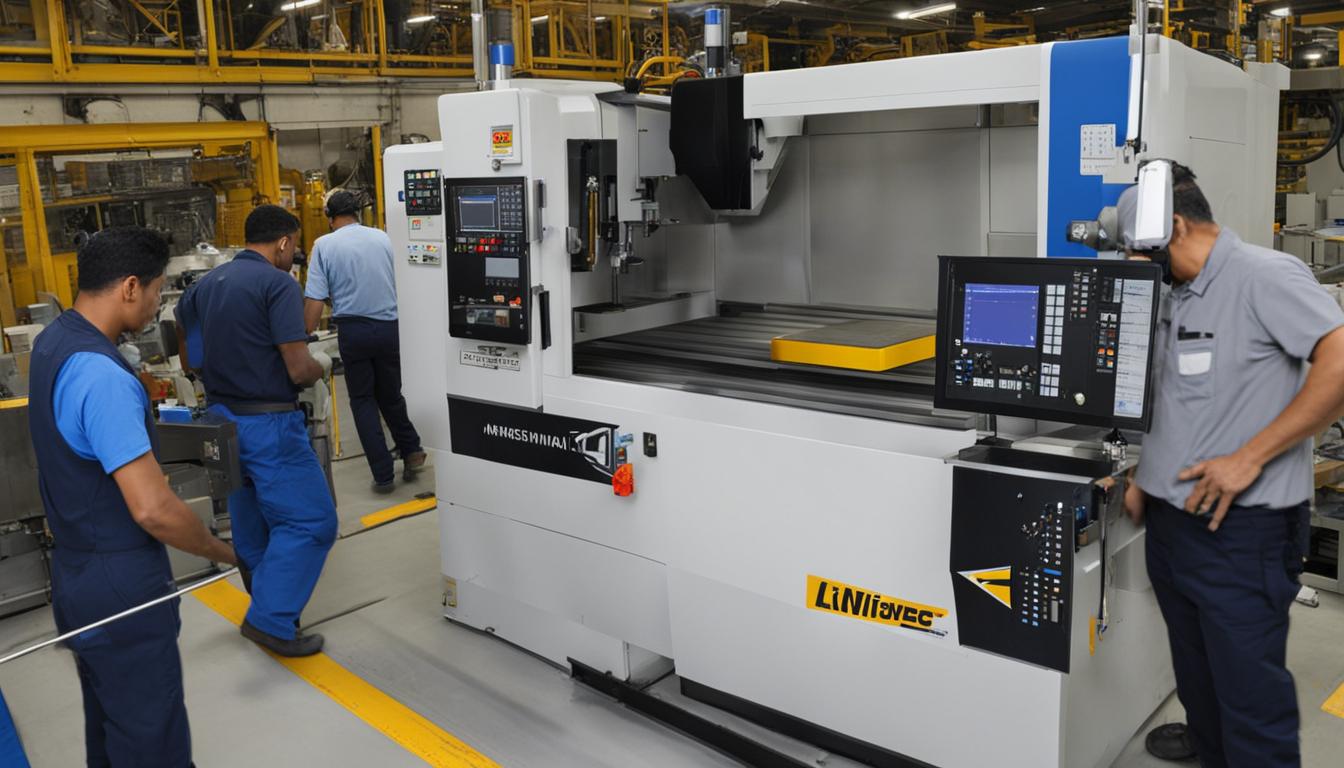
Unplanned downtime significantly impacts CNC machine productivity and profitability. Implementing strategic automation and robust planning methodologies can drastically reduce idle time, ensuring consistent output and optimized resource utilization. Modern manufacturing environments demand proactive approaches to keep spindles running and production flowing efficiently.
Achieving high machine utilization requires a multi-faceted strategy, encompassing advanced hardware solutions and intelligent software systems. By addressing common bottlenecks in job changeovers, material handling, and maintenance, manufacturers can transform their operational efficiency.
Integrating Pallet Changer Systems for Continuous Operation
Pallet changer systems are fundamental to minimizing idle time on CNC machines by enabling ‘lights-out’ or unattended machining. These systems allow operators to set up new workpieces on an external pallet while another part is being machined, drastically reducing the time a machine sits idle between jobs. This parallel setup capability is crucial for high-mix, low-volume production environments.
Zero-point clamping systems are often integrated with pallet changers, offering exceptional repeatability, typically ≤0.003 mm. This precision ensures that pallets can be swapped quickly without requiring re-zeroing or extensive alignment checks, which traditionally consume valuable machine time. Such systems are vital for maintaining consistent part quality across batches.
Automatic pallet changers, particularly those with rotary libraries offering up to 180 stations, facilitate extended unattended operation. This allows for long production runs overnight or over weekends, maximizing spindle uptime and increasing overall equipment effectiveness (OEE). The ability to pre-stage numerous jobs significantly enhances throughput.
Leveraging Robotic Machine Tending for Enhanced Throughput
| Parameter | Standard Tolerance (mm) | High Precision Tolerance (mm) |
|---|---|---|
| Linear Dimensions (Milling/Turning) | ±0.13 (±0.005″) | ±0.025 (±0.001″) |
| Reamed Holes | N/A | ±0.0127 (±0.0005″) |
| Feature Location | N/A | ±0.051 (±0.002″) |
Robotic machine tending automates the repetitive and often labor-intensive tasks of loading raw parts and unloading finished components from CNC machines. This automation frees human operators to focus on higher-value activities such as quality inspection, programming, or supervision, directly addressing skilled labor shortages.
Industrial robot arms and collaborative robots (cobots) are both viable options for machine tending. Cobots, like the Universal Robots UR10e, are particularly suited for job shops new to automation due to their simplified programming and ability to work safely alongside humans, often requiring less guarding. They can be quickly redeployed between machines, offering flexibility for varied production needs.
Automated tending systems provide consistent cycle times, eliminating the variability inherent in manual loading due to operator fatigue or other interruptions. This consistency leads to improved part quality and allows for 24/7 lights-out production, significantly increasing machine utilization. Return on investment (ROI) for robotic tending projects often materializes within 1-2 years, driven by labor savings and increased uptime.
Optimized Job Scheduling for Peak Efficiency
Effective job scheduling is paramount for maximizing CNC machine utilization and minimizing idle periods. Dynamic scheduling systems, which can adjust workflows based on real-time data, are essential for efficient resource allocation. Companies utilizing software-driven scheduling have reported up to a 25% reduction in lead times.
Finite capacity scheduling is a critical methodology for high-mix, low-volume environments, preventing overcommitment by explicitly modeling machine and labor constraints. This contrasts with heuristic or ‘infinite’ scheduling, which can lead to unrealistic production promises. Software solutions like Jobpack, PlanetTogether, and User Solutions’ RMDB are designed for complex job shop environments.
Integrating real-time machine monitoring data into scheduling software is crucial. This allows for instant detection of downtime, monitoring of cycle-time variations, and identification of bottlenecks before they escalate. Feeding actual performance data back into future schedules creates a continuous feedback loop, improving accuracy and adherence to production plans.
Implementing Robust Preventive Maintenance Plans
Preventive maintenance (PM) is a proactive strategy to service CNC machine components on a schedule, preventing wear from degrading part accuracy or causing unplanned downtime. This approach significantly reduces emergency repairs, scrapped parts, and production interruptions, which can cost an average of $85,000 per incident.
A structured PM schedule includes daily operator checks, weekly lubrication and inspection tasks, monthly system performance reviews, and annual major overhauls. Daily checks involve chip removal, coolant level verification, and visual inspections. Weekly tasks extend to cleaning motion components, inspecting belts, and checking coolant filters.
Monthly and quarterly PMs delve deeper, covering electrical cabinet ventilation, machine alignment, and hydraulic system inspections. Annual maintenance typically involves comprehensive calibration, spindle analysis, and replacement of fluids like hydraulic oil and way lube. Predictive maintenance, utilizing data trends from smart chuck systems, can further optimize these schedules by anticipating component fatigue or degradation.
Here is a general overview of standard CNC machining tolerances and typical feeds and speeds for common materials:
Feeds and speeds are highly dependent on material, tool geometry, and machine rigidity. For aluminum, typical spindle speeds range from 8,000–12,000 RPM with feed rates of 40–80 IPM. Hardwoods like walnut generally use 6,000–8,000 RPM with 60–100 IPM. Carbon fiber requires higher RPM (12,000–18,000) but slower feeds (30–60 IPM) to prevent fraying. In turning, roughing operations use higher feeds (0.25–0.5 mm/rev) for rapid material removal, while finishing employs lower feeds (0.05–0.15 mm/rev) for surface quality.
Implementing Fast Workholding Quick-Change Solutions
Rapid workholding changeover systems are essential for reducing setup times, especially in environments with frequent part variations. Traditional workholding methods can lead to significant idle time during fixture changes. Modern solutions focus on speed, precision, and repeatability to keep machines cutting.
Pneumatic and hydraulic quick-change workholding systems offer substantial advantages. Pneumatic systems, for instance, can reduce setup time by up to 90% and provide high repetition accuracy of ±0.005mm. They use compressed air to rapidly engage and disengage clamps, ensuring consistent clamping force and enhancing precision. These systems are ideal for automation and repetitive operations.
Magnetic workholding systems are also gaining traction for their ability to provide strong, stable clamping force and superior precision, particularly for thin-walled or easily deformable materials. They offer minimal positioning errors due to standardized clamping and high repeatability, supporting consistent quality across production batches. Quick-change jaw systems on lathe chucks allow operators to swap jaws in seconds, directly translating to increased profit margins.