
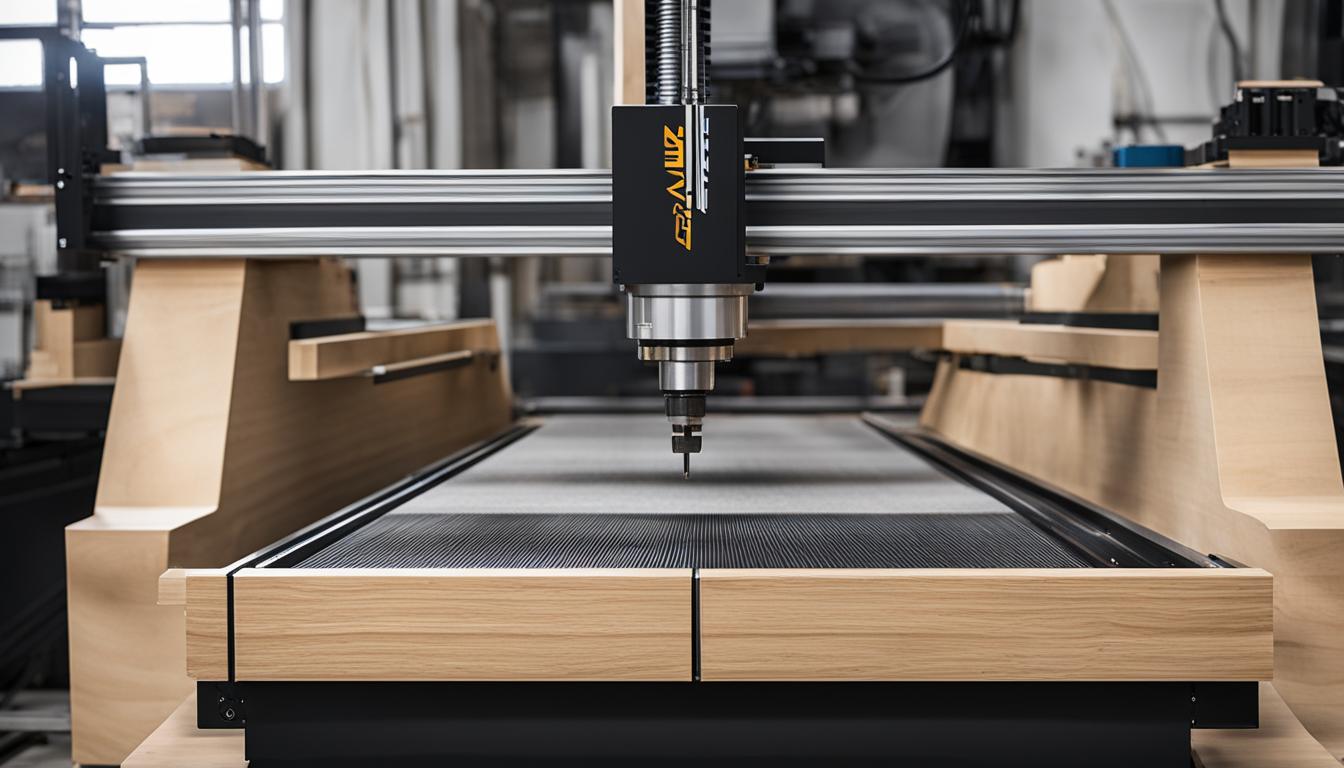
Precision woodworking operations increasingly rely on Computer Numerical Control (CNC) technology to achieve intricate designs and repeatable accuracy. Modern CNC routers offer enhanced capabilities, moving beyond basic cutting to complex carving and joinery. These machines integrate advanced hardware with sophisticated software, streamlining the entire fabrication process from digital design to finished product.
The current generation of CNC woodworking tools emphasizes user-friendliness, robust construction, and seamless software integration. Shops of all sizes, from hobbyist garages to production floors, can now access powerful systems that deliver consistent, high-quality results. This accessibility transforms traditional woodworking, allowing for greater creativity and efficiency in production.
CNC Shark Router Series: Performance and Specifications
Next Wave CNC’s Shark router series represents a significant advancement in accessible, high-performance woodworking CNCs. Models like the CNC Shark HD510 and HD520 are engineered with industrial-grade components, featuring heavy-duty aluminum and steel-reinforced gantries. These machines utilize extruded aluminum router mount systems, interlocking aluminum tables, and linear rails with anti-backlash, wear-compensated lead screws on all axes, ensuring superior accuracy and reliability.
The HD5 series is designed to accommodate 2-1/4 HP routers or Next Wave’s water-cooled spindle systems, making them versatile for various materials including wood, soft metals, composites, and plastics. Standard packages often include Vectric VCarve Desktop software, a color pendant controller, and patented Virtual Zero Unlimited software. This software maps material surfaces to auto-adjust G-code, compensating for warped workpieces and maintaining constant cutting depth.
Next Wave CNC offers various configurations, including the HD5 Standard, Plus, and Pro packages, each with incremental enhancements. The Pro package, for instance, features a 3HP water-cooled spindle and a true closed-loop, encoded motor system, achieving positional accuracy of ±0.001 inches and speeds up to 1,000 inches per minute. These specifications highlight the series’ capability for demanding projects requiring exceptional precision.
Standard tolerances for CNC-routed parts in woodworking typically range from ±0.2 mm to ±0.3 mm, depending on the material and machine. For instance, CNC Creations reports achieving ±0.2 mm for CNC-routed parts in general, while for MDF and melamine-faced MDF, a tolerance of ±0.3 mm is common. Precision tolerance in some CNC machining can be as tight as ±0.001 inches (0.025 mm) or better for specialized applications.
Streamlined Control: Pendant Units and Ready-To-Use Systems
| Material Type | Bit Diameter (inches) | Spindle Speed (RPM) | Feed Rate (IPM) | Chip Load (IPT) | Depth of Cut (DOC) |
|---|---|---|---|---|---|
| Softwood (Pine, Spruce) | 1/4″ | 18,000 – 20,000 | 100 – 150 | 0.003 – 0.004 | Up to 1x Diameter |
| Hardwood (Oak, Maple) | 1/4″ | 16,000 – 18,000 | 80 – 120 | 0.003 – 0.004 | 0.5x – 1x Diameter |
| MDF / Particle Board | 1/4″ | 18,000 – 20,000 | 110 – 130 | 0.004 – 0.007 | Up to 1x Diameter |
| Acrylic | 1/4″ | 14,000 – 16,000 | 70 – 100 | 0.006 – 0.009 | 0.5x Diameter |
Modern CNC woodworking machines increasingly feature intuitive pendant control handheld units, significantly enhancing operator workflow and convenience. These units typically incorporate color touchscreens, providing clear visual feedback and easy navigation through machine functions. Operators can manage job files, initiate cuts, jog axes, and perform tool changes directly from the pendant, reducing reliance on a dedicated computer during operation.
Many contemporary pendant controllers offer advanced features such as offline CNC control, allowing the machine to operate independently without a PC, which improves system stability. Some units integrate high-resolution touch displays and optional Wi-Fi connectivity for remote monitoring and data transfer, aligning with smart factory systems.
Ready-to-use woodworking CNCs are transforming accessibility for small shops and hobbyists. Brands like Next Wave, Shapeoko, and OneFinity offer machines that come with essential components, software, and support, enabling users to begin cutting projects quickly. These systems often include pre-configured control software and basic CAD/CAM packages, minimizing the initial learning curve.
These integrated solutions prioritize ease of setup and operation, making CNC technology less intimidating for new users. Features such as modular designs, robust ball screw systems for rigidity, and closed-loop stepper motors that maintain position even after power loss are becoming more common, offering professional-grade capabilities in a garage-friendly footprint.
Integrated CAD/CAM Software for Woodworking
Integrated CAD/CAM software is fundamental to modern CNC woodworking, bridging the gap between design conception and machine execution. These platforms allow users to design parts (CAD) and then generate the necessary toolpaths and G-code (CAM) within a single environment. This seamless workflow minimizes errors and accelerates the production cycle.
Vectric’s product line, including VCarve Pro and Aspire, remains a popular choice for woodworking. VCarve Pro excels in 2D cutting, nesting, and 2.5D machining, ideal for cabinetry and signage. Aspire extends this capability with comprehensive 3D modeling and relief sculpting tools, allowing for intricate artistic designs and complex 3D machining strategies.
Autodesk Fusion 360 offers an all-in-one CAD/CAM/CAE platform, particularly powerful for complex 3D modeling, custom joinery, and parts with intricate details. While it has a steeper learning curve, its integrated environment and advanced simulation capabilities make it invaluable for engineering-grade output and verifying toolpaths before machining.
For beginners, browser-based options like Easel provide a low-friction entry point, combining basic design tools with G-code generation and direct machine control. These simpler interfaces are excellent for learning fundamental CNC concepts before transitioning to more advanced software.
Small Shop Carving Tools and Feeds & Speeds
Small shop carving tools for CNC routers encompass a variety of specialized bits designed for intricate detail and efficient material removal. Common types include V-bits for engraving and sharp details, ball nose end mills for smooth 3D contours, and tapered ball nose bits for fine relief carving. The selection of the correct tool geometry is critical for achieving desired surface finishes and preventing tool breakage.
Material properties significantly influence tool selection and machining parameters. Hardwoods like oak and maple require different approaches than softwoods such as pine or engineered materials like MDF. Hardwoods are denser and generate more heat, necessitating careful feed rate and RPM adjustments to prevent burning. MDF, lacking grain structure, produces fine dust that can clog flutes if not properly managed.
Optimizing feeds and speeds is paramount for tool life, cut quality, and efficiency. Chip load, the thickness of material removed by each cutting edge per revolution, is a key parameter. Too low a chip load causes rubbing and excessive heat, dulling the bit, while too high a chip load can lead to tool deflection or breakage.
General guidelines for spindle speed in woodworking typically range from 16,000 to 24,000 RPM, with larger diameter bits often requiring lower RPMs to maintain safe peripheral speeds. Feed rates must be adjusted proportionally to RPM and the number of flutes to achieve the optimal chip load for the specific material.
These values serve as starting points; actual parameters may require fine-tuning based on specific machine rigidity, tool geometry, and desired surface finish. Monitoring chip formation (small, solid flakes are ideal, not dust or thick splinters) and listening for chatter are crucial for optimizing settings.