
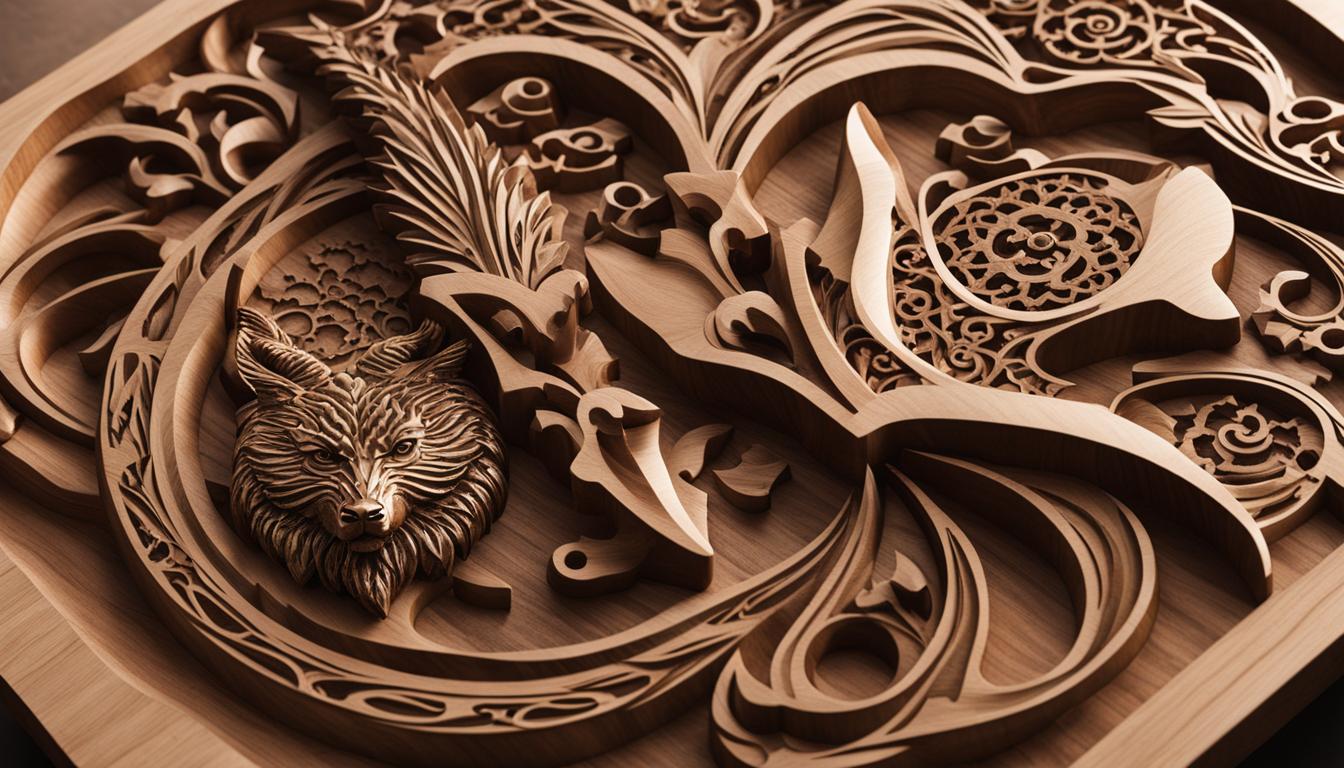
The CNC Shark, a prominent desktop CNC router series from Next Wave CNC, offers hobbyists and small workshops robust capabilities for precision machining across various materials. These machines are designed for detailed work, providing computer-controlled accuracy for tasks traditionally performed by hand. Models like the Shark HD510 PLUS® feature a 28” x 36” table and 25” x 25” x 7” XYZ travel, making them suitable for a range of projects.
Equipped with industrial-grade components, including heavy-duty aluminum and steel reinforced gantries, linear rails, and anti-backlash lead screws, the CNC Shark ensures reliable performance. The system often includes a 2HP air-cooled spindle and a 10.1” Android-based color touch screen pendant for intuitive control.
Desktop Router Wood Carving Capabilities
CNC Shark machines excel at wood carving, transforming digital designs into tangible wooden art. They can engrave, cut, and shape various natural wood species and wood composites with high precision. Hardwoods like maple, walnut, and cherry are particularly effective for capturing fine details in relief carvings due to their dense grain structure.
For efficient wood carving, selecting the appropriate router bits is crucial. Spiral upcut bits are commonly used for roughing passes to remove bulk material, while ball nose bits are essential for smooth 3D contours and finishing passes. Tapered ball nose bits offer even finer detail in tight spaces, minimizing breakage risk.
Optimal feeds and speeds for wood carving vary by wood type and bit size. A common starting point for hobbyist CNC work on wood is between 16,000 and 24,000 RPM. Depth of cut (DOC) should generally be equal to or less than the bit diameter, with shallower passes for finer detail and harder woods.
Workholding is critical to prevent material movement during carving. Clamps are standard, but for thicker materials, screws may be necessary, ensuring they are placed outside the toolpath. Double-sided tape can secure softer or thinner stock effectively.
Precision in 3D Relief Ornament Carving
| Parameter | Wood Carving (Hardwood) | Acrylic Milling | Aluminum Milling (Soft) |
|---|---|---|---|
| Spindle Speed (RPM) | 16,000 – 24,000 | ~18,000 – 28,000 | ~10,000 – 18,000 (lower for softer metals) |
| Feed Rate (IPM / mm/min) | ~50-100 IPM (1270-2540 mm/min) | 75-300 IPM (1905-7620 mm/min) | ~20-60 IPM (500-1500 mm/min) |
| Depth of Cut (DOC) | 0.5 – 1.0 x Bit Diameter | ~0.5 x Bit Diameter | ~0.25 – 0.5 x Bit Diameter |
| Recommended Bits | Spiral Upcut, Ball Nose, Tapered Ball Nose | Single/Double O-Flute, Solid Carbide | Single Flute, Solid Carbide (specific for metal) |
| Coolant/Lubrication | Not typically required | Air blast or Mist cooling recommended | Required (e.g., cutting fluid, mist) |
| Standard Tolerance | ±0.005″ (±0.127 mm) | ±0.005″ (±0.127 mm) | ±0.005″ (±0.127 mm) |
Creating intricate 3D relief ornaments is a core strength of the CNC Shark, allowing users to sculpt depth, shadows, and texture into materials. This process involves designing or importing a 3D model, generating toolpaths in CAM software, and executing roughing and finishing passes.
Roughing passes typically employ flat end mills to remove excess material quickly, leaving a small stock allowance for the finishing pass. Finishing passes then utilize ball nose or tapered ball nose bits to achieve smooth contours and fine details.
Stepover, the sideways distance the cutter moves between passes, significantly impacts surface quality. For high-detail finishing, a stepover of 8% to 10% of the tool tip diameter is recommended to minimize sanding. Larger stepovers, while faster, will leave visible ridges.
Standard CNC router tolerances are typically ±0.005 inches (±0.127 mm) for most linear dimensions, which is achievable for general relief carving. For exceptionally fine details or mating parts, tighter tolerances down to ±0.001 inches (±0.025 mm) can be achieved with careful setup and slower machining.
Crafting Custom Sign Lettering
CNC Shark machines are highly effective for producing custom sign lettering, offering versatility in design and material choice. Common techniques include V-carving, pocketing, and profile cutting. Materials like wood, acrylic, and even aluminum composite material (ACM) are frequently used for sign making.
V-groove bits are essential for creating crisp, clean V-carved lettering, which is a popular method for signs. Flat bottom bits are used for pocketing out areas around letters, while ball nose bits can create decorative effects or 3D elements within signs.
For painted signs, applying a vinyl masking film like Oramask 813 before carving helps achieve sharp paint lines and prevents bleed. After painting, gentle heat can aid in removing the masking without pulling up wood grain.
Workholding for sign making often involves securely clamping the material to the machine’s interlocking slotted rigid aluminum table. Ensuring the material is flat and immobile is paramount for consistent letter depth and clean edges.
Plastic and Soft Metal Milling
The CNC Shark series can mill various plastics and soft metals, expanding its utility beyond woodworking. Approved plastics include ABS, acrylic, HDPE, Delrin (POM), expanded PVC, and machinable foam. Soft metals like aluminum and brass are also machinable, though they require specific tooling and lubrication.
Milling plastics requires careful attention to prevent melting and achieve a good surface finish. Sharp, polished single- or double-flute cutters are recommended, with O-flute bits often preferred for softer plastics. High cutting speeds and moderate feed rates help to avoid heat buildup and deformation.
For acrylic, an optimal cutting RPM is around 18,000, with feed rates typically between 75-300 IPM, adjusted for bit size. Using a mist cooling system or air blast is highly beneficial for chip removal and preventing melting in many plastics.
When milling soft metals like aluminum, specialized tools and lubrication are necessary for optimal results. Carbide tools are generally preferred for their hardness and ability to stay sharp longer. Managing tool speed is critical to prevent smearing in softer metals.
Handheld Controller Operation
Operating a CNC Shark machine is streamlined through its handheld controller, often an Android-based color touch screen pendant. This interface allows for direct machine control without constant computer interaction during operation.
The handheld controller facilitates essential functions such as jogging the gantry, setting work offsets (X, Y, and Z zero points), and loading G-code files. Users can precisely position the bit, often using a paper test to establish the Z-zero point accurately.
Before initiating a carving program, the controller ensures the spindle or router is activated and at full speed. The system also includes features like ‘Virtual Zero Unlimited,’ which maps the material surface to compensate for warped or bowed workpieces, automatically adjusting G-code for consistent depth.
Startup procedures are critical, often requiring the power inverter to be turned on before the controller itself to ensure proper spindle activation. The pendant guides users through these steps, displaying status and allowing for program execution and monitoring.