
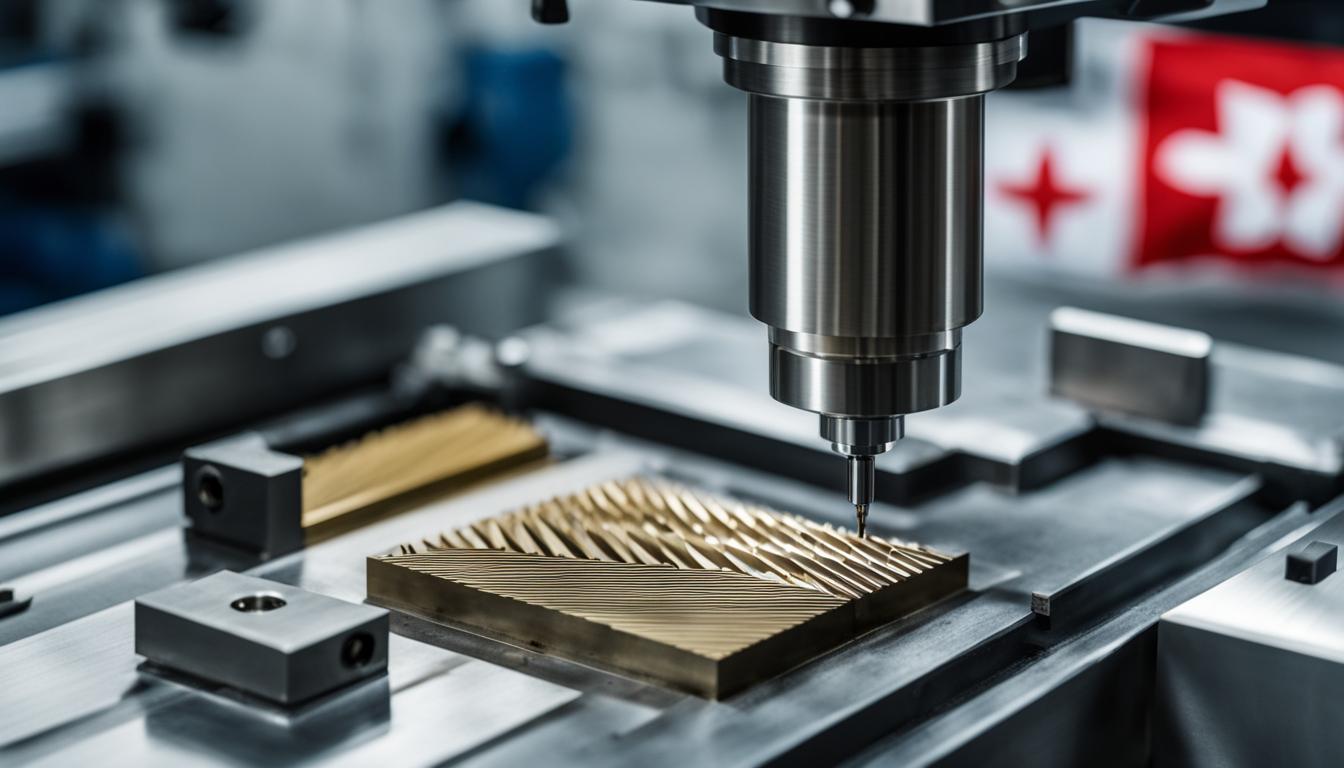
Swiss CNC machining represents a highly specialized manufacturing process, critical for producing small, intricate components with exceptional accuracy. This advanced turning method, originating from Swiss watchmaking, has evolved significantly to meet the demanding requirements of modern industries, including medical, aerospace, and electronics. Its core advantage lies in minimizing workpiece deflection, enabling the creation of parts with extremely tight tolerances and superior surface finishes.
Manufacturers frequently select Swiss CNC machining when components require consistent dimensional control and efficient high-volume production. The process is particularly effective for bar diameters up to approximately 1.50 inches, with many applications focusing on parts under 0.75 inches. This capability ensures that even the smallest and most complex geometries can be manufactured reliably.
Guide Bushing Sliding Headstock Technology
The guide bushing sliding headstock system is the defining feature of Swiss CNC machines, fundamentally differentiating them from conventional lathes. In this configuration, the bar stock material feeds through a guide bushing, which provides rigid support directly at the cutting zone.
This continuous support minimizes workpiece deflection and vibration, even when machining long, slender parts with high length-to-diameter ratios, often exceeding 6:1 or even up to 30:1. By supporting the material so close to the tool, the cutting force’s impact on part accuracy is virtually eliminated, allowing for deeper, single-pass cuts while maintaining precise dimensions.
Guide bushings come in various types, including fixed and rotary designs. Fixed guide bushings remain stationary while the bar stock spins, typically used for tighter tolerance requirements. Rotary guide bushings, which rotate simultaneously with the workpiece, are often preferred for wider parts or when surface finish is critical to prevent marring. Achieving consistent micron tolerances over time necessitates guide bushings with a coaxiality of 0.0002 inches.
High-Volume Small Parts Production
| Machining Process | Typical Diametric Tolerance | Achievable Surface Finish (Ra) |
|---|---|---|
| Conventional CNC Turning | ±0.001″ (25.4 µm) | 32-63 µin |
| Standard Swiss CNC Turning | ±0.0005″ to ±0.001″ (12.7 µm to 25.4 µm) | 16-32 µin |
| Micro-Precision Swiss CNC Turning | ±0.0001″ to ±0.0002″ (2.5 µm to 5 µm) | 8-16 µin |
Swiss CNC machines are exceptionally well-suited for high-volume production of small, intricate components. Their design, featuring automatic bar feeding systems, enables continuous, unattended production runs that can exceed 10,000 to 100,000 parts with remarkable dimensional repeatability.
The ability to perform multiple operations simultaneously within a single setup significantly reduces cycle times and eliminates the need for secondary operations. This streamlined process translates to lower labor costs, reduced work-in-progress, and faster turnaround times, making it a cost-effective solution for large batches.
Micro-Precision Turning Capabilities
Micro-precision turning on Swiss CNC machines achieves extremely tight tolerances, often surpassing what conventional turning can reliably hold on comparable tiny parts. Standard production tolerances typically range from ±0.0002 inches to ±0.001 inches, depending on material, machine calibration, and tooling.
In highly controlled environments, Swiss machining can achieve tolerances as tight as ±0.0001 inches (2.5 microns), comparable to precision grinding processes. This level of accuracy is crucial for components with sub-millimeter features where even slight dimensional drift or burrs can render a part unusable.
Surface finishes commonly range from 16 µin to 32 µin Ra under optimized parameters, with finishes as fine as 8 µin (0.2 Ra µm) achievable without secondary operations. Maintaining such precision requires rigorous process control, including stable bar stock, calibrated tooling, and environmental monitoring to prevent thermal expansion or tool wear from affecting consistency.
Here is a comparison of typical tolerances:
Complex Medical Pin Machining
The medical device industry heavily relies on Swiss CNC machining for producing critical components like surgical instruments, implants, and various pins. This process is ideal for bone screws, pedicle screws, fixation pins, and other small-diameter orthopedic hardware due to its ability to hold extremely tight tolerances.
Swiss CNC machines can hold tolerances as tight as ±0.0002 inches (±0.005 mm) in production, which is vital for thread engagement in bone screws, implant seating interfaces, and fixation hardware. Dimensional accuracy directly impacts mechanical performance and patient outcomes, making this precision non-negotiable.
Common materials for medical pins include titanium alloys (e.g., Ti-6Al-4V ELI), 316LVM stainless steel, MP35N, Nitinol, and PEEK, all of which are effectively machined on Swiss platforms with appropriate tooling. Machining stainless steel, particularly grades like 316, requires optimized speeds and feeds to prevent work hardening and ensure surface quality. Typical cutting speeds for 304 stainless steel with carbide end mills range from 200-250 SFM (60-75 m/min), while 316 stainless steel may require slightly lower speeds of 180-230 SFM (55-70 m/min) due to its higher nickel and molybdenum content.
Live Tooling Side Operations
Live tooling is a significant advancement in Swiss CNC machining, integrating rotating tools such as drills, end mills, and taps directly onto the lathe’s turret. This capability allows for secondary operations like milling, drilling, and tapping to be performed without removing the workpiece from the machine.
The integration of live tooling eliminates the need for additional setups and transfers to other machines, significantly streamlining the manufacturing process. This consolidation reduces cycle times, minimizes part handling, and enhances overall production efficiency and productivity.
Multi-axis Swiss machines, often featuring 7 to 13 axes and multiple spindles, can perform complex operations including turning, drilling, milling, thread cutting, and polygon forming in a single setup. This versatility is particularly beneficial for complex geometries and intricate features, ensuring high accuracy and repeatability by reducing the risk of misalignment errors.