
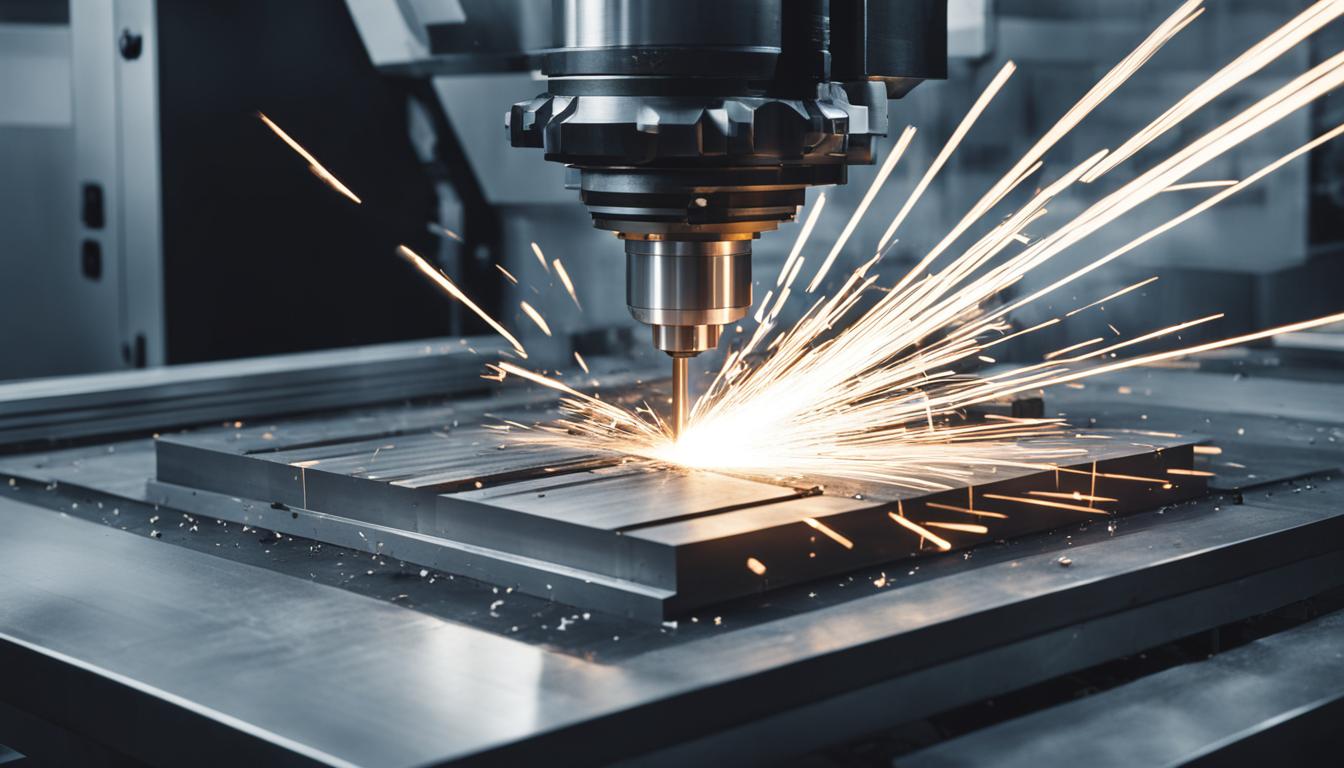
Okuma Corporation stands as a foundational entity in the global manufacturing sector, distinguished by its century-long commitment to machine tool innovation. The company’s unique strategy involves developing and manufacturing both its CNC machine tools and proprietary control systems in-house, a rare comprehensive approach within the industry. This integrated philosophy ensures seamless operation and optimized performance across all machine components, from mechanical structures to advanced software.
Foundations of Precision: High-Rigidity Box Ways
Machine tool rigidity is paramount for achieving consistent precision and superior surface finishes, especially during demanding cutting operations. Okuma machines frequently incorporate high-rigidity box ways, which are integral to their robust construction. These guideways are engineered to provide exceptional vibration damping, a critical advantage when machining hard-to-process materials.
Box ways offer significant benefits over linear guides in applications prioritizing heavy cutting and stability, though linear guides typically allow for faster positioning with quicker acceleration and deceleration rates. Okuma’s LB series, for instance, utilizes a solid slanted-box bed construction, which contributes to its exceptional rigidity and thermal stability. This design minimizes thermal changes, maintaining machining accuracy even under high pressure.
For larger, heavy-duty applications, such as those handled by the MCR series, Okuma employs a double column design. This configuration provides unparalleled structural rigidity, crucial for maintaining stability during the machining of heavyweight materials and supporting enormous dies or structural components. Furthermore, some box ways, like those on the MA-650V vertical machining center, feature internal coolant systems designed to eliminate overheating, ensuring sustained accuracy during prolonged operations.
Unwavering Accuracy: Absolute Position Encoders
| Feature/Parameter | Typical Okuma Specification | Benefit to Manufacturing |
|---|---|---|
| Positional Tolerance (Cadet Lathe) | ±0.0002″ consistently | Ensures high repeatability for tight-tolerance parts. |
| Spindle Speed (MA-650V) | 50-25,000 min⁻¹ (option) | Versatility for heavy-duty cutting and high-speed finishing. |
| Spindle Motor Power (MA-650V) | Up to 30 hp | Aggressive material removal and efficient machining of tough alloys. |
| Rapid Traverse (MA-650V X/Y/Z) | 131 / 131 / 98 fpm | Reduced non-cutting time, increasing overall productivity. |
| High-Speed Spindle (Air Turbine Tools) | 25,000-90,000 RPM, 2 micron accuracy | Enables micro-machining and superior surface finishes on one platform. |
| Thermal Stability (Thermo-Friendly Concept) | Minimizes dimensional changes due to temperature | Consistent accuracy over long production runs without external compensation. |
Precision in CNC machining relies heavily on accurate position feedback, a role fulfilled by absolute position encoders in Okuma machines. Unlike incremental encoders, absolute encoders provide a unique output value for every resolvable shaft position. This means the machine’s true position remains known even after power interruptions or in electrically noisy environments, eliminating the need for a reference return routine.
The advantages of absolute encoders are substantial, including instant position feedback, high accuracy, and inherent resistance to external signal interference. This technology is fundamental to the Okuma OSP control system, which leverages these encoders on all motors. Consequently, the OSP control consistently knows the exact location of components like the Automatic Tool Changer (ATC) and Automatic Pallet Changer (APC).
This capability simplifies recovery from emergency stops, power outages, or resets, requiring only a button press to resume operations. Specific Okuma absolute encoders, such as the E4809-024-019-D, offer high-precision resolution, with some models providing 16,384 pulses per tenth revolution and supporting up to 2048 turns before rollover. Such precise feedback is vital for maintaining tight tolerances in complex machining tasks.
Intelligent Manufacturing: Mechatronics Integration
Okuma’s ‘Mechatronics’ philosophy represents a deep integration of mechanical and electrical engineering, where all critical machine, control, and software components are designed and built synergistically. This holistic approach results in ‘smarter’ CNC machines capable of making real-time, automatic decisions that enhance product quality and reduce cycle times.
A cornerstone of this integration is the Thermo-Friendly Concept, a proprietary solution developed to mitigate the effects of thermal expansion on dimensional accuracy. This concept relies on structural symmetry, anticipating thermal movements, and built-in compensation within the CNC control, ensuring dimensional stability even during long production runs.
Further intelligent technologies include Machining Navi, which helps operators determine optimal spindle speeds and minimize chatter, and the Collision Avoidance System (CAS), which uses real-time 3D modeling to prevent costly crashes. The advanced OSP-P500 control system, with its increased processing power, can simultaneously manage multiple intelligent technologies and monitoring systems, further improving machining performance and accuracy.
Okuma also integrates OSP-AI Self-Diagnostics for spindle bearings, utilizing deep learning AI to analyze vibration data. This predictive maintenance feature alerts operators to potential spindle damage, allowing for planned maintenance that minimizes downtime and reduces overall costs.
Spindle Performance: High-Precision Spindle Bearings
The spindle is the heart of any CNC machine, and its performance is directly tied to the quality and precision of its bearings. Okuma machines feature high-precision spindle bearings that are crucial for achieving the tight tolerances and superior surface finishes demanded by modern manufacturing. Integral spindle motors, such as those found in the GENOS L3000-M, provide powerful and precise machining capabilities across a wide range of materials.
To ensure longevity and consistent performance, Okuma has developed advanced diagnostic functions for spindle bearings. The OSP-AI Self-Diagnostics technology employs deep learning AI to monitor bearing conditions through vibration analysis. This system provides early warnings of potential damage, enabling predictive maintenance and preventing unexpected failures that could disrupt production schedules.
For applications requiring extremely high rotational speeds, Okuma machines can integrate specialized high-speed spindle options. Partnerships with companies like Air Turbine Tools allow for the seamless integration of spindles capable of 25,000 to 90,000 RPM with 2-micron accuracy. These air-powered spindles maintain constant RPM and torque under load through a patented governor system, avoiding heat generation and thermal growth, thus expanding the machine’s capabilities for fine finishing and micro-tooling.
Power and Productivity: Heavy Metal Removal Capacity
Modern manufacturing frequently requires machines capable of aggressive material removal, particularly in industries producing large or complex components like aerospace and automotive. Okuma CNC machines are engineered for heavy metal removal, combining robust construction with high-power spindles. This capability allows for efficient processing of diverse materials, from tough steels to aluminum and composites.
Key to this capacity are heavy-duty spindles designed to deliver high power and torque throughout their RPM range. Models like the MU-V series can feature 40Hp spindles, while the LB series utilizes powerful PREX motors for heavy and fast cutting. The structural integrity, reinforced by designs such as double columns and rigid box ways, effectively absorbs cutting forces and minimizes vibration, ensuring stability and accuracy during aggressive machining.
Efficient chip management systems are also critical for sustaining heavy metal removal operations without interruption. Okuma machines incorporate features like large-volume coolant washes, hinge conveyors, and Sludgeless Tanks to smoothly remove accumulated chips. These systems prevent chip accumulation and coolant contamination, maximizing machine uptime and maintaining machining effectiveness during long production runs.
Technical Parameters and Performance Indicators
Achieving optimal feeds and speeds is crucial for maximizing CNC machining performance, influencing efficiency, tool life, and final part quality. Okuma’s OSP control systems incorporate advanced functions like Hi-Cut Pro, which dynamically controls feed rate, acceleration, and deceleration based on the desired tolerance. This allows for optimized cutting conditions, from aggressive roughing to precise finishing.
For multi-axis simultaneous cutting, inverse time feed (Okuma G93) is a commonly utilized control feature, where feed rates are specified in cutting time rather than inches or millimeters per minute. Furthermore, the OSP control enables advanced programming techniques, such as using the M63 command to ignore spindle rotation answer signals, allowing simultaneous spindle rotation and feed axis operations to reduce cycle times.