
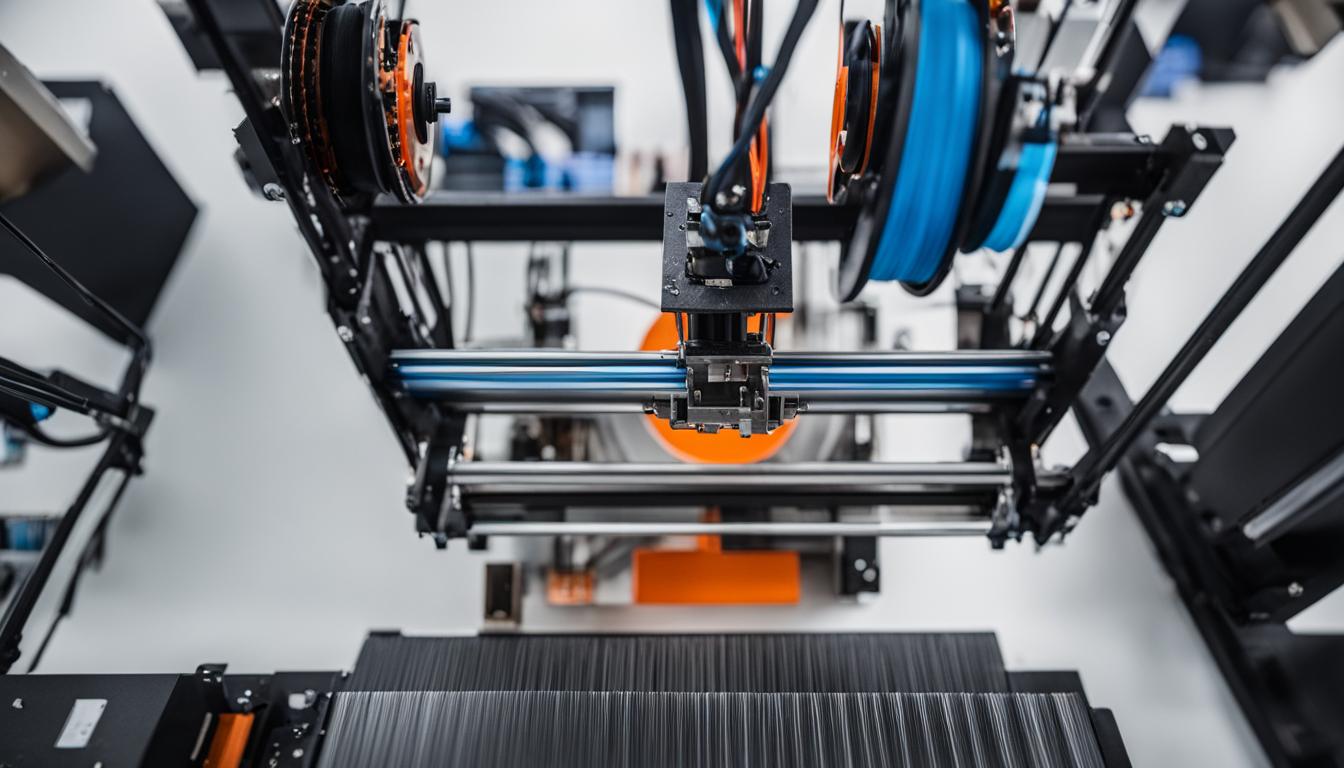
Micro desktop 3D printers represent a significant advancement in accessible additive manufacturing, bringing industrial-grade capabilities to smaller workspaces. These compact machines are engineered for precision, enabling hobbyists and engineers alike to produce intricate components with remarkable detail. Their design prioritizes user-friendliness, making advanced prototyping more attainable for a broader audience.
The Rise of Micro Desktop 3D Printers
The proliferation of micro desktop 3D printers has democratized additive manufacturing, offering compact solutions for diverse applications. These printers typically feature small footprints, often measuring around 185mm per side, making them suitable for limited desk space. Their lightweight construction, sometimes as low as 1 kg, further enhances portability and ease of integration into any environment.
Build volumes on these compact units, while smaller than industrial counterparts, are optimized for their intended use. For instance, models like the M3D Micro+ offer a base print area of 109mm x 113mm with a print height of 116mm. The Bambu Lab A1 Mini provides a cubic build volume of 180x180x180mm, demonstrating sufficient capacity for numerous small-scale projects.
These printers are designed to be highly accessible, often requiring minimal assembly and featuring intuitive software interfaces. This focus on user experience allows individuals to transition quickly from digital design to physical object, fostering rapid iteration and innovation. The compact form factor does not compromise on the core functionality required for effective 3D printing.
Optimizing Compact PLA Filament Printing
| Feature | M3D Micro+ | Bambu Lab A1 Mini |
|---|---|---|
| Printer Dimensions | 185mm x 185mm x 185mm (7.3″ cube) | Compact (specific dimensions not provided, but build volume is 180mm cube) |
| Build Volume (XYZ) | 109mm x 113mm x 116mm (Base) | 180mm x 180mm x 180mm |
| Printer Weight | 1 kg (2.2 lbs) | Not specified, but described as ‘size-saving’ |
| Filament Diameter | 1.75mm (standard) | 1.75mm (standard) |
| Layer Resolution | 50-350 microns (0.05-0.35mm) | Not specified, but capable of high detail |
| X/Y Positioning Accuracy | 15 microns (0.015mm) | Not specified, but consistent, reliable print quality |
| Print Bed | Self-leveling, non-heated | Automated calibration, removable |
| Max Print Speed | Not specified | Up to 500mm/s |
Polylactic Acid (PLA) filament is the material of choice for most micro desktop 3D printers, particularly for entry-level users, due to its ease of use and forgiving properties. PLA prints at relatively low temperatures, typically requiring a nozzle temperature between 180°C and 220°C, with 200-210°C being a common sweet spot for balanced quality and adhesion. A heated print bed, set between 45°C and 60°C, significantly improves first-layer adhesion and prevents warping, though it is not always strictly necessary for PLA.
Achieving optimal print quality with PLA involves careful consideration of layer height and print speed. For fine details, such as miniatures or intricate designs, a layer height of 0.1mm to 0.15mm is recommended to reduce visible layer lines and create smoother surfaces. For everyday prints or functional parts where speed is more critical, layer heights between 0.2mm and 0.3mm are often employed. Typical print speeds for PLA range from 40-60 mm/s, balancing detail and print duration.
Nozzle selection also plays a crucial role in print resolution and speed. A standard 0.4mm nozzle offers a practical balance for most FDM 3D printing, accommodating a wide range of projects. For exceptionally fine details, such as small text or intricate features, smaller nozzles like 0.2mm or 0.25mm can be utilized, though this will increase print times and the risk of clogging. Conversely, larger nozzles (0.6mm or 0.8mm) facilitate faster prints and stronger parts by extruding more material per pass.
Entry-Level Accessibility for Hobbyists
Modern micro desktop 3D printers are increasingly designed with ‘plug-and-play’ functionality, making them highly appealing to entry-level hobbyists. Many models arrive fully assembled, eliminating complex build processes and allowing users to begin printing almost immediately after unboxing. This ease of setup is a critical factor in reducing the barrier to entry for new users.
Key features that enhance the hobbyist experience include automatic bed leveling and guided setup wizards. These automated calibration processes ensure reliable first layers, which is often the most challenging aspect for beginners. Printers like the Bambu Lab A1 Mini boast fully automated calibration and even one-click nozzle swaps, simplifying maintenance and operation.
Furthermore, the availability of user-friendly slicing software and robust online communities provides invaluable support for new users. These resources offer guidance on print settings, troubleshooting, and design optimization, fostering a collaborative learning environment. FDM technology, in particular, is favored for beginners due to its lower cost, straightforward setup, and broad material compatibility.
Precision Prototyping for Small Components
Micro desktop 3D printers are instrumental in rapid prototyping small components, allowing engineers and designers to quickly iterate and test designs. This capability significantly accelerates product development cycles, enabling proof-of-concept validation and functional testing without the time and expense of traditional manufacturing methods. The ability to produce physical models directly from CAD files facilitates real-time refinement.
When prototyping small parts with FDM, understanding dimensional tolerances is essential. General FDM tolerances for well-calibrated machines are typically around ±0.3 mm for features under 100 mm, or ±0.5% with a lower limit of ±0.5 mm. For miniature components, where deviations of just 0.02 mm can impact mechanical engagement, FDM may present challenges with extremely thin walls (below 0.3-0.5 mm) or tiny snap-fits due to material flow and resolution limits.
Designing for fit and function requires specific clearances. For parts intended to slide together, a clearance of approximately 0.3 mm on each mating surface is a practical starting point. For press-fit applications, an interference of about 0.1 mm can be designed. When creating snap-fit features, a 0.2 mm clearance is generally recommended, with initial prototyping to verify functionality.
Modern Engineering Practices with Micro 3D Printing
Integrating micro desktop 3D printers into engineering workflows significantly enhances rapid iteration and design refinement. Engineers can quickly produce functional prototypes, allowing for immediate testing and adjustments, which is crucial for complex assemblies or custom components. This agile approach reduces lead times and identifies potential design flaws early in the development cycle, minimizing costly rework later on.
These compact machines empower engineers and designers to conduct hands-on testing and iteration directly from their personal workspaces. The ability to print and test prototypes within hours fosters greater collaboration and responsiveness to feedback, accelerating the overall product development process. Desktop 3D printing, particularly with high-performance materials, allows for the creation of durable, functional parts for rigorous testing.