
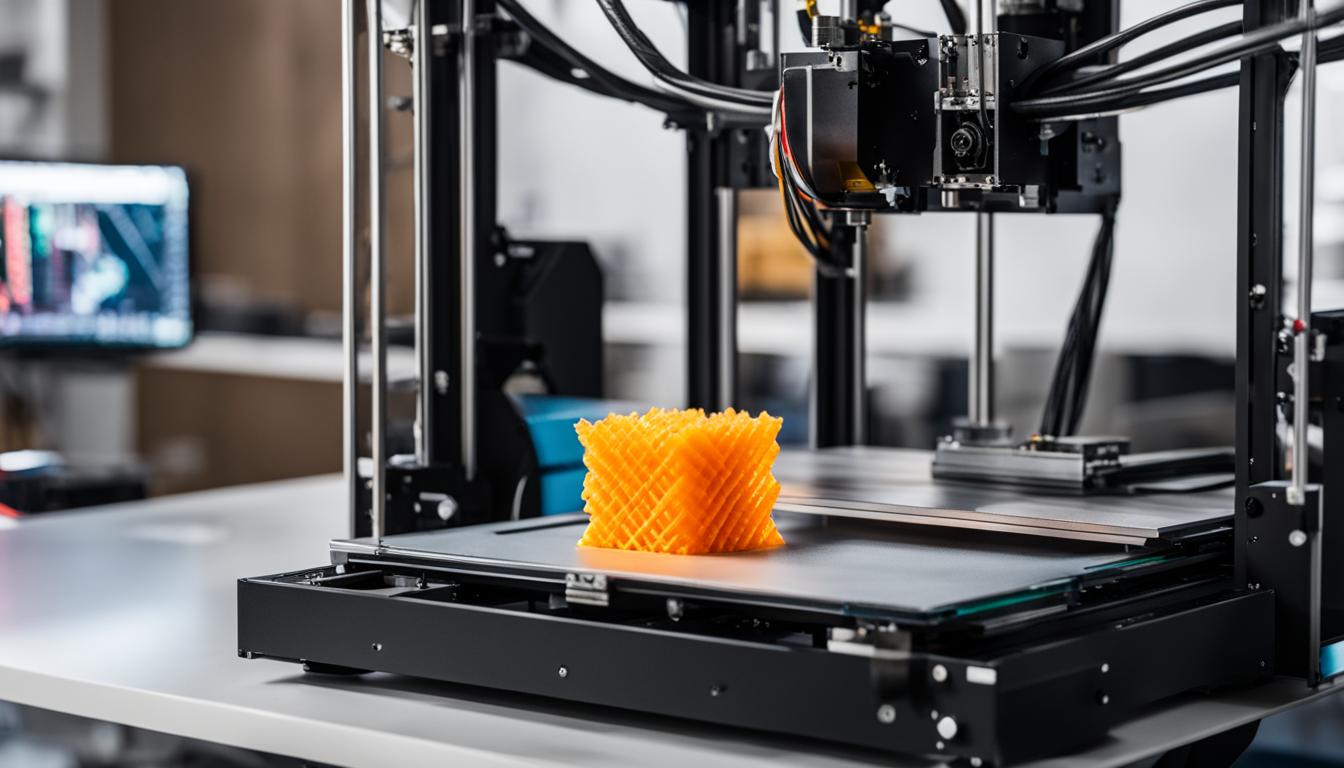
Anycubic has established itself as a prominent manufacturer in the additive manufacturing sector, offering a diverse range of 3D printers that cater to both hobbyists and professional engineers. The company’s product lines, encompassing Fused Deposition Modeling (FDM) and Masked Stereolithography (MSLA) technologies, are recognized for their blend of performance, accessibility, and advanced features.
These machines are designed to transform digital designs into tangible objects, providing solutions for rapid prototyping, functional part creation, and intricate model production. Anycubic’s continuous innovation focuses on enhancing user experience through features like automatic bed leveling and high-speed printing capabilities.
Anycubic Kobra FDM Series: Precision and Speed
The Anycubic Kobra FDM series represents a significant advancement in filament-based 3D printing, emphasizing both speed and print quality. Models like the Kobra 2 Pro and the newer Kobra 3 showcase impressive performance metrics, making them suitable for a wide array of applications. The Kobra 2 Pro, for instance, achieves a standard print speed of 300 mm/s and a maximum print speed of 500 mm/s, with an acceleration of 20,000 mm/s².
Further enhancing the series, the Anycubic Kobra 3 boasts an even higher maximum print speed of up to 600 mm/s, supported by advanced computational capabilities and an enhanced cooling system. These printers typically handle common FDM materials such as PLA, PETG, ABS, and TPU, with the Kobra 3 featuring a maximum extrusion temperature of 300 °C and a bed temperature of 110 °C for broader material compatibility.
Dimensional accuracy for FDM printing generally falls within ±0.5% with a lower limit of ±0.5 mm, though some machines can achieve ±0.15 mm to ±0.3 mm. Engineers should consider that FDM tolerances are influenced by layer bonding and thermal contraction, with features in the X-Y plane often holding tighter than those along the Z-axis.
Minimum wall thickness for FDM parts is typically 1.0 mm, and details smaller than 0.6 mm may not resolve clearly. For reliable threaded connections, M6 and larger threads print well, or heat-set brass inserts can be used for stronger results.
Anycubic Photon MSLA Resin Printers: Detail and Resolution
| Feature | Anycubic Kobra 3 (FDM) | Anycubic Photon Mono M5s (MSLA) |
|---|---|---|
| Technology | Fused Deposition Modeling (FDM) | Masked Stereolithography (MSLA) |
| Build Volume (approx.) | 250 x 250 x 260 mm | 200 x 218 x 123 mm (HWD) |
| Max Print Speed | Up to 600 mm/s | 105 mm/h (with high-speed resin) |
| Acceleration | Up to 20,000 mm/s² | N/A (Layer-based curing) |
| XY Resolution | ~0.4 mm (Nozzle diameter) | 19 microns |
| Auto Leveling | LeviQ (e.g., LeviQ 3.0 on Kobra 3 Max Combo) | Leveling-free (floating platform technology) |
| Typical Tolerance | ±0.15 mm to ±0.3 mm | ±0.1 mm to ±0.15 mm |
Anycubic’s Photon series utilizes MSLA (Masked Stereolithography) technology, which is renowned for producing highly detailed and smooth prints. This method cures entire layers of liquid photopolymer resin simultaneously using a UV light source masked by an LCD screen, offering significant speed advantages over traditional SLA.
The Photon Mono M5s exemplifies this capability with its 10.1-inch 12K resolution monochrome LCD screen, achieving an impressive 19-micron XY accuracy. This level of detail allows for the reproduction of intricate designs, often described as being as precise as a hair’s thickness.
Resin printers like the Photon Mono M5s can achieve an average printing speed of 105 mm/h when utilizing high-speed resin and optimized slicing settings. The Photon M3 Premium, another notable model, features an 8K resolution screen and incorporates Anycubic’s LightTurbo 2.0 system for enhanced light uniformity and reduced stray light, resulting in delicate and smooth surfaces.
MSLA printing typically offers tighter tolerances compared to FDM, with achievable ranges of ±0.1 mm to ±0.15 mm on small features. The precision of the laser spot and minimal thermal movement during curing contribute to this high accuracy, making MSLA ideal for intricate models, functional prototypes requiring tight fits, and applications in engineering and miniatures.
Budget-Friendly 3D Printing Solutions
Anycubic has consistently focused on making 3D printing accessible to a broader audience, offering a range of budget-friendly printers without compromising essential features. The Kobra 2 Neo, for example, is positioned as a highly affordable FDM option, often available for under $199 in the US market.
FDM printers generally present a more cost-effective entry point into 3D printing compared to resin printers, considering initial machine cost, material prices, and maintenance. This affordability allows enthusiasts and small businesses to engage in rapid prototyping and custom manufacturing without substantial upfront investment. Anycubic’s commitment ensures that even budget models include advanced features like automatic bed leveling.
Material costs also play a significant role in overall budget considerations. While FDM filaments like PLA and PETG are relatively inexpensive, resins for MSLA printers can vary, with specialized engineering or high-speed resins often costing more. However, the increasing competition in the market continues to drive down prices for both printer types and their consumables.
Advanced Features: Automatic Bed Leveling and High-Speed Printing
Automatic bed leveling is a critical feature that significantly enhances the user experience and print success rate across Anycubic’s FDM and MSLA lines. The Anycubic LeviQ 2.0 system, found in the Kobra 2 series, utilizes an inductive sensor to detect distances on the metal print platform without direct contact.
This system integrates a smart Z-axis offset module, which independently adjusts the nozzle height to achieve an accurate Z-offset, simplifying the calibration process for both novices and experienced users. The newer Kobra 3 Max Combo even features LeviQ 3.0 auto-leveling, further refining precision and ease of use.
High-speed desktop printing is another area where Anycubic excels, pushing the boundaries of what FDM and MSLA technologies can achieve. The Kobra 2 Pro’s ability to reach 500 mm/s and the Kobra 3’s 600 mm/s maximum speeds are supported by high-performance processors, optimized extruder systems, and vibration compensation.
For MSLA printers, the Photon Mono M5s achieves an average print speed of 105 mm/h, largely due to its high-speed release film that reduces release force and allows for faster lifting speeds. Achieving high speeds without sacrificing quality requires a balance of extrusion flow, cooling power, motion system stability, and precise calibration, all of which Anycubic addresses in its advanced printer designs.