
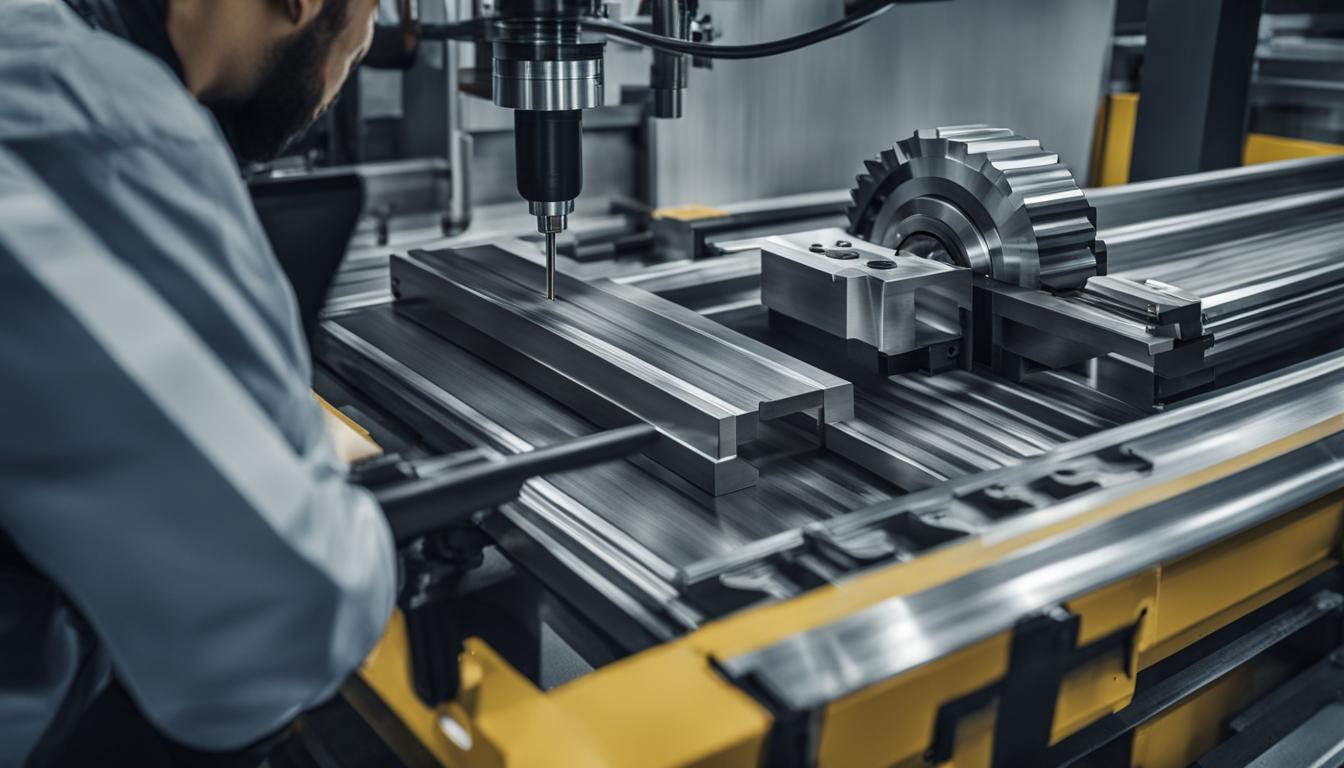
Computer Numerical Control (CNC) machining has fundamentally transformed manufacturing, moving beyond traditional manual methods to achieve unprecedented levels of precision, efficiency, and complexity. This advanced subtractive manufacturing process is indispensable across diverse industries, from aerospace to medical device production, due to its inherent capabilities that address critical engineering demands. Modern CNC equipment, guided by sophisticated software, executes intricate operations with minimal human intervention, ensuring consistent quality and rapid production cycles.
The necessity of CNC machining stems from its ability to meet stringent requirements that manual processes simply cannot. It provides solutions for producing components with extremely tight tolerances, ensuring high repeatability across large production runs, and fabricating parts with complex three-dimensional geometries. Furthermore, CNC technology significantly reduces the potential for human error and offers unparalleled scalability for manufacturing operations.
Achieving Micron Tolerances in Component Production
Precision is a cornerstone of contemporary engineering, with many applications demanding dimensional accuracy measured in microns. Modern CNC machines, particularly high-end milling, turning, and grinding centers, are engineered to achieve these exacting specifications. They routinely hold tolerances down to ±1 to 5 microns (0.00004 to 0.0002 inches), a level of accuracy critical for components in medical implants, aerospace parts, and precision tooling.
Maintaining such tight tolerances requires a confluence of advanced machine design and control systems. Machine rigidity, thermal compensation, and high-resolution feedback mechanisms are paramount. Closed-loop CNC systems, for instance, continuously monitor actual tool and workpiece positions using linear scales or rotary encoders, comparing them to commanded trajectories and making real-time corrections.
Thermal stability is another critical factor, as temperature fluctuations can cause machine components and workpieces to expand or contract, leading to dimensional drift. Advanced CNC machines integrate temperature compensation software that reads sensors placed throughout the machine, automatically adjusting tool paths to counteract thermal growth. This proactive management of thermal effects is essential for consistent precision, especially during extended machining operations.
Ensuring High-Volume Part Repeatability
| Parameter | Typical Range/Standard | Notes |
|---|---|---|
| Linear Dimensional Tolerance | ±0.005 mm to ±0.05 mm (±0.0002″ to ±0.002″) | Achievable with standard CNC milling/turning. High-precision can reach ±1-5 microns. |
| Repeatability | ±0.0025 mm to ±0.005 mm (±0.0001″ to ±0.0002″) | With closed-loop systems and thermal compensation. |
| Surface Finish (Ra) | 3.2 μm (125 μin) standard as-machined | Can be reduced to 1.6, 0.8, or 0.4 μm (63, 32, or 16 μin) with finishing passes. |
| General Tolerances (ISO 2768-1) | ‘f’ (fine), ‘m’ (medium), ‘c’ (coarse), ‘v’ (very coarse) | Applies to linear and angular dimensions without explicit tolerances. |
| Geometric Tolerances (ASME Y14.5) | Defines symbols, rules, and practices for GD&T. | Ensures clear communication of design intent for form, fit, and function. |
Manufacturing at scale demands not only precision but also unwavering consistency across every single part produced. CNC machining excels in high-volume repeatability, ensuring that the thousandth part is dimensionally identical to the first. This capability is vital for industries where interchangeability and consistent performance are non-negotiable, such as automotive and consumer electronics.
The inherent automation of CNC processes minimizes variability introduced by human operators. Once a program is validated, the machine executes the same sequence of operations, tool movements, and cutting parameters for each workpiece. This deterministic execution, coupled with robust machine design, guarantees consistent output quality.
Closed-loop feedback systems are instrumental in maintaining repeatability. These systems detect and correct minute deviations in real-time, ensuring that the machine’s actual position precisely matches the programmed path, even under varying loads or environmental conditions. This continuous monitoring and adjustment capability is a significant advantage over manual methods, where fatigue and subjective judgment can lead to inconsistencies.
Mastering Complex 3D Contour Cutting
Many modern product designs feature intricate three-dimensional geometries and complex contours that are impossible or impractical to produce with conventional manual machining. CNC technology, particularly multi-axis machining, provides the capability to create these sophisticated shapes with high accuracy and surface finish.
Five-axis CNC machines, for example, move cutting tools along three linear axes (X, Y, Z) and simultaneously rotate along two additional axes (A, B, or C). This allows the tool to approach the workpiece from virtually any angle in a single setup, enabling the machining of deep cavities, undercuts, and organic forms like turbine blades, impellers, or orthopedic implants.
The integration of Computer-Aided Design (CAD) and Computer-Aided Manufacturing (CAM) software is crucial for complex contour cutting. CAD models define the intricate geometries, which CAM software then translates into precise G-code toolpaths for the CNC machine. This digital workflow ensures that the physical part accurately reflects the design intent, facilitating rapid prototyping and efficient production of highly complex components.
Eliminating Manual Human Error
Human error is an unavoidable factor in any manual process, leading to inconsistencies, scrap, and increased production costs. CNC machining significantly mitigates this risk by automating the manufacturing process. Once a program is thoroughly tested and verified, the machine executes operations with unwavering precision, removing the subjective element of manual control.
This shift from manual to automated control reduces the likelihood of mistakes such as incorrect measurements, improper tool changes, or inconsistent feed and speed adjustments. The role of human operators evolves from direct machining to programming, setup, monitoring, and quality assurance, focusing on higher-value tasks.
Beyond quality improvements, the reduction of human intervention also enhances workplace safety. Automated systems can perform hazardous or repetitive tasks, minimizing operator exposure to dangerous machinery and environments. This creates a safer manufacturing environment while simultaneously boosting overall production reliability.
Scaling Manufacturing Output Efficiently
The ability to scale production rapidly and efficiently is a key competitive advantage in today’s dynamic markets. CNC machining provides exceptional scalability, allowing manufacturers to increase output significantly without compromising quality or consistency.
CNC machines can operate continuously, often 24/7, enabling ‘lights-out manufacturing’ where facilities run autonomously without human supervision during off-hours. This maximizes machine utilization and throughput, leading to substantial increases in productivity and reductions in per-unit costs.
Furthermore, the digital nature of CNC programming means that once a part’s design and manufacturing process are established, they can be replicated across multiple machines or facilities with ease. This flexibility allows manufacturers to respond swiftly to fluctuating market demands, from producing a few prototypes to thousands of parts for mass production, maintaining a competitive edge.