
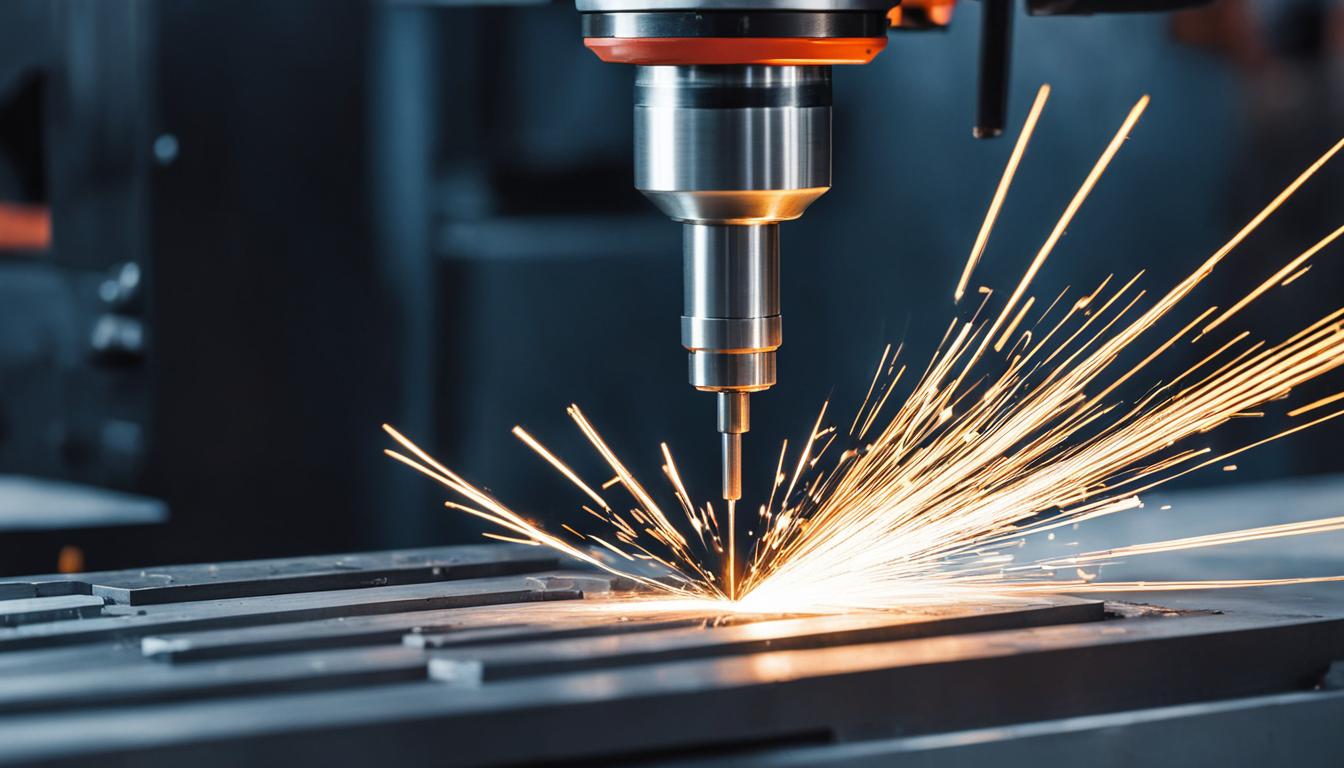
Phoenix, Arizona, has solidified its position as a critical hub for advanced manufacturing, particularly in precision CNC machining. The region’s robust infrastructure and skilled workforce support a diverse array of high-tech industries, from aerospace and defense to the rapidly expanding semiconductor sector. Local machine shops offer specialized services that meet the stringent demands of these cutting-edge fields.
Arizona’s Role in Defense and Space Manufacturing
Arizona’s defense and space suppliers rely heavily on precision CNC machining for mission-critical components. Companies in the Phoenix area are often AS9100 certified, an international Quality Management System standard essential for aviation, space, and defense industries. This certification ensures meticulous attention to detail and adherence to rigorous safety protocols.
Manufacturing for these sectors involves working with challenging materials such as titanium, Inconel, and specialized aerospace-grade aluminum alloys. Machining complex geometries and maintaining exceptionally tight tolerances are standard requirements. Many Phoenix-based facilities offer advanced capabilities like 5-axis machining, multi-tasking mill-turn solutions, and wire EDM services for difficult-to-machine applications.
Local firms like Precision Aerospace LLC and Ignova Mechanical in the Phoenix area specialize in build-to-print complex machined sheet metal fabrications and turbine engine components. Their commitment to quality is further demonstrated by NADCAP and RoHS compliance, alongside extensive inspection capabilities utilizing advanced tools such as Coordinate Measuring Machines (CMMs).
Ultra-Precision for Semiconductor Components
| Material | Typical Surface Feet per Minute (SFM) | Chip Load (per tooth, for 1/4″ end mill) |
|---|---|---|
| Aluminum (6061) | 800-1000 | 0.003″ – 0.005″ |
| Steel (1018) | 300-400 | 0.002″ – 0.003″ |
| Stainless Steel (304) | 100-150 | 0.001″ – 0.003″ |
| Titanium (Ti-6Al-4V) | 60-100 | 0.001″ – 0.002″ |
Semiconductor component machining demands extreme dimensional precision, often requiring tolerances below one micron and surface finishes measured in nanometers. These components are vital for wafer handling, process chambers, lithography systems, and thermal management assemblies.
Material selection for semiconductor applications is driven by factors beyond mechanical performance, including chemical resistance, vacuum compatibility, plasma resistance, thermal stability, and outgassing behavior. Machined parts must also be particle-free, necessitating aggressively contamination-controlled post-processing and often cleanroom environments.
Phoenix is experiencing significant growth in the electronics manufacturing industry, with major investments in semiconductor fabrication. This expansion positions the city as a crucial hub for high-tech production, attracting companies that require highly specialized machining services for their intricate components.
Advanced Precision CNC Milling Capabilities
Precision CNC milling services in Phoenix encompass a wide range of capabilities, including 3-axis, 4-axis, and 5-axis machining. These advanced machines utilize multi-point cutting tools to remove material from solid blocks, producing custom metal and plastic parts with tight tolerances and impressive mechanical properties.
Achievable tolerances in CNC machining vary, but general standard tolerances for metals typically range around ±0.1 mm (approximately ±0.004 inches). For high-precision applications, tolerances can be as tight as ±0.025 mm (±0.001 inches), with some critical semiconductor features demanding sub-micron accuracy. Industry standards like ISO 2768-1 for linear and angular dimensions and ASME Y14.5 for Geometric Dimensioning and Tolerancing (GD&T) guide these specifications.
Optimizing feeds and speeds is critical for balancing efficiency, tool life, and surface finish in precision milling. These parameters depend heavily on the material, tool type, and desired outcome. Incorrect settings can lead to excessive heat, tool wear, poor finish, or even tool breakage.
High-Tech Shop Manufacturing and Modern Practices
High-tech manufacturing shops in Phoenix are characterized by continuous investment in cutting-edge machinery and skilled personnel. Facilities often feature automated 5-axis milling and turning centers, integrated with pallet systems for lights-out manufacturing. This advanced equipment, combined with expert CAM programming, streamlines production and ensures accuracy from prototype to full-scale production.
Modern engineering practices, such as Design for Manufacturability (DFM), are integral to these operations. DFM evaluates a part’s geometry, tolerances, materials, and inspection requirements to ensure reliable and cost-effective production. This proactive approach reduces production risk, minimizes scrap, and aligns design intent with real-world process capabilities.
Advanced metrology plays a critical role in quality assurance, utilizing tools like programmable CMMs, micrometers, and non-contact laser scanners. These instruments verify that final products match CAD models and meet precise tolerance specifications. Metrology also supports automated production lines with real-time measurement data, enabling data-driven decisions and continuous improvement.
Strategic Advantages of Local Contract Machining
Partnering with local contract machining services in Phoenix offers numerous strategic advantages for businesses. These partnerships provide access to specialized expertise and advanced equipment without the significant capital investment required to purchase and maintain new machinery. This is particularly beneficial for companies with fluctuating demand or those needing to produce a diverse range of components.
Local contract manufacturers can offer greater responsiveness and flexibility, crucial for rapid prototyping and scaling up production quickly to meet increased market demand. Their proximity also streamlines supply chain operations, potentially reducing logistical costs and lead times.
Quality control is a paramount concern, and reputable Phoenix contract machining firms often possess robust in-house quality systems and certifications like ISO 9001 and AS9100. This ensures that outsourced components meet or exceed customer expectations, providing an additional layer of oversight and expertise in the manufacturing process.