
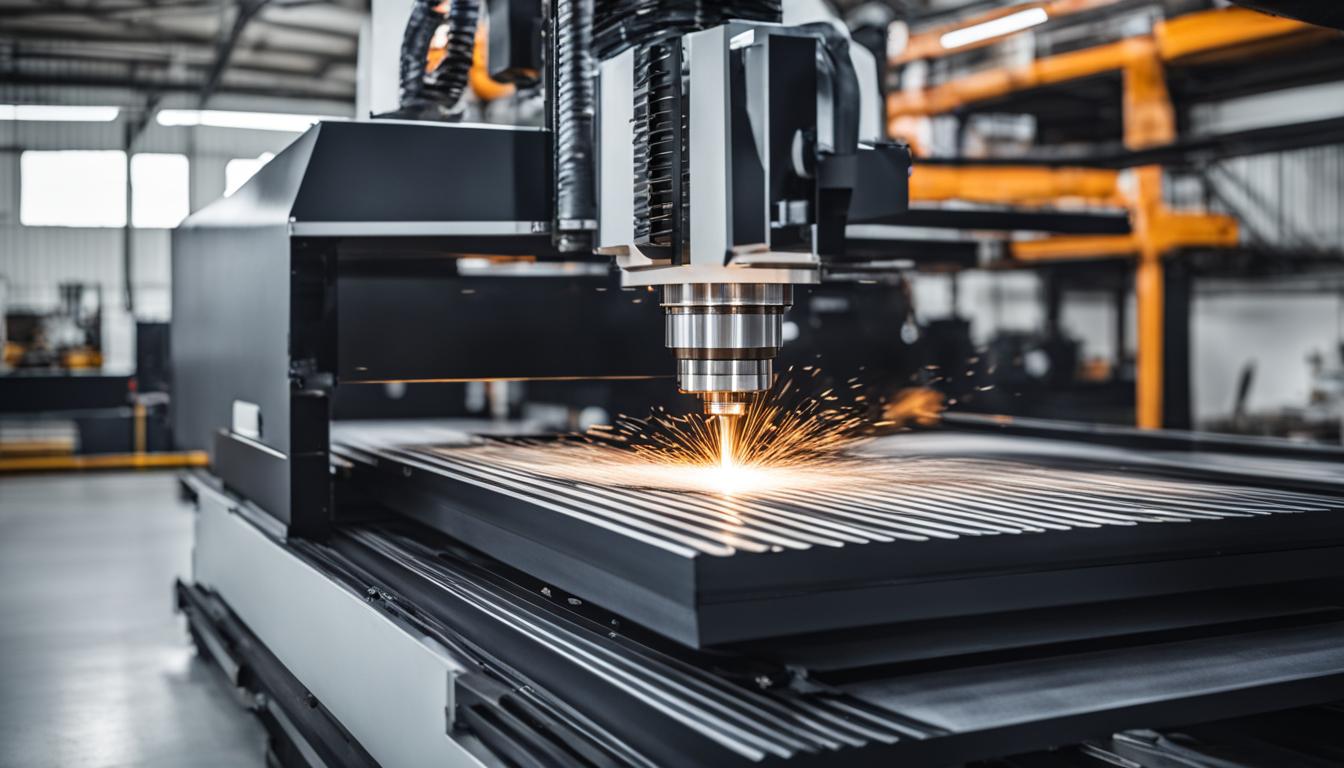
The Maslow CNC machine represents a significant departure from conventional gantry-style computer numerical control routers, primarily distinguished by its vertical, wall-mounted orientation. This innovative design allows for the processing of full 4×8 foot sheet materials within a remarkably compact footprint, making large-scale digital fabrication accessible to a broader audience.
Initially conceived to democratize access to large-format CNC capabilities, the Maslow project emphasizes affordability and an open-source philosophy. Its unique mechanical configuration and community-driven development have positioned it as a popular tool for hobbyists, small businesses, and educational maker spaces.
The Maslow CNC: Redefining Large-Format Fabrication
Traditional CNC routers often demand substantial floor space, a prohibitive factor for many small workshops or home garages. The Maslow CNC addresses this challenge directly through its vertical design, where the workpiece stands upright, leaning against a frame or wall. This arrangement drastically reduces the machine’s physical footprint, typically requiring only about 19 inches of depth.
This vertical orientation, reminiscent of a hanging plotter, enables the machine to handle standard 4×8 foot sheets of material without requiring them to be broken down. Such a capability is invaluable for projects like furniture, cabinetry, and large signage, where full sheet utilization is critical for efficiency and material economy.
The Maslow CNC is typically sold as a kit, requiring user assembly and the integration of a user-supplied router and frame materials. This DIY approach significantly contributes to its low overall cost, making it an attractive option for budget-conscious makers.
Engineering the Movement: from Chains to Tensegrity Belts
| Parameter | Maslow 4.1 Specification | Notes |
|---|---|---|
| Work Area (X/Y) | 1.2 x 2.4 meters (4×8 feet) | Adjustable based on anchor placement. |
| Z-Axis Travel | 65mm (2.6 inches) | Maximum material thickness 70mm (2.75 inches) in multiple passes. |
| X/Y Cutting Speed | Up to 2,500mm/min (100ipm) | Typical operating speed around 2,000mm/min. |
| Z Cutting Speed | 300mm/min (11ipm) | |
| Precision (Repeatability & Absolute) | ±0.5mm after calibration | Suitable for furniture, not high-precision mating parts. |
| Controller | FluidNC (Maslow’s fork) on ESP32 | WiFi, USB-C, Bluetooth connectivity. |
| Recommended Router | DeWalt DWP611 (or D26200) | User-supplied, RPM range 16,000-27,000. |
The original Maslow CNC system utilized a chain-driven gantry, where two chains, controlled by motors at the top corners of the frame, suspended and moved a router-mounted sled. This setup relied on gravity to maintain chain tension and keep the sled pressed against the workpiece.
The latest iteration, the Maslow 4.1, has evolved to a more advanced ‘tensegrity belt-drive system.’ This design employs four independently controlled, steel-reinforced belts that extend from a central sled to anchor points at the corners of the work area. Each belt is precisely managed by a 24-volt DC servo motor coupled with a planetary gearbox and a high-precision magnetic encoder.
This four-belt system allows the sled to position itself across the cutting surface by dynamically adjusting belt tension across all four axes simultaneously. The Z-axis depth control is handled by two dedicated stepper motors with lead screws, providing 65mm (2.6 inches) of travel.
The Maslow 4.1’s drive system offers improved precision and speed compared to its predecessors. It also features self-calibration, where the machine automatically measures belt tension and calculates anchor positions, simplifying setup and enhancing accuracy.
The Open-Source Ecosystem and DIY Assembly
At its core, the Maslow CNC is an open-source hardware and software project, fostering a vibrant community of users and developers. All designs, firmware, and control software are freely available, encouraging modification, improvement, and sharing of projects and knowledge.
The kit-based nature of the Maslow requires users to assemble the machine, source frame materials (typically plywood and 2x4s), and provide their own router. This DIY aspect not only reduces the initial purchase price but also provides users with a deep understanding of their machine’s mechanics and electronics.
Control software for the Maslow 4.1 is browser-based, utilizing FluidNC (a Maslow-specific fork) and offering connectivity via WiFi, USB-C, or Bluetooth. Older versions commonly used ‘Ground Control’ or ‘WebControl’ software. The open-source nature extends to CAM tools, with the team developing their own free and open-source CAD/CAM tool, ‘Abundance’.
Operational Parameters and Cutting Performance
The Maslow CNC is designed for large-format cutting, primarily of sheet goods. Its work area typically measures 1.2 x 2.4 meters (4×8 feet) in the X/Y plane. The maximum material thickness that can be cut in multiple passes is approximately 70mm (2.75 inches).
Cutting speeds for the Maslow 4.1 can reach up to 2,500mm/min (100 inches per minute) in X/Y and 300mm/min (11 inches per minute) in Z, with typical operating speeds around 2,000mm/min. Precision for the Maslow 4.1 is rated at ±0.5mm for both repeatability and absolute accuracy after calibration, which is suitable for many woodworking and fabrication tasks.
The machine does not include a router, but the DeWalt DWP611 (or D26200 for 240V regions) is a commonly recommended option. This router offers a variable speed range, typically from 16,000 to 27,000 RPM. Selecting appropriate router bits is crucial, with 1/4-inch two-flute up-spiral bits being a common starting point for plywood.
For optimal results, especially with plywood, feed rates and depth per pass must be carefully managed. While the Maslow 4.1 has higher maximum speeds, community recommendations for older models suggest starting with feed rates around 760mm/min (30 ipm) and a depth of cut of about 3mm (0.125 inches) for a 1/4-inch bit. Overly slow feed rates can lead to bit rubbing and material burning.
Applications and Economic Advantages for Makerspaces
The Maslow CNC machine excels in applications requiring the cutting of large, flat materials, making it a versatile tool for various projects. It is particularly well-suited for furniture components, cabinet parts, large-scale artistic installations, and signage.
For makerspaces, educational institutions, and small businesses, the Maslow offers a compelling value proposition. Its low initial cost, typically around $525 for the Maslow 4.1 kit (excluding router and frame materials), makes large-format CNC capabilities accessible without a significant capital investment.
The open-source nature fosters a collaborative environment, allowing users to leverage community-developed resources, troubleshooting guides, and project files. This collective knowledge base reduces the barrier to entry for new users and supports ongoing innovation and customization.
Its compact storage footprint, especially when disassembled or mounted against a wall, is another significant advantage for spaces with limited room. The ability to cut full 4×8 foot sheets without a massive, dedicated machine makes the Maslow an ideal budget-friendly tool for prototyping and production in maker-oriented environments.