
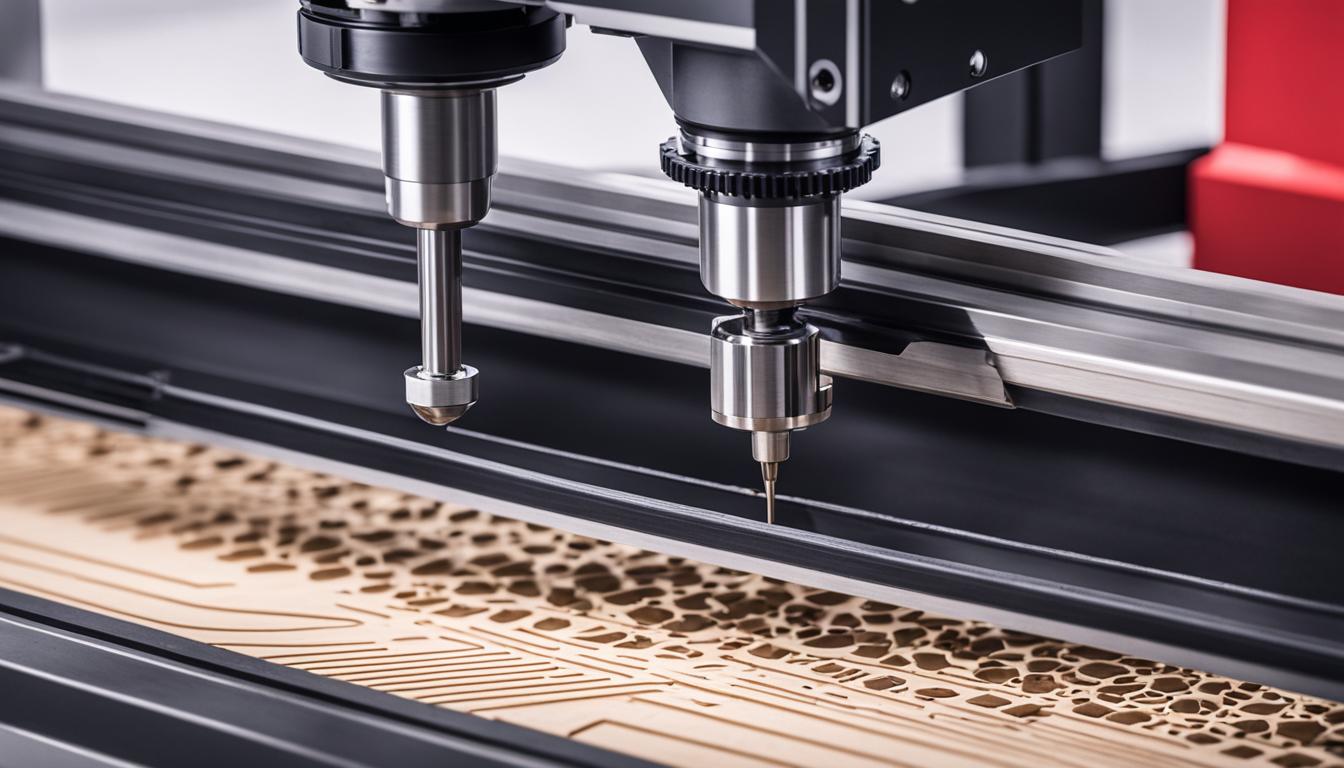
Avid CNC has established itself as a prominent provider of robust CNC routing solutions, particularly with its PRO table series. These machines offer a compelling balance of industrial capability and user-friendly assembly, making them suitable for both professional workshops and advanced DIY enthusiasts. The PRO series is designed to handle a diverse range of materials, from various woods to non-ferrous metals like aluminum, providing a versatile platform for precision manufacturing.
Avid CNC PRO Table Series: Engineered for Rigidity
The Avid CNC PRO series tables are fundamentally engineered for high rigidity, a critical factor for achieving precise and consistent machining results. Their construction typically features a robust aluminum frame, which offers a significant advantage in terms of shipping logistics and allows for extensive user customization. This design philosophy enables users to tailor their machine’s footprint and capabilities to specific workshop requirements.
Structural integrity is further enhanced by well-machined components and thoughtful design, ensuring accuracy and repeatability across the work envelope. The gantry system, a key element, is often driven by rack and pinion mechanisms for the X and Y axes, while the Z-axis commonly utilizes a ball screw for precise vertical motion. These drive systems are integral to the machine’s ability to maintain tight tolerances during demanding operations.
Avid CNC offers the PRO series in various sizes, accommodating different project scales and workshop layouts. Common configurations include 4×4, 4×8, and 5×10 foot tables, providing ample working area for full sheet processing or multiple smaller parts. The modular nature of these kits allows for future expansion, enabling users to increase the machine’s length or integrate specialized accessories as their needs evolve.
Heavy-Duty Gantry Routers: the Foundation of Performance
| Feature | NEMA 34 Stepper Motor (Typical) | NEMA 34 Servo System (Typical) |
|---|---|---|
| Control Type | Open-loop (position inferred) | Closed-loop (position feedback via encoder) |
| Holding Torque | 4.8 – 8.5 Nm (679 – 1200 oz-in) | Higher, consistent across speed range; peak torque capability |
| Speed Range | Lower (up to ~1000 RPM effectively) | Higher (several thousand RPMs) |
| Accuracy/Repeatability | Good, but can lose steps under load | Exceptional, real-time error correction |
| Acceleration | Moderate | Better, due to peak torque capability |
| Heat Generation | Higher, especially at standstill | Lower, more efficient operation |
| Cost | Generally lower upfront cost | Higher upfront cost |
A heavy-duty gantry is the cornerstone of a high-performance CNC router, distinguishing it from lighter, less capable machines. This robust construction is essential for effectively managing the significant cutting forces generated when machining materials beyond soft woods, such as dense hardwoods or aluminum. Adequate gantry rigidity directly translates to reduced chatter, improved surface finish, and extended tool life.
These gantries are typically constructed from thick-wall steel tubing or substantial aluminum extrusions, often reinforced and stress-relieved to prevent warping and minimize deflection. The design focuses on creating a stiff load path from the spindle through the gantry, linear guides, and into the base frame. This structural integrity is paramount for maintaining precision across the entire machining area.
For industrial applications, heavy-duty gantry routers provide consistent quality and the capacity to handle large, heavy workpieces with high precision. Their inherent stability makes them ideal for continuous production environments, particularly for top-down machine tending and applications requiring high-precision linear motion over extended distances. This design ensures reliable performance under sustained operational loads.
NEMA 34 Servo Systems: Precision and Power
NEMA 34 servo systems represent a significant upgrade over traditional stepper motors for demanding CNC routing applications, primarily due to their closed-loop feedback mechanism. Unlike open-loop stepper systems that assume commanded motion is executed, servos continuously monitor and correct their position using encoders. This real-time feedback ensures superior accuracy and prevents lost steps, which can ruin a workpiece.
These servo motors offer substantial technical advantages, including higher torque output, faster acceleration, and the ability to achieve significantly higher rotational speeds, often reaching several thousand RPMs. A typical NEMA 34 stepper motor might offer 4.8 to 8.5 Nm of holding torque with a rated current of 4.0 to 6.0 A, operating between 36-60 VDC. Servo systems, however, can deliver consistent torque across their entire speed range and provide peak torque briefly to overcome transient loads.
The practical implications for routing are profound. Servo systems enable the machine to maintain consistent cutting speeds even when encountering varying material densities or tool loads, leading to smoother cuts and better surface finishes. Their ability to recover from unexpected resistance or minor collisions without losing position is invaluable for complex, multi-hour machining operations, significantly reducing material waste and production downtime.
Industrial Wood and Aluminum Routing: Optimizing Performance
Effective wood routing demands careful selection of tooling and optimized feeds and speeds to achieve desired surface finishes and prevent material damage. For general woodworking, two-flute spiral up-cut or down-cut bits are common, with compression bits being ideal for plywood to minimize tear-out on both sides. Recommended spindle speeds for dense hardwoods typically range from 6,000 to 8,000 RPM, with feed rates between 60 and 100 inches per minute (IPM).
Machining aluminum requires a more specialized approach, necessitating solid carbide ‘O’ flute or two-flute end mills with specific helix angles (e.g., 30°) to facilitate efficient chip evacuation. Proper lubrication or coolant is often crucial to prevent chip re-welding and manage heat. For aluminum, optimal spindle speeds are generally between 8,000 and 12,000 RPM, with feed rates from 40 to 80 IPM. Starting with conservative parameters and monitoring chip formation is essential to prevent tool breakage and ensure quality.
Achievable tolerances in CNC routing vary by material and machine rigidity. For general CNC machining, a standard default tolerance is approximately ±0.005 inches (±0.125 mm), often formalized as ISO 2768-m. Precision machining can achieve tighter tolerances, sometimes down to ±0.001 inches (±0.025 mm) or better on critical features, particularly in aluminum. Wood, due to its inherent fibrous nature and susceptibility to environmental changes, typically holds slightly looser tolerances.
DIY Kit Configuration Options and Modern Practices
Avid CNC’s modular kit approach provides extensive configuration options, allowing users to build a machine precisely suited to their operational needs. This includes choices in table size, gantry height, and spindle power, ranging from 2.2 kW (3 HP) to 4 HP spindles. Users can select from various control systems, including those compatible with NEMA 23 or NEMA 34 motors, and integrate essential accessories like universal dust boots and ER collet sets.
The platform supports a clear upgrade path, enabling owners to enhance their machine’s capabilities over time. This might involve transitioning from NEMA 23 stepper motors to more powerful NEMA 34 servo systems for increased performance and accuracy. Additional upgrades often include automatic tool changers, tool height setters, and proximity sensors, which streamline workflow and improve repeatability.
Modern engineering practices are evident in the meticulous design and manufacturing of Avid CNC components. The kits feature well-machined parts that fit precisely, simplifying the assembly process for users. Comprehensive documentation and an active community further support builders, ensuring that even complex configurations can be successfully implemented, leading to high-performance machines capable of industrial-grade work.