
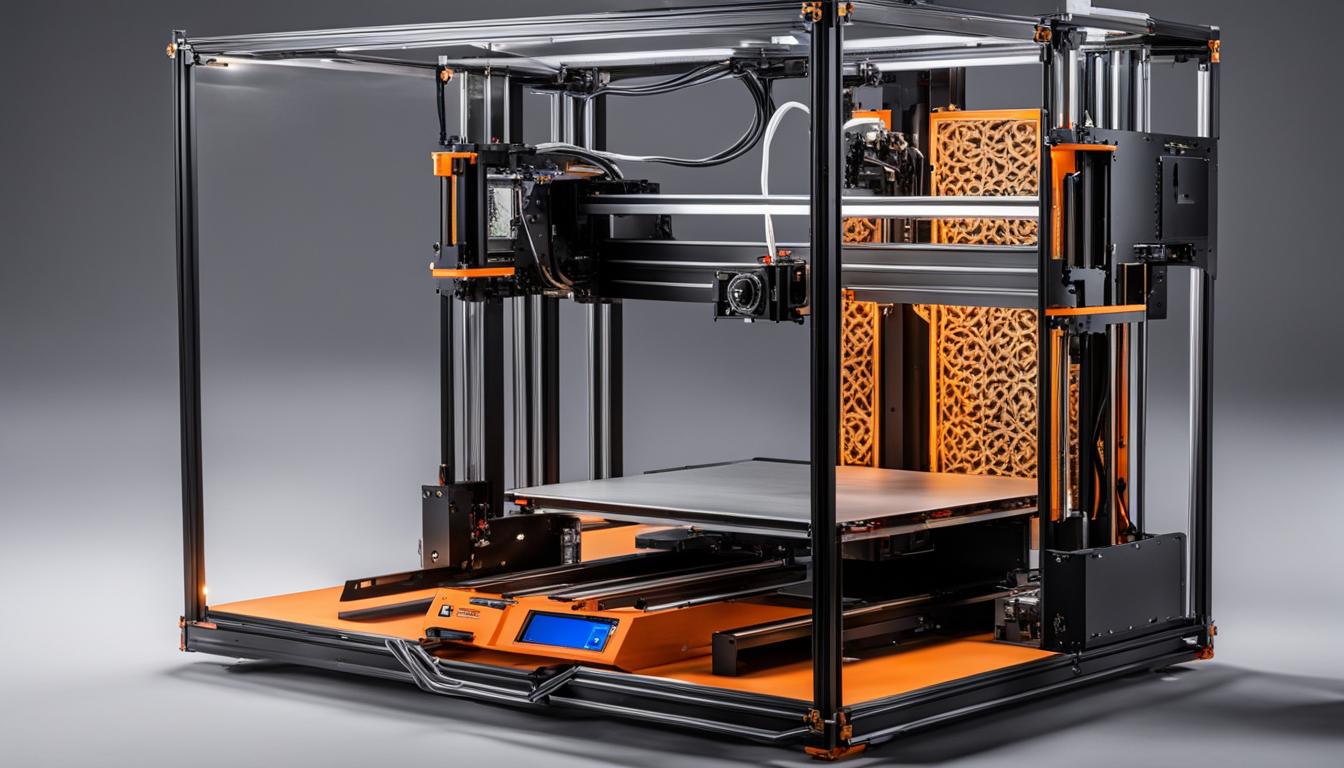
Industrial large-scale Fused Deposition Modeling (FDM) has fundamentally transformed manufacturing workflows, moving beyond mere prototyping to become a critical process for producing functional end-use parts. This shift is driven by advancements in machine capabilities, material science, and integrated software solutions. The additive manufacturing market is projected to exceed USD 37 billion in 2026, indicating a robust long-term growth trajectory.
Manufacturers across aerospace, automotive, healthcare, and energy sectors are increasingly integrating additive technologies into their digital supply chains. This systematic incorporation allows for greater design freedom and faster development cycles, directly impacting production efficiency and cost-effectiveness.
Industrial Large-Scale FDM Redefines Manufacturing
The adoption of industrial large-scale FDM systems addresses the historical limitations of smaller build volumes, enabling the creation of massive components in a single print. This capability significantly reduces assembly time and potential points of failure inherent in multi-part constructions. Such systems are now central to producing jigs, fixtures, and even low-volume end-use parts.
Thermoplastic additive systems, like those offered by BigRep, utilize a wide array of engineering-grade filaments, expanding the applications for FDM technology. These materials are specifically optimized for large-format printing, ensuring consistent quality and performance across extensive build envelopes. The focus has shifted from experimental applications to stable, qualifiable processes capable of long-term production.
BigRep ONE: Unmatched Printing Volume and Capabilities
| Parameter | Specification |
|---|---|
| Build Volume | 1005 x 1005 x 1005 mm (1 cubic meter) |
| Nozzle Temperature | Up to 280 °C |
| Print Bed Temperature | Max. 80 °C |
| Nozzle Sizes | 0.6 mm, 1.0 mm, 2.0 mm (interchangeable) |
| Layer Height Resolution | 0.1 mm – 1.4 mm (custom heights supported) |
| Max Print Speed | Up to 250 mm/s (ONE.5X) |
| Filament Diameter | 2.85 mm |
The BigRep ONE series, including the ONE.5 and the recently introduced ONE.5X, is renowned for its substantial build volume, typically measuring 1005 x 1005 x 1005 mm (approximately one cubic meter). This generous printing space allows for the fabrication of full-scale prototypes, large tools, and numerous smaller parts simultaneously, optimizing production throughput.
The BigRep ONE.5X, an evolution of the platform, introduces advanced automation features such as XYZ autocalibration, adaptive mesh bed leveling, and auto-sequential printing. These enhancements streamline machine setup, ensure consistent first-layer adhesion, and enable continuous operation, even overnight, without constant operator intervention.
The system’s robust frame and custom-built gantry are engineered to minimize vibrations, ensuring precise movement of the extruders even at high speeds. This stability is crucial for maintaining dimensional accuracy across large prints, a key requirement for industrial applications.
Precision and Speed with High-Flow Extrusion Heads
BigRep printers are equipped with advanced high-flow extrusion heads, such as the BigRep Power Extruder (PEX) and PEX2, designed for rapid material deposition. These modular extruders feature interchangeable nozzle sizes, typically ranging from 0.6 mm to 2.0 mm, allowing for a balance between fine detail and high-speed printing.
The PEX2 extruders, for instance, boast a 40% higher flow rate, significantly accelerating print times. This capability is further enhanced by features like pressure advance algorithms, which dynamically regulate material flow during acceleration and deceleration to prevent corner bulges and improve overall print quality.
Diamond nozzles are often integrated into these high-flow systems, extending component lifespan, especially when processing abrasive, fiber-reinforced materials. This durability ensures consistent performance and reduces maintenance downtime in demanding industrial environments.
Engineering Thermoplastics for Robust Prototypes and Tools
BigRep offers a comprehensive portfolio of certified engineering thermoplastics, alongside compatibility with third-party filaments, to meet diverse application requirements. Common materials include PLA, PETG, ABS, ASA, and specialized blends like PRO HT, PRO HS, and HI-TEMP CF.
These materials are selected for their mechanical properties, such as high stiffness, impact strength, and heat resistance, making them suitable for functional prototypes, jigs, fixtures, and even molds. For example, BigRep HI-TEMP offers heat resistance up to 160 °C, while HI-TEMP CF can withstand temperatures up to 115 °C.
Typical print settings vary by material and nozzle size. For PLA, nozzle temperatures generally range from 190-220 °C with a bed temperature of 50-60 °C. PETG typically requires nozzle temperatures between 220-250 °C and a bed temperature of 50-80 °C. Carbon fiber reinforced filaments often demand higher nozzle temperatures, between 200-260 °C, and a bed temperature of 50-100 °C.
Large Prototype Manufacturing and Tooling Applications
The ability to produce large prototypes in a single piece significantly accelerates product development cycles across various industries. Automotive manufacturers can create full-scale dashboard mock-ups or aerodynamic components, while aerospace companies can prototype large structural elements. This capability reduces the need for costly and time-consuming traditional manufacturing methods for initial iterations.
Industrial FDM systems are also invaluable for manufacturing custom tooling, including jigs, fixtures, and patterns for casting. The rapid production of these tools allows for agile adjustments in production lines, minimizing downtime and improving overall manufacturing flexibility. Materials like carbon fiber-reinforced blends offer the necessary stiffness and dimensional stability for such demanding applications.
Achievable tolerances in industrial FDM typically range from ±0.1–0.2 mm for functional prototyping, with dedicated production cells reaching ±0.05 mm. For critical applications, such as aerospace and defense, tolerances of ±0.025–0.051 mm are pursued through rigorous process control and post-machining. It is important to note that FDM tolerances are anisotropic, meaning Z-axis accuracy can differ from XY-plane accuracy, and internal features like holes may print slightly undersized due to factors like arc compression.