
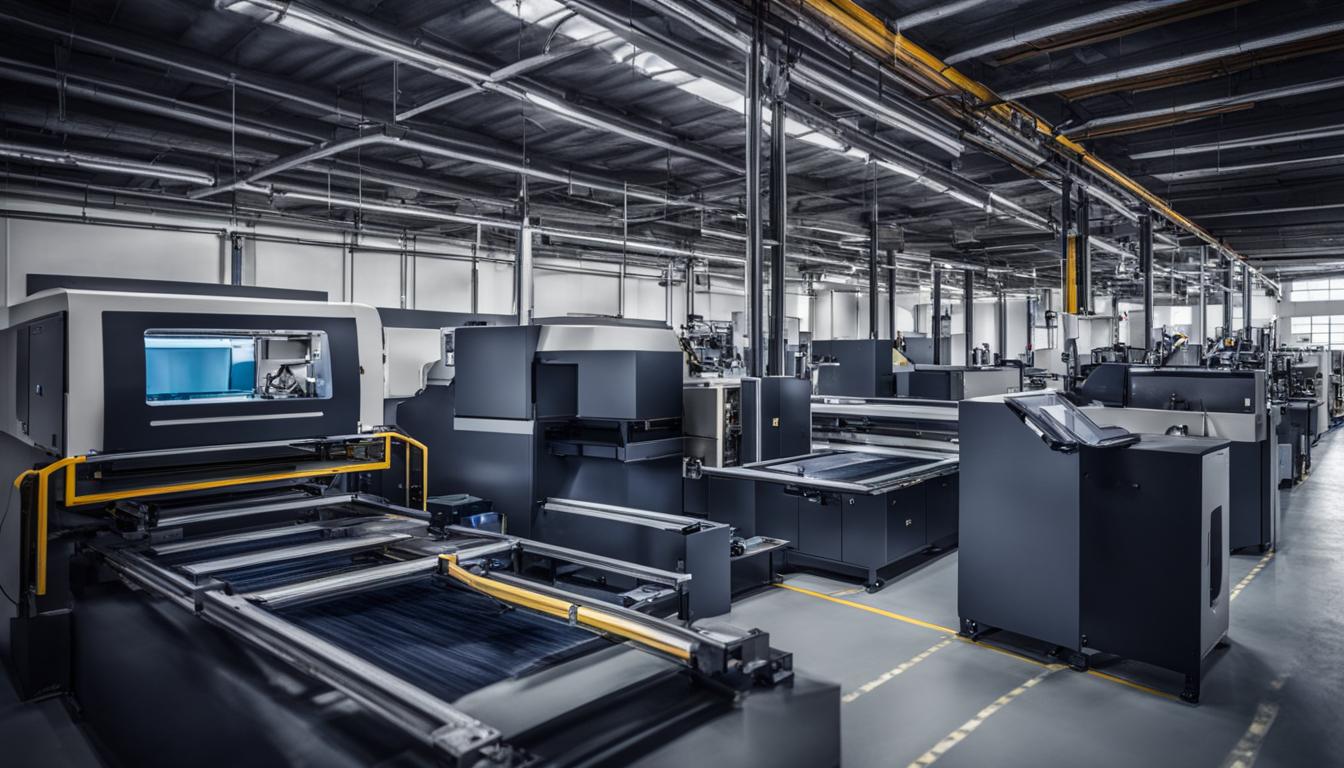
Industrial additive manufacturing continues its rapid evolution, with companies like Roboze pushing the boundaries of what is achievable with high-performance polymers. Their focus on extreme environments and metal replacement parts addresses critical needs across aerospace, energy, and medical sectors. Roboze’s technology enables the production of functional components that withstand demanding operational conditions.
The company specializes in processing super polymers and composite materials, creating finished functional parts for mission-critical applications. This approach leverages advanced Fused Filament Fabrication (FFF) systems engineered for precision and reliability.
High-Temperature Super-Polymer Printing Advancements
The demand for materials capable of performing in harsh conditions has driven significant innovation in 3D printing. Traditional plastics often fall short in applications requiring high thermal stability, chemical resistance, or exceptional mechanical strength. Roboze addresses this by focusing on super polymers, which offer properties comparable to certain metals.
Roboze’s material portfolio includes advanced thermoplastics such as PEEK, Carbon PEEK, PEKK, and ULTEM AM9085F. These materials are engineered to maintain their integrity under sustained stress and extreme temperatures, making them suitable for long-life applications.
These super polymers exhibit excellent dimensional stability and continuous service temperatures up to 260°C for PEEK, along with chemical inertness to most organic solvents, acids, and bases. Such characteristics are vital for components used in naval, oil and gas, and medical fields, where sterilization and chemical exposure are common.
PEEK and Carbon PEEK FDM: Engineering for Extremes
| Feature | ARGO 500 Hyperspeed | ARGO 1000 / Hypermelt |
|---|---|---|
| Build Volume (X x Y x Z) | 500 x 500 x 500 mm | 1000 x 1000 x 1000 mm |
| Accuracy (XY) | 10 µm | 10 µm |
| Max Extruder Temperature | 450°C (some models 500°C) | 450°C |
| Max Heated Chamber Temperature | 180°C | 180°C |
| Max Print Speed | 120 mm/sec | Up to 10x faster (Hypermelt) |
| Compatible Materials | PEEK, Carbon PEEK, ULTEM, Carbon PA, PEKK, ABS, PP, etc. | PEEK, Carbon PEEK, ULTEM, PEKK, Carbon PA, etc. |
| Motion System | Patented Beltless System (Rack & Pinion) | Patented Beltless System (Rack & Pinion) |
Polyetheretherketone (PEEK) is a semi-crystalline technopolymer renowned for its high mechanical properties, thermal characteristics, and chemical resistance. Printing PEEK via FDM, however, presents challenges due to its high melting point and propensity for warping and internal stress if thermal control is not precise.
Roboze’s FFF systems are specifically designed to overcome these difficulties, featuring extruders capable of reaching up to 450°C (or 500°C for some models) and heated build chambers that can maintain temperatures up to 180°C. This precise thermal management is crucial for achieving optimal layer adhesion and crystallinity, which directly impacts the final part’s mechanical performance.
Carbon PEEK, a composite material with a PEEK matrix reinforced with 20% chopped carbon fibers, further enhances these properties. The addition of carbon fibers significantly improves compressive strength, stiffness, and load capacity, while also increasing thermal and electrical conductivity.
This composite material offers a lower dry friction coefficient and superior resistance to hydrolysis in boiling water and superheated steam, making it ideal for demanding tribological applications and extreme environments. Carbon PEEK is considered among the strongest thermoplastics at room temperature.
Metal Replacement 3D Parts: Performance and Efficiency
The drive to replace metal components with advanced polymers is a significant trend in industrial manufacturing, motivated by weight reduction, corrosion resistance, and design flexibility. Roboze’s super polymers, including PEEK and Carbon PEEK, offer a compelling alternative to traditional metal alloys.
These materials provide exceptional strength-to-weight ratios; for instance, PEEK’s density of 1.29 g/cm³ can nearly halve the weight of parts compared to metal alloys with densities around 2.5 g/cm³. This weight reduction is critical in sectors like aerospace and automotive, where payload efficiency and fuel economy are paramount.
Roboze’s technology enables the production of complex geometries that are often cost-prohibitive or impossible with traditional subtractive manufacturing methods. This design freedom allows for part consolidation and optimization, leading to more efficient and integrated components.
Industrial Extreme Environment 3D Printing Solutions
Components operating in extreme environments, characterized by high temperatures, aggressive chemicals, or sustained mechanical loads, require materials that can withstand accelerated degradation. Roboze’s additive manufacturing systems are engineered precisely for these conditions.
Applications span across aerospace, energy, oil and gas, and medical industries, where parts must endure radiation, outgassing, atomic oxygen exposure, and chemical inertness. Roboze materials like ULTEM AM9085F are specifically designed for such harsh conditions.
The ability to produce parts with consistent mechanical properties and dimensional accuracy in these challenging environments is a hallmark of Roboze’s technology. This ensures reliability and extends the lifecycle of industrial products, reducing downtime and maintenance costs.
Precise Thermal Control: the Foundation of Reliability
Achieving high-quality, dimensionally accurate parts from super polymers like PEEK and Carbon PEEK in FDM printing is fundamentally dependent on precise thermal control. These materials are highly sensitive to temperature fluctuations during the printing process.
Roboze printers, such as the ARGO 500 and ARGO 1000, feature advanced heated build chambers capable of reaching 180°C. This uniform heating minimizes thermal shock and prevents warping, which are common issues with high-performance thermoplastics.
The patented Beltless System, which replaces traditional rubber belts with hardened steel rack and pinion gears, contributes to exceptional positioning accuracy of 10 µm in XY and 25 µm in Z. This mechanical precision, combined with advanced thermal management, ensures consistent repeatability and part performance.
Roboze’s High Viscosity Polymer (HVP) extruders are designed to optimize the flow of high-viscosity materials at temperatures up to 450°C, further reducing shrinkage and preventing clogging. Integrated sensors and real-time process control monitor critical parameters, ensuring stability and error detection throughout the print.