
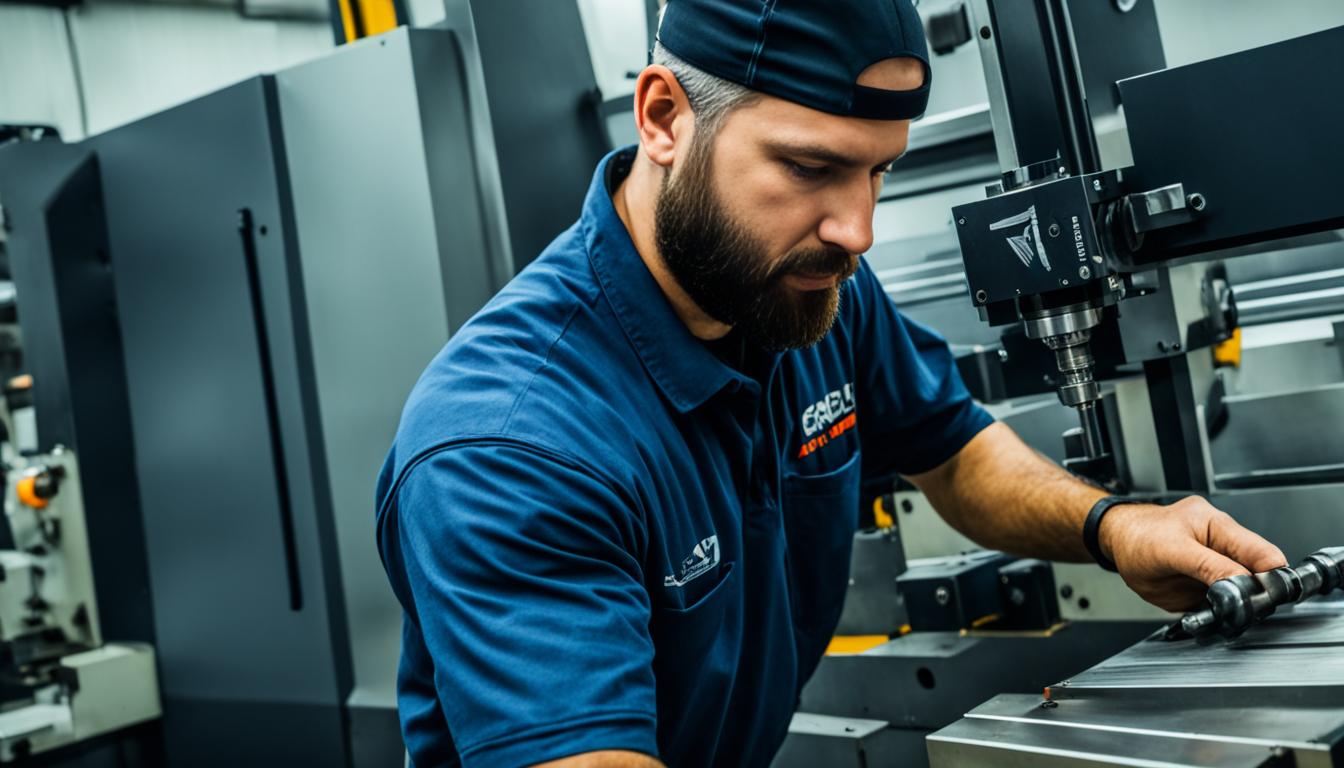
Makino, a global leader in advanced machine tools, maintains a sophisticated manufacturing and distribution network spanning multiple continents. The company’s commitment to precision engineering originates from its Japanese heritage, extending through its strategically located production facilities worldwide. This global presence ensures localized support and tailored solutions for diverse industrial demands.
Makino’s operational strategy integrates research, development, and manufacturing across its international sites, focusing on high-performance machining centers, EDM machines, and automation solutions. This approach allows Makino to serve critical sectors such as aerospace, automotive, medical, and semiconductor manufacturing with specialized expertise.
Makino Milling Machine Co. Japan: Core of Innovation
Makino Milling Machine Co., Ltd. was established in Tokyo, Japan, in 1937, where its world headquarters remains today. Japan serves as the primary hub for Makino’s research and development, driving innovation in machine tool technology.
The company’s Japanese manufacturing facilities, including the Atsugi, Fujikatsuyama, and the newly inaugurated Fujiyoshida Plant, are central to producing high-precision machine tools. The Fujiyoshida Plant, opened in May 2026, significantly expands production capacity for large horizontal and 5-axis machining centers, crucial for industries like aerospace and semiconductor manufacturing.
Japanese VMC assembly at these plants adheres to stringent quality controls, leveraging naturally stable environmental conditions at sites like Fujiyoshida, situated at the foot of Mt. Fuji. Reinforced foundations with thousands of underground support pillars ensure an exceptionally stable production environment, vital for achieving sub-micron accuracy.
Makino’s Tokyo R&D department pioneered Japan’s first numerically controlled (NC) milling machine in 1958 and the country’s first machining center in 1966. This legacy of innovation continues to shape the development of cutting-edge machines and systems.
Global Manufacturing Facilities and Specializations
| Parameter | Typical Range (Example Models) | Achievable Tolerance |
|---|---|---|
| Spindle Speed | 8,000 to 40,000 min-1 (RPM) | High-speed stability for fine finishes |
| Axis Travel (X, Y, Z) | 400mm to 2000mm+ (model dependent) | Positioning accuracy within microns |
| Repeatability | Typically ±1 to ±2 microns | Consistent part-to-part dimensions |
| Surface Finish | Ra < 0.1 µm achievable in specific applications | Superior surface quality, reducing post-processing |
Beyond Japan, Makino operates a robust global manufacturing footprint to serve regional markets effectively. Makino Asia, headquartered in Singapore, manufactures vertical milling machines, machining centers, wire EDMs, and RAM EDMs for Southeast Asia, China, and India.
Makino J China, with facilities in Wuhan, specializes in producing vertical and horizontal machining centers, primarily catering to the automotive, construction, and agricultural machinery industries within China. This strategic presence supports localized production and cost improvement.
Makino India, celebrating 30 years of operations, has a 52,900 m² manufacturing facility in Bengaluru producing PS-series, Slim-series, LS2 vertical, and JA6 horizontal milling machines. A dedicated 38,500 m² fixture factory in Coimbatore further strengthens its capabilities, serving sectors like aerospace and medical manufacturing.
In Europe, Makino GmbH in Hamburg, Germany, focuses on developing turnkey solutions and systems for metal-cutting applications, distributing Makino solutions across the continent. While Makino Americas, headquartered in Mason, Ohio, serves North and South America through regional tech centers, providing sales, service, and training.
Precision Machine Tool Engineering and Standards
Makino’s engineering philosophy emphasizes achieving superior accuracy and reliability in its machine tools. This is evident in their design principles, which prioritize thermal stability, vibration dampening, and advanced control systems.
The company employs rigorous quality control processes, including laser calibration and advanced measurement systems, to ensure machines meet tight tolerances. Makino’s patent-pending ‘Hybrid Automatic Tool-Length Measuring System’ on VMCs, for instance, measures tool tip position at the submicron level, minimizing thermal displacement and tool abrasion.
Makino machines are engineered for consistent precision, often achieving level differences within one micron even when using different tools and speeds. This capability is critical for demanding applications in micromachining and medical device manufacturing.
Their commitment to precision extends to the structural integrity of machines, incorporating features like core-cooled ball screws and larger linear guides. These design elements contribute to the rigidity and stability required for high metal-removal rates and rapid feed rates while maintaining accuracy.
Advanced Machining Technologies and Tolerances
Makino integrates advanced technologies to enhance machining performance and part quality. Features like ‘Feed Optimizer’ automatically adjust feed rates during air cutting to reduce cycle times, while ‘Process Tracer’ monitors spindle load to prevent machining defects.
The company’s machines are designed to handle complex geometries and difficult-to-machine materials such as titanium, offering customizable spindle speeds and torques. Makino’s ADVANTiGE™ Technology, developed for titanium machining, was recognized for its innovation in the aerospace industry.
Typical achievable tolerances on Makino machines are often in the range of a few microns, depending on the specific machine model and application. This level of accuracy is essential for industries where component integrity and fit are paramount.
Here are some general specifications for Makino machining centers, illustrating their performance capabilities:
Global Distribution Network and Support
Makino’s global distribution network ensures that its advanced machine tools reach customers in over 40 countries. This network is supported by regional tech centers that provide local sales, service, and training.
In North America, Makino operates through its headquarters in Mason, Ohio, and additional facilities in Auburn Hills, MI, Wichita, KS, and Fountain Valley, CA. These centers offer demonstrations, application engineering, and technical support.
Makino partners with distributors like Yamazen Inc. to expand its reach, providing access to high-performance machining platforms across key regions, including the Northeast United States. This collaboration ensures comprehensive sales support and application expertise.
Customer support is a cornerstone of Makino’s global strategy, offering technical phone support, training, and engineering services. These services include DFM (Design for Manufacturability) and GD&T (Geometric Dimensioning and Tolerancing) interpretation, ensuring optimal manufacturing routes.