
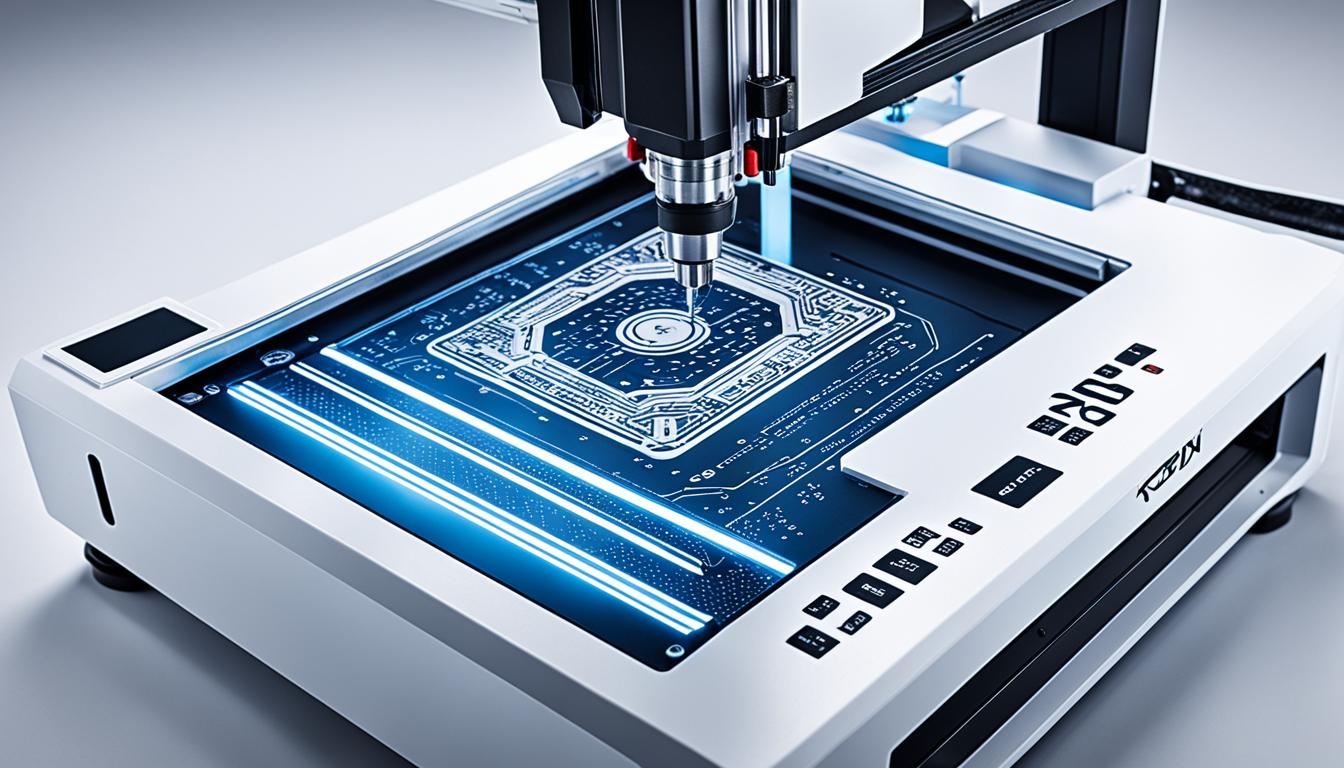
Printed circuit board (PCB) CNC machines offer a precise and efficient method for fabricating circuit boards, particularly for prototyping and low-volume production. These machines mechanically remove copper from a substrate and drill component holes, providing a direct alternative to traditional chemical etching processes. The technology allows for rapid design iteration and high-quality board production in a controlled environment.
Precision Mechanical Isolation Routing
Mechanical isolation routing is a subtractive process where a CNC machine removes unwanted copper from a copper-clad substrate, typically FR-4, to define electrical traces and pads. This method ensures accurate trace widths, spacing, and overall board geometry. The precision of this process is critical for high-frequency and complex circuit designs, offering significantly lower margins of error compared to manual etching.
Routing tools, such as V-bits and end mills, are essential for creating isolation paths. Carbide diamond-cut router bits are often used for PCB contouring and depaneling. For optimal performance, a chip load of 0.010–0.025 mm per tooth is typically recommended for FR-4 and copper materials.
Standard tolerances for CNC routing typically range around ±0.2mm, while routed features may require a tolerance of ±0.005 inches (approximately ±0.127mm). Trace width and spacing can vary by ±10% to ±20% from the designed Gerber files, with minimum manufacturable traces often around 4mil (0.1mm).
Achieving clean cuts in FR-4 and copper requires careful consideration of feeds and speeds. For a 0.80mm diamond-cut router bit, a table feed rate of 20 inches per minute (IPM) at 60,000 RPM is suggested. For general FR-4 machining with 1/8″ carbide burrs, aggressive feeds of 30-60 IPM at maximum spindle RPM (18,000-24,000) are recommended to prevent tool dulling.
Micro Drill Bit Hole Drilling
| Control Measure | Description |
|---|---|
| Local Exhaust Ventilation (LEV) | Captures dust at the source, preventing airborne spread. |
| HEPA Filtration | Filters air down to 0.3 microns to remove dangerous particles. |
| Respiratory Protection | N95 masks or PAPRs are essential for operators. |
| Wet Machining | Suppresses dust formation using coolant fluids. |
| Sealed Enclosures | Maintains negative pressure to contain particles within the workspace. |
Micro drill bit hole drilling is a fundamental aspect of PCB fabrication, creating precise holes for component leads, vias, and mounting. Modern CNC drilling machines achieve high accuracy, with carbide drill bits capable of ±3 microns accuracy for diameters between 0.1 and 1.0 millimeters.
Drill bit sizes are categorized into micro drill bits (less than 0.45 mm), standard drill bits (0.5 mm to 3.175 mm), and large diameter drills (3.2 mm to 6.5 mm). Micro drill bits, often made of carbide, are crucial for high-density interconnects and micro-hole drilling. The minimum drill size for standard mechanical drilling is typically around 0.15 mm, while laser drilling can achieve holes as small as 0.1 mm.
Finished hole size tolerances for plated through-holes (PTH) are commonly ±0.08mm, while non-plated through-holes (NPTH) often have a tolerance of ±0.05mm. These tolerances account for factors like drill bit wear, material properties, and plating processes which can reduce hole diameter by 0.025 mm to 0.05 mm.
Optimal drilling parameters for FR-4 PCBs involve spindle speeds between 30,000 and 60,000 RPM, with feed rates typically ranging from 50 to 100 IPM. For a 0.5 mm drill bit on a 1.6 mm thick FR-4 board, a starting point of 40,000 RPM is suggested. The aspect ratio, which is the ratio of board thickness to hole diameter, is critical, with industry recommendations typically between 8:1 and 10:1 to ensure reliable plating.
Prototyping Circuit Boards
CNC milling offers significant advantages for prototyping circuit boards, enabling rapid design iterations within hours. This speed is a key benefit over traditional chemical etching, which requires more setup and processing time, including chemical handling and disposal.
Milling PCBs is particularly cost-effective for low-volume production and prototyping. Unlike etching, which demands chemicals, masks, and extensive preparation, milling primarily requires the machine, cutting tools, and raw PCB materials. This reduces material and chemical costs, making it suitable for startups and small-scale projects.
Another benefit is the environmental aspect; PCB milling does not involve hazardous chemicals, resulting in zero chemical waste and a safer working environment. This allows prototyping to occur in standard workshop environments without the need for specialized, ventilated labs.
Dust Containment for FRP
Machining fiber-reinforced polymer (FRP) materials like FR-4 generates fine, abrasive dust that poses significant health risks. The dust contains glass fibers and crystalline silica, which can cause respiratory issues, skin irritation, and potentially lead to chronic lung diseases like asthma, bronchitis, pulmonary fibrosis, and even lung cancer with long-term exposure.
Effective dust containment is paramount to protect operators and maintain equipment. Local exhaust ventilation (LEV) systems with high-efficiency particulate air (HEPA) filters are crucial for capturing fine fiberglass particles at the source. HEPA filters rated at 0.3 microns are necessary to meet high safety standards for filtering these hazardous particles.
Personal protective equipment (PPE) protocols must be strictly enforced, including N95 masks or powered air-purifying respirators (PAPRs) to prevent inhalation. Safety goggles or face shields protect eyes from flying debris, and cut-resistant gloves safeguard hands from splinters. Avoiding compressed air for cleaning is also important, as it can disperse hazardous dust.
High RPM Precision Spindle Heads
High RPM precision spindle heads are indispensable for PCB CNC machines, especially when working with small-diameter cutting tools and fine machining operations. These spindles operate at speeds often exceeding 20,000 RPM, with some mass production machines reaching 200,000 RPM or higher. This high rotational speed is crucial for improving cutting efficiency, reducing cutting resistance, minimizing burr formation, and achieving superior surface finishes.
Spindle performance is directly linked to machining quality and tool life. Factors such as rotational accuracy, runout control, vibration stability, and thermal stability are critical considerations. Even slight spindle instability can lead to hole position errors, poor edge quality, and premature tool breakage.
Direct-drive spindles are favored for their efficient power transmission, reduced mechanical loss, and low vibration characteristics, making them suitable for high-precision PCB machining. For micro mills and sub-0.5 mm end mills, target RPMs range from 60,000 to 120,000+ to achieve optimal surface speeds. Spindles over 100,000 RPM require a 5-minute idle run before operation and careful collet cleaning to prevent malfunctions.