
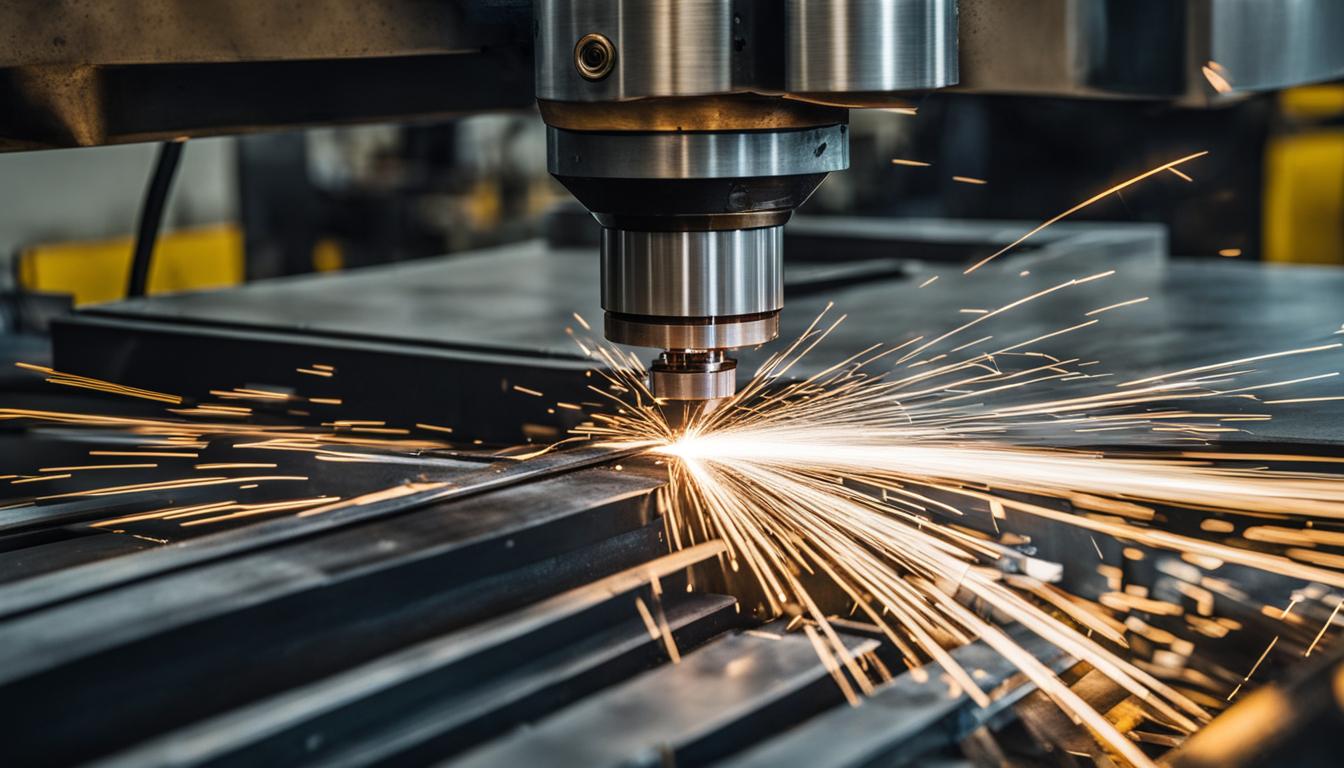
While primarily associated with softer materials like wood and plastics, certain CNC routers possess the structural integrity and power to machine steel effectively. Achieving this requires a precise understanding of machine limitations, tooling, and machining strategies.
Cutting steel on a CNC router is possible, but it demands a robust machine and careful parameter selection. Unlike dedicated CNC milling machines, routers typically have less rigidity and higher spindle speeds, which necessitates a different approach for ferrous metals.
Frame Rigidity and Machine Structure
The fundamental limitation for cutting steel on a CNC router is often its frame rigidity. Routers designed for woodworking typically feature lighter gantry systems and less robust linear motion components. Machining steel generates significantly higher cutting forces and vibrations, which a less rigid frame cannot adequately absorb.
For effective steel machining, a CNC router needs a heavy, sturdy frame, ideally constructed from welded steel RHS (Rectangular Hollow Section) rather than bolted aluminum plate. Rigidity targets for steel cutting are typically 25 N/µm or higher, compared to 5 N/µm for wood. This increased stiffness minimizes deflection and chatter, which are critical for tool life and surface finish.
Machine components like linear rails and ball screws must also be industrial-grade to withstand the increased loads. High-quality linear guides and robust ball screw assemblies contribute significantly to the machine’s overall static and dynamic rigidity, preventing unwanted movement during aggressive cuts. Without sufficient rigidity, tool breakage, poor surface finish, and inaccurate dimensions become prevalent.
Low RPM High Torque Requirements
| Parameter | Typical CNC Router (Wood/Plastic) | CNC Router (Capable of Steel) | Dedicated CNC Mill (Steel) |
|---|---|---|---|
| Frame Rigidity Target | ~5 N/µm | 25 N/µm or higher | 50-70 N/µm+ |
| Spindle RPM Range | 18,000 – 24,000+ RPM | 1,000 – 12,000 RPM (High Torque) | 50 – 10,000+ RPM (Wide Range, High Torque) |
| Typical Spindle Power | 0.8kW – 2.2kW | 2.2kW – 5.5kW+ (with high torque) | 5kW – 30kW+ |
| Axial Depth of Cut (Mild Steel) | Not recommended | 0.5mm – 1.5mm (very light) | Up to 1x tool diameter (roughing) |
| Radial Depth of Cut (Mild Steel) | Not recommended | 5% – 15% of tool diameter | 30% – 50% of tool diameter (roughing) |
| Standard Linear Tolerance | ±0.13 mm (±0.005 in) | ±0.13 mm (±0.005 in) | ±0.025 mm (±0.001 in) or better |
Spindle characteristics are paramount when transitioning from soft materials to steel. Traditional woodworking CNC router spindles are designed for high RPM and relatively low torque, which is unsuitable for cutting ferrous metals. Steel machining demands high torque at much lower RPMs to maintain cutting force without burning the tool or stalling the spindle.
Spindles in the 2.2kW to 4.5kW range are commonly used for light aluminum, but for steel, higher power spindles (5.5kW and above) are often indispensable, especially for heavy-duty cutting. These specialized spindles prioritize torque and stability over sheer rotational speed, ensuring consistent power delivery even at reduced RPMs.
Many high-speed spindles (24,000 RPM+) lack the necessary torque at lower speeds, leading to bogging down or stalling. A Variable Frequency Drive (VFD) is essential for precise speed control, allowing operators to adjust RPMs to match the material and tooling requirements. This enables the spindle to deliver maximum torque at the optimal cutting speed for steel.
Carbide Tool Bit Selection
Selecting the correct cutting tools is crucial for successful steel machining on a CNC router. High-speed steel (HSS) tools are generally inadequate for steel due to their lower hardness and heat resistance. Solid carbide end mills are the preferred choice, offering superior hardness and wear resistance at elevated temperatures.
For steel, end mills with two to four flutes are typically recommended. Two-flute tools offer better chip evacuation, which is vital in deeper cuts, while four-flute tools provide a finer finish. Coatings like TiAlN (Titanium Aluminum Nitride) or AlTiN (Aluminum Titanium Nitride) significantly enhance tool life by improving heat resistance and reducing friction.
Tool geometry, including helix angle and core diameter, also plays a role. A higher helix angle can improve chip evacuation and reduce cutting forces. Using a high-quality tool holder with minimal runout is also critical to prevent vibration and extend tool life, especially with difficult materials.
Light Pass Depth Settings
Aggressive cutting parameters suitable for softer materials will quickly lead to tool failure and machine damage when machining steel. Extremely light pass depths are mandatory. This involves carefully controlling both the axial depth of cut (ADOC) and radial depth of cut (RDOC).
For general steel milling, roughing might involve an axial depth equal to the tool diameter with 30-50% radial engagement on a dedicated mill. However, on a CNC router, these values must be significantly reduced. A common strategy involves using a very shallow axial depth (e.g., 0.5mm to 1.5mm) combined with a small radial engagement (e.g., 5-15% of the tool diameter) to manage cutting forces and heat.
Feeds and speeds for mild steel with a carbide end mill on a capable CNC router should be conservative. For a Ø10mm, 2-flute carbide end mill, a surface speed (Vc) of around 100-150 m/min and a feed per tooth (fz) of 0.03-0.05 mm are typical starting points. These parameters must be fine-tuned based on machine rigidity, tool condition, and the specific steel alloy.
The goal is to produce small, manageable chips that efficiently carry heat away from the cutting zone. Overloading the tool or machine with excessive depths or feed rates will result in chatter, poor surface finish, rapid tool wear, and potential damage to the spindle or machine structure.
Coolant Lubrication Mist
Heat generation is a significant challenge when cutting steel. Without proper cooling and lubrication, tool life diminishes rapidly, and the workpiece can deform or harden. A mist coolant system is an essential accessory for any CNC router attempting to machine steel.
Mist coolant systems combine compressed air and a specialized coolant fluid into a fine mist, delivering it directly to the cutting zone. This targeted application provides both cooling to dissipate heat and lubrication to reduce friction between the tool and workpiece. Benefits include extended tool life, improved surface finish, and efficient chip evacuation.
These systems typically feature adjustable flow controls for both air pressure and coolant delivery, allowing operators to customize the mist density for different materials and operations. While some mist systems are not recommended for ferrous metals, many modern units are designed for metal cutting applications, including steel.
The use of mist coolant helps prevent overheating of tools and workpieces, reduces tool wear and breakage, and enhances machining speed and surface finish. It also minimizes coolant consumption compared to flood coolant systems, making it a more environmentally friendly option for many shops.