
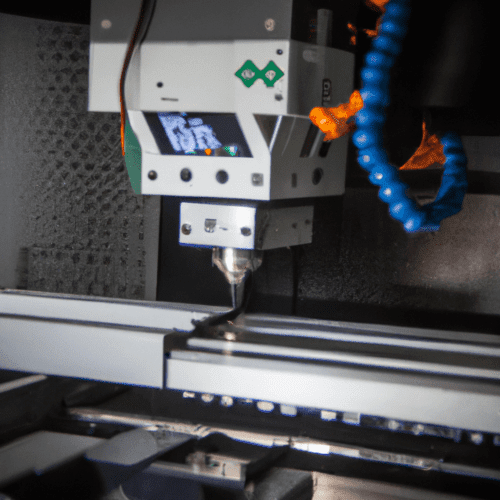
Manufacturing processes rely heavily on machine tools to shape raw materials into finished components. Two primary categories define this landscape: conventional (manual) machines and Computer Numerical Control (CNC) machines. While both achieve material removal, their operational methodologies, precision capabilities, and production efficiencies diverge significantly, impacting modern engineering practices.
Understanding these fundamental differences is critical for engineers, machinists, and production managers to select the appropriate technology for specific manufacturing demands. The choice directly influences part quality, production costs, and overall operational scalability.
Manual Operator Control vs. Computer Program Execution
Conventional machines, such as manual lathes and milling machines, operate under direct human control. The machinist physically manipulates handwheels, levers, and cranks to guide the cutting tool relative to the workpiece. This requires continuous, real-time engagement and a high degree of tactile feedback from the operator. Each cut, depth, and feed rate is determined and executed manually.
In contrast, CNC machines execute operations based on pre-programmed instructions, typically G-code and M-code. A computer controller interprets these commands, translating them into precise movements of servo or stepper motors that drive the machine axes. This automation minimizes direct human intervention during the cutting process, allowing for complex geometries and repeatable operations.
The transition from manual control to computer program execution represents a paradigm shift in manufacturing. It moves the primary skill requirement from continuous physical manipulation to programming, setup, and oversight. Modern CAM software, for instance, generates intricate toolpaths and simulates machining processes, reducing guesswork before a single chip is cut.
Production Output Speed and Efficiency
| Parameter | Conventional Machines | CNC Machines |
|---|---|---|
| Typical Positional Accuracy | ±0.005″ (±0.127 mm) | ±0.001″ to ±0.002″ (±0.025 to ±0.050 mm) |
| Highest Achievable Tolerance | ±0.002″ (±0.050 mm) with expert skill | ±0.0001″ (±0.0025 mm) for specialized processes |
| Aluminum Milling (RPM) | 600-1200 RPM (HSS tooling) | 8,000-18,000+ RPM (carbide tooling) |
| Aluminum Milling (Feed Rate) | ~15 IPM (0.25″ HSS end mill) | 40-240 IPM (2-3 flute carbide end mills) |
| Steel Turning (SFM) | 60-100 SFM (HSS tooling) | 100-300 SFM (carbide tooling) |
| Steel Turning (Feed Rate) | 0.002-0.006 IPR (roughing) | 0.001-0.005 IPR (parting, finishing) |
| Typical Material Removal Rate (Aluminum) | ~0.5 in³/min (manual knee mill) | Up to 61 in³/min (adaptive toolpaths, 15hp machine) |
Production output speed on conventional machines is inherently limited by human reaction time and physical endurance. Each tool change, measurement, and adjustment adds to the cycle time, making high-volume production economically unfeasible. Setup times are often extensive, requiring skilled operators to align workpieces and tools meticulously for each new job.
CNC machines offer significantly higher production output speeds due to their automated and repeatable nature. Once a program is proven, the machine can run continuously with minimal supervision, often for multiple shifts. Features like automatic tool changers, pallet changers, and integrated robotics further reduce non-cutting time, drastically improving throughput.
Modern CNC trends in 2026 emphasize even greater efficiency through AI-driven machining, which uses real-time sensor feedback to automatically adjust feeds, speeds, and toolpaths. This adaptive control optimizes material removal rates, reduces tool wear, and minimizes production halts.
Precision Consistency and Tolerances
Achieving high precision on conventional machines is a testament to operator skill. Tolerances of ±0.005 inches (±0.127 mm) are generally considered standard, with tighter tolerances requiring exceptional expertise and careful measurement. Factors like tool wear, machine backlash, and operator fatigue can introduce variability into part dimensions.
CNC machines inherently deliver superior precision and consistency. Standard CNC machining tolerances typically range from ±0.005 inches (±0.127 mm) for general-purpose parts, with many operations reliably holding ±0.001 to ±0.002 inches (±0.025 to ±0.050 mm). High-precision CNC machines, including grinding and wire EDM, can achieve tolerances as tight as ±0.0001 inches (±0.0025 mm) under controlled conditions.
This enhanced precision is a direct result of the machine’s rigid construction, precise motion control systems, and the elimination of human error in tool path execution. Digital twins and advanced simulation software further ensure that design intent translates accurately to the physical part, minimizing setup errors and improving first-pass yield.
Operator Skill Requirements
Operating conventional machines demands a broad range of traditional machining skills. Operators must possess a deep understanding of cutting mechanics, material properties, manual measurement techniques, and the ability to ‘feel’ the cut. Extensive apprenticeship and hands-on experience are crucial for mastering these machines.
CNC machine operators require a different, yet equally specialized, skill set. While basic mechanical know-how and an understanding of workplace safety are still essential, the focus shifts to computer literacy, blueprint reading, and proficiency with CAD/CAM software. They need to interpret G-code, set up tools and fixtures, monitor machine operation, and troubleshoot programming or mechanical issues.
Modern CNC machinists also engage with advanced technologies like AI-driven adaptive control and digital twins, requiring continuous learning and problem-solving abilities. The role evolves from purely manual dexterity to a blend of technical programming, data analysis, and process optimization.
Technical Parameter Comparison
A direct comparison of key technical parameters highlights the distinct capabilities of conventional and CNC machining.