
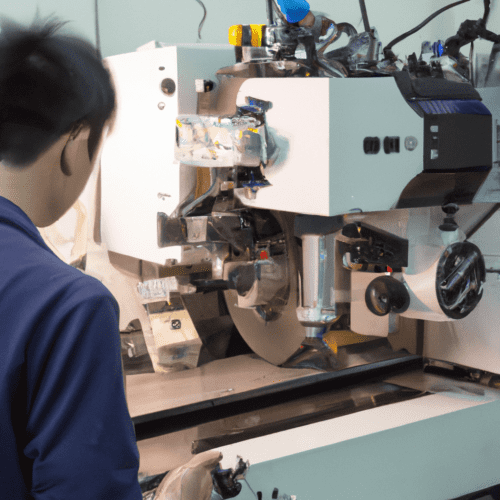
Machining, the process of shaping material by removing unwanted portions, fundamentally transformed manufacturing during the Industrial Revolution. Before this era, skilled artisans relied on manual methods, producing components with limited precision and inconsistent quality. The demand for interchangeable parts and efficient production spurred innovations in machine tool design.
Industrial Revolution’s Machining Genesis
The late 18th and early 19th centuries marked a profound shift in production capabilities, driven by the need for greater accuracy and repeatability in manufacturing. Early machinery, particularly steam engines, required components with tighter tolerances than traditional handcrafting could reliably achieve. This necessity became the mother of invention for the first true machine tools.
Initial attempts at mechanizing metalworking often involved adaptations of woodworking lathes, which lacked the rigidity and precision for harder materials. These rudimentary machines struggled with consistent material removal, leading to significant scrap rates and slow production times. The limitations highlighted a critical need for dedicated, robust metalworking equipment.
The burgeoning textile industry also contributed to the demand for improved machinery. Complex weaving looms and spinning jennies required precisely manufactured gears, shafts, and other intricate parts. This inter-industry pressure accelerated the development of more capable and accurate machine tools, laying the groundwork for modern manufacturing.
Henry Maudslay’s Lathe: a Precision Leap
| Feature | Early Carbon Steel Tools (Pre-1880s) | High-Speed Steel (HSS) Tools (Post-1900) | Modern Carbide Inserts (Post-1950s) |
|---|---|---|---|
| Primary Material | High-carbon steel | Tungsten, Chromium, Vanadium alloy | Tungsten carbide with cobalt binder |
| Hardness | Moderate | High | Very High |
| Wear Resistance | Low | Good | Excellent |
| Max Cutting Speed | Low (manual feeds) | Medium (up to 2-3x carbon steel) | Very High (up to 10x HSS) |
| Heat Resistance | Poor | Good | Excellent |
| Typical Use | Manual turning, low-speed operations | General machining, drilling, milling | High-volume production, hard materials |
Henry Maudslay, an English machine tool innovator, is widely credited with developing the first industrially practical screw-cutting lathe around 1800. His groundbreaking design incorporated a lead screw and change gears, enabling the precise and repeatable cutting of threads. This invention was a monumental step towards interchangeable parts.
Maudslay’s lathe featured a robust cast-iron bed, significantly increasing rigidity compared to earlier wooden constructions. This enhanced stability allowed for heavier cuts and improved surface finishes. The machine’s ability to produce accurate screws consistently revolutionized mechanical engineering and manufacturing processes.
The introduction of the slide rest, a mechanism that held and guided the cutting tool, was another critical innovation attributed to Maudslay. This eliminated the need for a craftsman to manually hold the tool against the workpiece, ensuring uniform depth of cut and superior accuracy. The slide rest became a fundamental component of all subsequent lathes.
The Evolution of Metal Cutting Tools
Early metal cutting tools were primarily made from high-carbon steel, often forged and hand-ground to specific profiles. These tools required frequent resharpening and were limited in their ability to withstand high cutting speeds and temperatures. Their effectiveness was directly tied to the skill of the operator and the material being machined.
The development of tool steels with improved hardness and wear resistance was crucial for advancing machining capabilities. Tungsten steel, introduced in the late 19th century, offered better performance than plain carbon steel, allowing for increased cutting speeds and longer tool life. This marked a significant material science improvement.
High-speed steel (HSS), patented in 1900 by Frederick Winslow Taylor and Maunsel White, represented another major leap forward. HSS tools could operate at significantly higher cutting speeds without losing their hardness, dramatically increasing productivity. This material became the standard for many cutting applications for decades, enabling more efficient and faster material removal.
Historical Lathe Developments
Following Maudslay’s innovations, lathe designs continued to evolve rapidly throughout the 19th century. Joseph Whitworth, another prominent English engineer, refined lathe construction, emphasizing rigidity and standardization. His work contributed to the development of standardized screw threads, which were essential for mass production.
Later advancements included the introduction of power feeds for both longitudinal and cross-slide movements, reducing operator fatigue and improving consistency. Turret lathes, developed in the mid-19th century, allowed for multiple tools to be rapidly indexed into position, facilitating repetitive operations on complex parts.
The early 20th century saw the integration of electric motors, replacing belt-driven systems from overhead line shafts. This provided more direct power, greater flexibility in machine placement, and improved safety. Gearboxes for speed changes also became common, offering a wider range of cutting parameters.
Machining Evolution Into the Modern Era
The mid-20th century ushered in the era of numerical control (NC) machining, where machine tool movements were controlled by punched tape containing coded instructions. This represented a paradigm shift from manual operation to automated, programmable manufacturing. NC machines offered unprecedented precision and repeatability.
Computer Numerical Control (CNC) systems, emerging in the 1970s, replaced punched tape with integrated computers, allowing for more complex programming, easier modifications, and real-time feedback. CNC technology rapidly expanded machining capabilities, enabling the production of highly intricate geometries with exceptional accuracy.
Modern machining practices leverage advanced materials, sophisticated cutting tools, and multi-axis CNC machines. Today’s tools often feature carbide inserts with specialized coatings, capable of machining exotic alloys at extremely high speeds and feeds. These advancements ensure tight tolerances and superior surface finishes.