
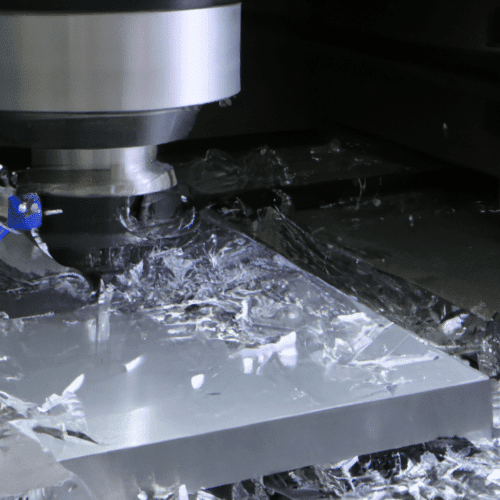
Aluminum stands as a premier material for Computer Numerical Control (CNC) machining, valued for its exceptional strength-to-weight ratio, inherent corrosion resistance, and high machinability. Its properties allow for rapid material removal and the creation of intricate geometries with remarkable precision. This makes aluminum a preferred choice across aerospace, automotive, and electronics industries.
Aluminum’s Machinability in CNC Environments
The ease with which aluminum can be cut and shaped is a significant advantage in CNC operations, leading to faster production cycles and reduced tool wear compared to harder metals like steel or titanium. Aluminum alloys chip cleanly, minimizing issues like tearing or stickiness that can plague softer materials.
Selecting the appropriate aluminum alloy is critical for successful machining. While 6061-T6 is widely considered the most versatile and easiest to machine due to its balanced hardness and forgiving characteristics, 7075-T6 offers superior strength for high-stress applications. Softer alloys like 5052 are often chosen for their excellent corrosion resistance, though they may deform more easily during machining.
High-Speed Milling for Optimal Aluminum Performance
| Parameter | Typical Range / Value | Notes |
|---|---|---|
| Spindle Speed (RPM) | 10,000 – 30,000+ | For high-speed milling, machine dependent. |
| Cutting Speed (SFM) | 400 – 800 | For 6061 aluminum, adjust for alloy. |
| Chip Load (IPT) | 0.002 – 0.020 inches | 0.005-0.010′ for roughing, 0.002-0.005′ for finishing. |
| Coolant Mist Pressure | 60 – 100 psi | Fluid flow 10-50 mL/hour. |
| Standard Milling Tolerance | ±0.05 mm (±0.002 inches) | For general industrial applications. |
| High-Precision Tolerance | ±0.01 – 0.02 mm (±0.0004 – 0.0008 inches) | Achievable under controlled conditions. |
Achieving efficiency in aluminum milling necessitates a ‘fast and light’ approach, prioritizing high cutting speeds and moderate feed rates. Spindle speeds often range from 10,000 to 30,000 RPM, with cutting speeds for 6061 aluminum typically falling between 400 and 800 Surface Feet Per Minute (SFM). This strategy minimizes heat transfer to the tool and workpiece, preventing material adhesion.
Aggressive chip loads are essential to carry heat away from the cutting zone effectively, preventing built-up edge (BUE) formation. Excessive cutting speeds without corresponding feed rates can lead to tool wear and poor surface finish. Machinists must coordinate spindle speed and feed to maintain proper chip thickness, ensuring efficient material removal.
Precision Tooling: the Role of 2-Flute Carbide End Mills
Two-flute solid carbide end mills are highly recommended for high-speed aluminum machining due to their design, which provides ample space for chip evacuation. This larger flute volume is crucial for preventing chip packing, especially during aggressive material removal and high-efficiency milling strategies like trochoidal toolpaths.
These tools often feature a high-positive rake geometry, allowing the cutting edge to slice through aluminum rather than push it, which reduces friction and heat buildup. Polished, uncoated, or specifically coated (e.g., ZrN or TiB2) end mills designed for non-ferrous materials further enhance performance by minimizing aluminum’s tendency to stick to the tool. A 45° helix angle also aids in faster chip removal and improved surface finish.
Advanced Coolant Strategies and Chip Management
Effective chip evacuation is paramount in aluminum machining to prevent chip recutting, which can accelerate tool wear and degrade surface finish. High-pressure coolant systems, delivering over 1000 PSI, are highly effective at blasting chips out of confined spaces and breaking up long, stringy aluminum chips. Internal coolant tool holders direct fluid precisely to the cutting edge, maximizing efficiency.
Minimum Quantity Lubrication (MQL) systems, also known as mist coolant, offer a precise mixture of compressed air and cutting fluid. These systems typically operate at 60-100 psi air pressure with fluid flow rates between 10-50 mL/hour, delivering droplets ranging from 5-50 microns. MQL can reduce cutting temperatures by 30-40% compared to dry machining and use 95% less coolant than flood systems, extending tool life and improving surface finish.
Beyond coolant, toolpath programming plays a vital role in chip control. Techniques such as helical interpolation and peck cycles create programmed escape routes for chips, preventing them from accumulating in deep pockets. Climb milling is also advantageous as it transfers heat to the chip rather than the tool or workpiece, reducing tool rubbing and the chance of chip recutting.
Achieving Dimensional Accuracy and Surface Finish
Precision in CNC aluminum machining is defined by adherence to specified tolerances, which directly impact assembly performance and functional reliability. Standard milling tolerances typically range from ±0.05 mm (±0.002 inches) for general applications, while high-precision machining can achieve ±0.01 mm (±0.0004 inches) under controlled conditions.
Tolerances should be applied judiciously, as overly tight specifications on non-critical features can significantly increase manufacturing costs without adding functional value. Modern engineering practices emphasize selecting tolerances based on feature function and size, rather than applying a blanket tight tolerance across an entire part.
Surface finish quality is also a critical consideration. As-machined aluminum typically achieves a surface roughness of Ra 3.2μm (126μin). Finer finishes, sometimes as low as Ra 0.4 μm with mist coolant, can be achieved through optimized cutting parameters and tool selection, though ultra-fine finishes may require secondary processes.