
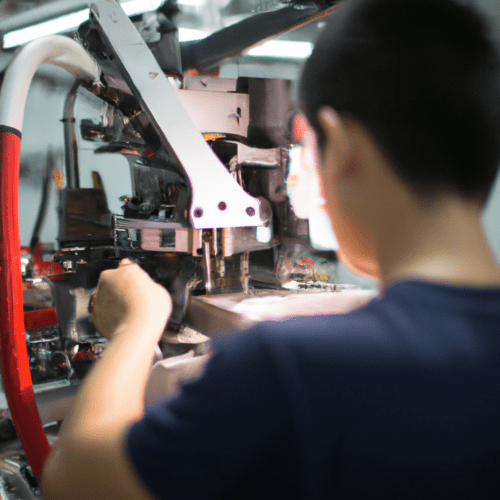
Computer Numerical Control (CNC) machining is not a dying trade; rather, it is undergoing a profound transformation, adapting to the demands of modern manufacturing with advanced technologies and evolving skill sets. The industry is experiencing significant growth, driven by digitalization and smarter factory systems.
Globally, the market for CNC machines is projected to reach between USD 93 billion and USD 129 billion in 2026, reflecting robust demand for precision manufacturing. This expansion includes both new machine sales and substantial investments in upgrading existing systems.
Modern Manufacturing Demand
Current industrial requirements emphasize high precision, customization, and rapid prototyping, pushing CNC machining capabilities to new limits. Manufacturers are increasingly seeking flexible production methods to meet diverse product specifications and shorter lead times.
The global manufacturing sector is also witnessing a strategic shift towards reshoring, bringing production closer to end-customers. This move aims to mitigate supply chain risks, reduce logistics costs, and enhance responsiveness, further solidifying the role of domestic CNC operations.
Efficiency and cost optimization remain paramount for competitiveness in 2026. Companies are leveraging advanced CNC technologies to minimize waste, improve resource utilization, and achieve higher throughput.
Advanced Automation Shifts
| Tolerance Level | Typical Range (mm) | Application |
|---|---|---|
| Standard Commercial | ±0.05 to ±0.13 | General mechanical components, automotive parts |
| Precision Grade | ±0.01 to ±0.025 | Critical fit and function, consumer electronics |
| Ultra-High Precision | ±0.005 | Specialized equipment, controlled environments |
| Aerospace/Medical Grade | ±0.002 to ±0.005 | Implants, critical aerospace components |
Automation is fundamentally reshaping CNC machining, with robotic loading and unloading systems becoming commonplace. These innovations enable ‘lights-out’ machining routines, allowing continuous operation with minimal human intervention, thereby reducing errors and downtime.
Artificial intelligence (AI) and machine learning are now integral to daily machine control and planning. AI systems analyze vast amounts of data—including spindle loads, tool wear, and part finish metrics—to predict tool failure, optimize cut paths, and adapt machining parameters in real-time.
The Internet of Things (IoT) plays a critical role, with sensors providing real-time monitoring of machine health and part quality. This connectivity facilitates predictive maintenance, allowing manufacturers to schedule servicing before breakdowns occur, significantly extending tool and spindle life.
Digital twin technology is also gaining traction, enabling virtual simulations of entire production lines and tool paths. This allows for the identification of potential collisions or vibrations before any material is cut, enhancing process reliability and product quality.
High-Skilled Labor Shortage
Despite technological advancements, the manufacturing sector faces a significant global talent shortage. In 2026, nearly 80% of manufacturers identified labor availability as their biggest external challenge, directly impacting operations.
The U.S. Bureau of Labor Statistics projects that 2.1 million manufacturing jobs could go unfilled by 2030, largely due to an aging workforce and a lack of new entrants into skilled trades. This demographic shift creates a critical demand for workers with specialized technical proficiency.
New skill sets are increasingly required, encompassing expertise in AI, automation, data analytics, and advanced CNC programming. Manufacturers are investing heavily in training and reskilling programs to bridge this gap and prepare their workforce for evolving roles.
Aerospace and Medical Growth
Both the aerospace and medical sectors are significant drivers of demand for advanced CNC machining. Commercial aircraft production shows resilience, with defense orders also accelerating into 2027.
The global medical device contract manufacturing market is projected to reach USD 92.86 billion in 2026, driven by robust demand, innovation, and the increasing adoption of advanced medical technologies. This includes a rapid shift towards home healthcare models.
These industries demand exceptionally tight tolerances and high-precision components. Aerospace and medical-grade parts often require tolerances as fine as ±0.002-0.005mm, necessitating specialized equipment and rigorous process control.
Future Industry Outlook
The future of CNC machining points towards continued evolution, characterized by faster machines, smarter controls, and increasingly sustainable operations. AI is transitioning from experimental to an integral part of daily machine control and planning, enabling adaptive correction.
Sustainability is becoming a core metric, with practices like minimum-quantity lubrication (MQL), scrap metal recycling, and energy-efficient drives gaining prominence. Manufacturers are also optimizing nesting software to minimize material waste.
Machinist roles are being redefined, shifting from direct machine tending to oversight, optimization, and complex problem-solving. This evolution requires a workforce capable of managing advanced automated systems and interpreting data for continuous improvement.
Hybrid manufacturing, which blends additive (3D printing) and subtractive (CNC) processes, is gaining momentum. This approach allows for the creation of complex near-net-shape parts that are then machined to tight tolerances, expanding the possibilities for intricate component production.