
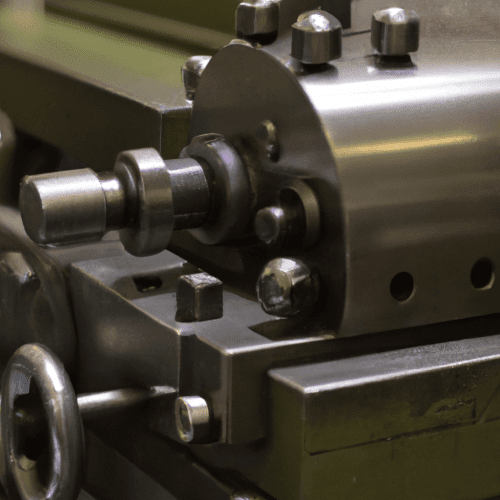
Lathe-mill combination machines offer a versatile solution for workshops with limited space, integrating turning, milling, and drilling capabilities into a single unit. These machines are particularly effective for jobbing shop projects requiring both turning and milling operations on limited quantities of parts. While they represent a compromise compared to dedicated machines, modern engineering advancements have significantly enhanced their precision and functionality.
Optimizing Performance with Dual Motor Power
Dual motor power configurations are a critical feature in contemporary lathe-mill combos, providing independent control and optimized performance for both turning and milling operations. This design typically involves separate motors for the lathe spindle and the milling head, allowing each function to operate at its ideal power and speed settings without compromise.
Machines equipped with dual motors, such as the Baileigh MLD-1022, often feature 1 HP motors for both the mill and lathe functions, running on standard 110V single-phase electrical input. This independent power supply reduces wear on components and extends the overall service life of the machine.
Having dedicated motors ensures that the power delivery is tailored to the specific demands of each machining process. For instance, turning operations might require consistent torque at lower RPMs, while milling benefits from higher spindle speeds and robust power to handle varying cutting loads. This separation prevents the common limitations found in single-motor designs, where one motor must serve both functions, often leading to compromises in performance or efficiency.
Ensuring Stability Through Rigid Bed Construction
| Grade | Lead Error (per 300mm) | Typical Applications |
|---|---|---|
| C0 | ≤ ±3.5μm | Aviation, Photolithography, Ultra-precision machines |
| C1–C3 | ±5–8μm | CNC equipment, Robotics, High-precision manufacturing |
| C5–C7 | ±12–52μm | Industrial automation, General machinery |
The machine bed forms the foundational support for all components, including the spindle, tool changer, and worktable, making its rigidity paramount for precision machining. A robust bed structure is essential for maintaining stability, minimizing vibrations, and ensuring the overall accuracy and longevity of the machine.
Modern lathe-mill combos often utilize heavily ribbed Meehanite cast iron frames, optimized through finite element analysis to maximize stiffness and maintain efficient mass distribution. Cast iron is a traditional choice due to its excellent damping properties and dimensional stability, which significantly aids in reducing vibrations during operation.
A rigid structure allows the machine to maintain dimensional accuracy even under significant cutting forces, improving both productivity and consistency, particularly when machining tough materials. Any deflection or misalignment in the bed can lead to measurable errors in the finished part, highlighting the importance of a well-engineered base.
Streamlining Operations with Easy Spindle Conversion
Efficient spindle conversion mechanisms are vital for maximizing the versatility of a lathe-mill combo, allowing operators to switch between turning and milling modes quickly and accurately. This feature minimizes downtime and enhances workflow, particularly in environments where diverse machining tasks are common.
Some systems, like Tormach’s RapidTurn accessory, allow a mill to be converted into a lathe by utilizing the mill’s VFD and a quick-change system. This accessory, while smaller than a standalone lathe, provides turning capabilities for parts up to 6 inches in diameter.
The ease of conversion often involves a well-designed headstock or milling column that can be repositioned or swapped with minimal effort. For example, some machines feature a cross slide that doubles as a mill table, simplifying the transition between operations.
Achieving Accuracy with Precision Lead Screws
Precision lead screws are fundamental components in CNC machines and lathe-mill combos, translating rotational motion into highly accurate linear movement. Their performance directly impacts the machine’s positioning accuracy, repeatability, and overall part quality.
Minimizing backlash is a critical factor for lead screw performance, as even slight gaps between the screw and nut can introduce errors during changes in motion direction. Lowest backlash lead screws are engineered to achieve clearances of 2 microns or less, ensuring precise and consistent movements.
Precision lead screws are capable of delivering positioning accuracy within ±0.21mm over 300mm of travel, a significant improvement over typical lead screws with higher backlash. For ultra-high precision applications, C0 grade roller lead screws can achieve errors of ≤ ±3.5μm/300mm.
Ground thread lead screws offer superior precision and surface finish compared to rolled thread lead screws, making them the preferred choice for applications demanding high positional accuracy and repeatability. The grinding process allows for extremely accurate thread profiles and tighter tolerance control.
Enhancing Control via Digital Readout (DRO) Integration
Digital Readout (DRO) systems are invaluable upgrades for manual and semi-manual lathe-mill combos, providing real-time position feedback of the machine’s moving parts. A DRO system typically uses linear encoders and a digital console to display precise numerical readouts, often to a resolution of 0.005 mm (5 µm).
DROs overcome the uncertainties associated with manual dials and lead screw backlash, significantly improving machining precision and efficiency. They allow machinists to reset axes to zero at any time and read table positions with high accuracy, eliminating the need for counting handwheel revolutions or complex calculations.
Modern DRO systems offer multi-axis readouts, supporting X, Y, and Z-axis movements for milling, and carriage (Z-axis) and cross-slide (X-axis) travel for lathes. Some advanced DROs include features like RPM readouts, touch probe support for edge finding, and spindle tachometers for chip-load and surface speed calculations.
Many DRO kits are designed for universal compatibility, fitting a wide range of machines and working with various scale types, including glass, magnetic, and capacitive encoders. This flexibility allows machinists to upgrade existing machines or customize new setups for optimal performance.