
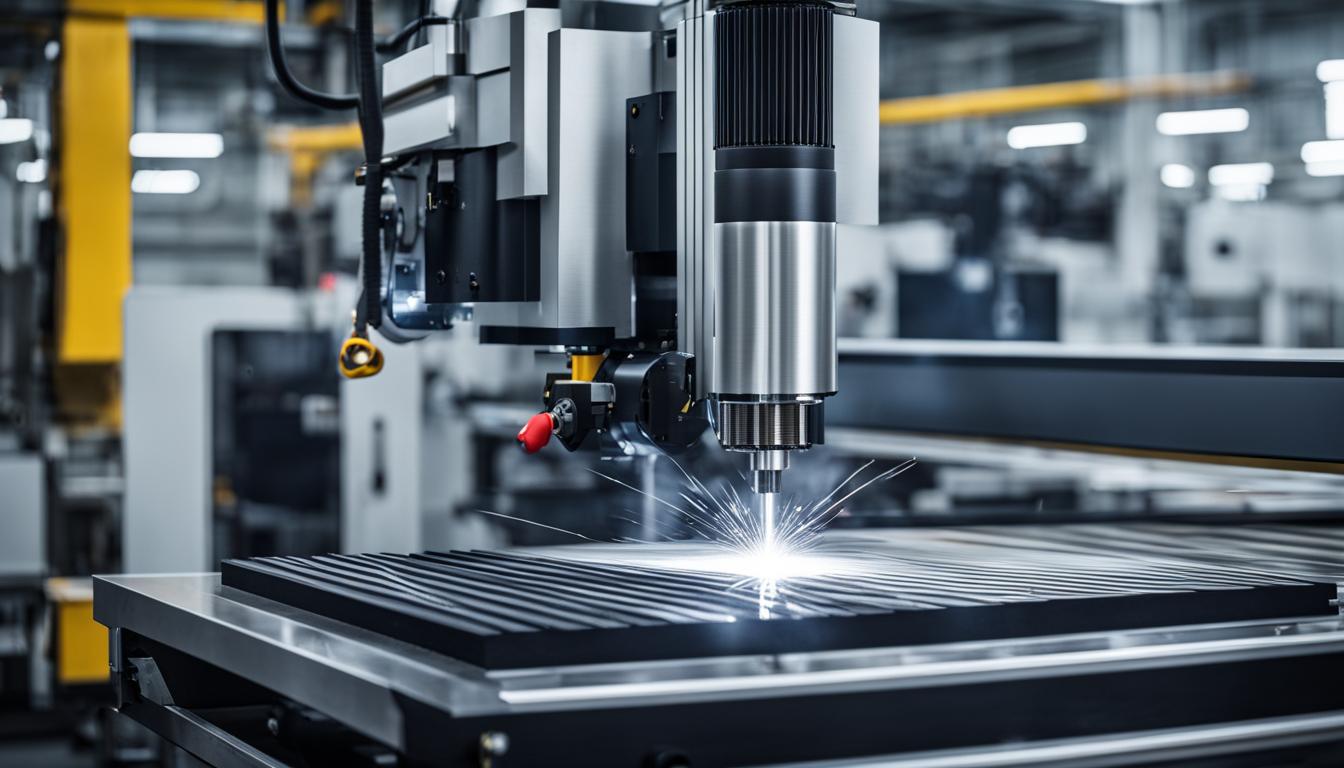
Haas Automation, an American machine tool builder headquartered in Oxnard, California, has established itself as a significant force in the global CNC market since its founding in 1983. The company designs and manufactures a comprehensive range of computer numerically controlled (CNC) equipment, including vertical and horizontal machining centers, lathes, and rotary tables. Haas machines are primarily manufactured at their Oxnard facility, which is recognized as one of the largest and most modern machine tool manufacturing operations in the United States.
This commitment to in-house production and continuous development underpins the brand’s reputation. Haas aims to provide capable CNC equipment that is both affordable and well-supported, catering to a wide array of manufacturing needs from small job shops to larger production facilities. Their integrated approach combines robust hardware with proprietary control software and a global dealer network.
High Value-To-Cost Ratio
Haas Automation pioneered the concept of affordable CNC machines with the introduction of the VF-1 vertical machining center in 1988. This foundational philosophy continues today, offering an extensive product line with transparent pricing and a strong emphasis on delivering exceptional value.
Many industry analyses highlight Haas machines as offering a superior value proposition compared to competitors. For instance, a popular 3-axis VMC like the Haas VF-2SS typically ranges from $70,000 to $120,000, depending on selected options such as through-spindle coolant or 5-axis rotary tables. Comparable base models from other top brands, including Mazak or DMG Mori, often start at $120,000 or more.
The company’s dedication to affordability is further exemplified by offerings like the Pocket Mill, a legitimate 40-taper vertical machining center starting at approximately $27,000. This machine can operate on single-phase or three-phase power and can be configured with a 10-pocket tool changer or a 4th/5th axis rotary, making advanced machining accessible to a broader market.
This ‘value for money’ approach ensures that shops can acquire machines with machining quality comparable to higher-end brands without the prohibitive initial investment. Haas machines also maintain strong resale value, making them a sound investment for businesses considering used equipment.
Intuitive Operator Controls
| Parameter | Value (SAE) | Value (Metric) |
|---|---|---|
| Chuck Size | 8.3 inches | 210 mm |
| Max Part Swing | 21.0 inches | 533 mm |
| Max Cutting Diameter (with BMT65 turret) | 11.75 inches | 298 mm |
| Max Cutting Length | 22.5 inches | 571 mm |
| Bar Capacity | 2.50 inches | 64 mm |
| X-Axis Travel | 8.40 inches | 213 mm |
| Z-Axis Travel | 22.50 inches | 571 mm |
| Rapid Traverse (X/Z) | 945 ipm | 24.0 m/min |
| Spindle Speed | 4,000 RPM | 4,000 RPM |
| Spindle Power | 20 hp | 14.9 kW |
| Positioning Accuracy | ±0.0002 inches | ±0.005 mm |
| Repeatability Accuracy | ±0.00012 inches | ±0.003 mm |
The Haas control system, encompassing both hardware and software, is developed and manufactured entirely in-house, specifically optimized for Haas machine tools. This integrated design ensures seamless operation and consistent functionality across the entire product line, from mills to lathes.
Operators benefit from a simple user interface and intuitive navigation, which significantly reduces the learning curve. Standard features include a responsive touchscreen interface, a dedicated keypad, one-button functions for common operations, and a multi-function jog handle. The large color LCD screen enhances visibility and user interaction.
The control supports both traditional G-code and conversational programming, providing flexibility for machinists of varying skill levels. The Visual Programming System (VPS) simplifies G-code program creation through form-like templates, further enhancing ease of use.
Haas machines are widely adopted in educational institutions globally, meaning many graduating students are already proficient with the Haas control. This familiarity streamlines the hiring process for shops and reduces training time for new operators, contributing to overall shop efficiency.
Widespread Service Network
Haas Automation supports its global customer base through an extensive network of independently owned and operated Haas Factory Outlets (HFOs). These HFOs provide comprehensive local sales, installation, and crucial after-sales support, ensuring that customers receive prompt and dedicated service.
Each HFO maintains a substantial inventory of service and maintenance parts, facilitating quick repairs and minimizing machine downtime. The Haas headquarters in California boasts a 99% same-day shipping rate for needed replacement parts to HFOs, underscoring their commitment to rapid service.
The service personnel at HFOs are factory-trained and certified, equipped to handle the evolving technology of modern machine tools. Haas also provides a 24-hour technical support hotline and a comprehensive online knowledge base, including manuals, drawings, and instructional videos, accessible 24/7.
The ‘Platinum One-Call Service’ policy is designed to provide expert service and an immediate response, aiming to achieve successful machine repairs on the first visit. This robust support infrastructure is critical for maintaining high productivity in demanding manufacturing environments.
American Manufacturing Quality
Haas Automation, an American company, manufactures the majority of its products at its state-of-the-art facility in Oxnard, California. This centralized production ensures stringent quality control throughout the manufacturing process, from design to final assembly.
The company holds ISO 9001:2015 certification for the design and manufacture of CNC machine tools and accessories. This international standard confirms Haas’s adherence to a robust quality management system, demonstrating their ability to consistently meet customer and regulatory requirements while pursuing continuous improvement.
All Haas-built CNC machine tools carry the ETL Listed mark, certifying their conformance to the NFPA 79 Electrical Standard for Industrial Machinery and its Canadian equivalent, CAN/CSA C22.2 No. 73. This ensures electrical safety and compliance with recognized industry standards.
Haas machines are constructed with robust cast-iron frames, which provide superior stability and effective vibration dampening. This durable construction is essential for maintaining high machining accuracy and reliability, even during prolonged and intensive production cycles.
Versatile Job Shop Performance
Haas CNC machines offer an optimal balance of value, dependability, and versatility, making them highly suitable for the dynamic demands of job shop environments. These machines are engineered to handle a diverse mix of unpredictable work, accommodating varying part sizes and a wide range of materials, including stainless steel, aluminum, and exotic alloys.
The VF (Vertical Format) series represents Haas’s primary vertical machining center lineup and is widely popular across North America for general-purpose milling, drilling, and tapping operations. Similarly, the ST (Turning) series, including models like the ST-20, serves as a standard solution for turning applications, often featuring 12-position turrets and live tooling capabilities for complex parts.
Haas machines are frequently deployed for rapid prototyping, small batch production, custom parts manufacturing, and the creation of on-demand spare parts and tooling. Their adaptability makes them valuable assets across various industries, including aerospace, automotive, and medical device manufacturing.
To enhance productivity, Haas offers integrated automation solutions such as Automatic Parts Loaders (APLs) and bar feeders, which interface directly with the Haas control. These systems streamline repetitive loading and unloading tasks, freeing operators for more complex work.
Technical Specifications and Tolerances
Haas machines are designed to achieve precise machining tolerances, crucial for modern manufacturing. Standard CNC machining tolerances for milling and turning typically range around ±0.005 inches (0.13 mm). For applications demanding higher precision, tolerances can be tightened to ±0.001 inches (±0.025 mm) or even ±0.0005 inches (±0.012 mm).
Angular tolerances generally fall within ±0.5° for general machining and ±0.25° for precision work. Specific Haas models, such as the ST-20Y, demonstrate a positioning accuracy of ±0.005 mm and a repeatability accuracy of ±0.003 mm, highlighting their inherent precision capabilities.
The Haas control incorporates features like ‘Maximum Rounding’ (Setting 85), which allows operators to define the machining accuracy of rounded corners. The default value is 0.05 inches, but this can be adjusted or overridden using the G187 code to optimize for roughing or finishing cycles, balancing speed and precision.
Feeds and speeds are critical parameters for optimizing machining operations. The Haas control includes built-in calculator features to assist operators in quickly determining starting values for various tools and materials.
For milling operations, a 1/2-inch 2-flute carbide endmill in 6061 aluminum on a Haas VF-11 might utilize 8000 RPM and 80 IPM with a 10% stepover, leaving 0.01 inches for finishing. Machines with lower horsepower or RPM, such as a TM-1P, would require adjustments, potentially around 5500 RPM and 15 IPM for a flat wall.
Advanced features like High Speed Machining (HSM) increase the control’s look-ahead capability to 80 blocks, enabling full-speed blending of feed strokes up to 500 inches per minute. This is particularly beneficial for machining smoothly sculpted shapes common in mold making. Through-Tool Air Blast (TAB) can also double RPM and feed rates for dry machining by efficiently clearing chips.