
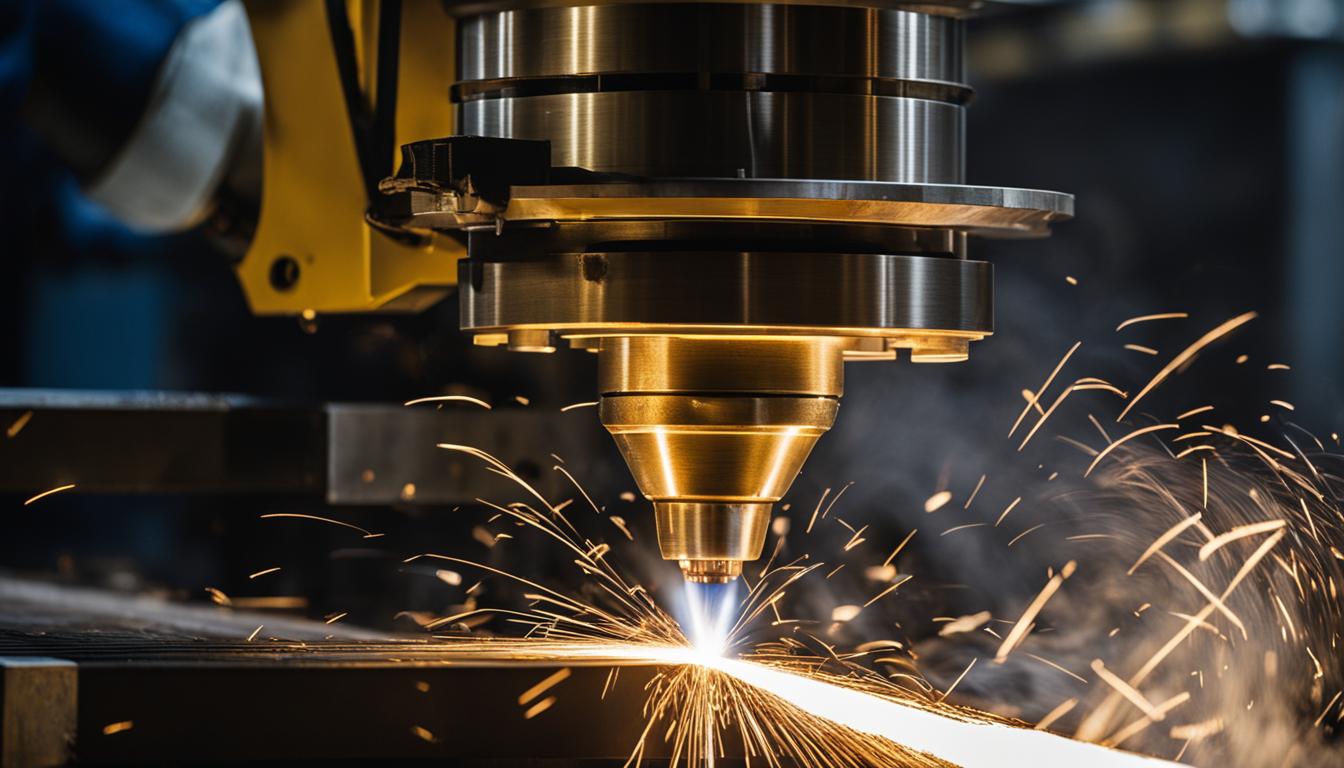
Chicago stands as a significant hub within Illinois’ robust manufacturing sector, contributing substantially to the state’s industrial output. The region’s manufacturing base is dynamic, encompassing advanced robotics, clean energy systems, aerospace, and precision engineering.
Illinois itself is recognized as a global leader in advanced manufacturing, supported by a skilled workforce, modern infrastructure, and extensive research and development capabilities. Key manufacturing cities in Illinois include Chicago, Elk Grove, Des Plaines, and Aurora, with many manufacturing operations thriving in the surrounding Chicagoland suburbs.
Chicago’s Role in Illinois Manufacturing
The Chicago metropolitan area boasts over 400,000 manufacturing and logistics workers, generating an annual output exceeding $100 billion from its manufacturing sector. This makes Chicago the second-largest U.S. metro for manufacturing employment diversity. The city’s strategic central location offers world-class logistics via rail, road, air, and water, connecting North America’s supply chains efficiently.
An innovative ecosystem further strengthens Chicago’s manufacturing prowess, with centers like mHUB and UI Labs accelerating R&D, prototyping, and commercialization across various sectors. This environment fosters growth and continuous innovation, attracting both legacy companies and new ventures in advanced manufacturing.
Ensuring Quality with ISO 9001 Certification
| Material | Tool Material | Surface Speed (SFM) | Chip Load (IPT) | Feed Rate (IPM) (approx. for 0.5″ 3-flute end mill) |
|---|---|---|---|---|
| 6061 Aluminum | Carbide | 800-1200 | 0.003-0.006 | 30-60 (calculated) |
| 304 Stainless Steel | Carbide | 150-250 | 0.001-0.003 | 5-15 (calculated) |
ISO 9001 certification is an internationally recognized standard for quality management systems (QMS), crucial for CNC machining companies to demonstrate consistent, high-quality output. This certification signifies that a shop has a robust QMS covering all production aspects, from design to final delivery.
Achieving ISO 9001 involves a comprehensive process, including an initial assessment, gap analysis, and the creation of a quality manual outlining policies and procedures. It mandates detailed documentation of workflows, monitoring performance metrics, and implementing corrective actions for nonconformities. This structured approach ensures process traceability and consistent quality checks, reducing defects.
Precision Machining for Aerospace and Automotive
The aerospace and automotive industries demand exceptionally high standards for precision, quality, and traceability in machined components. For aerospace applications, AS9100 certification is the baseline quality standard, extending ISO 9001 with specific requirements for aviation, space, and defense.
AS9100 addresses critical areas such as risk management, configuration management, product safety, and the prevention of counterfeit parts. It requires documented process controls, corrective action systems, and First Article Inspection (FAIR) per AS9102 to prove a supplier’s ability to produce conforming parts reliably. Compliance with ITAR (International Traffic in Arms Regulations) is also non-negotiable for handling defense-related aerospace drawings.
In the automotive sector, IATF 16949 is the global standard for quality management systems, building upon ISO 9001 with additional requirements for continuous improvement, defect prevention, and stringent supplier oversight. This certification is often a mandatory requirement from OEMs and tier-one suppliers, ensuring robust product traceability and process control throughout the supply chain.
Custom Metal Milling Capabilities in Chicago
Chicago’s CNC machining services offer extensive custom metal milling capabilities, handling a wide range of materials from aluminum to heat-resistant superalloys. Shops in the region provide multi-axis milling, including 3-axis, 4-axis, and 5-axis operations, to produce complex geometries and intricate components.
Precision machining operations can achieve tight tolerances, with standard tolerances typically around ±0.005 inches (±0.127 mm) for most metals. For critical applications, precision machining services can operate within ±0.001 inches (±0.0254 mm) to ±0.0005 inches (±0.0127 mm), with industry leaders reaching tolerances of 1-3 microns for medical and aerospace parts.
Modern CNC milling practices leverage advanced software for simulation and optimization, reducing waste and enhancing product quality. This includes sophisticated CAD/CAM integration to translate digital blueprints into tangible products with unmatched accuracy.
Note: These values are starting points and should be adjusted based on specific tool geometry, machine rigidity, depth of cut, and coolant strategy.
Accelerated Rapid Prototyping Turnaround
Rapid prototyping services in Chicago are designed to accelerate product development cycles, offering quick turnaround times for both simple and complex parts. Simple prototypes with standard materials and basic geometry can often be delivered within 1-3 business days.
For more complex prototypes, lead times typically range from 5-10 business days. Factors influencing turnaround include part complexity, material availability, and any required secondary operations like anodizing or heat treating. Many shops prioritize prototypes, with processes streamlined from order confirmation to machining, deburring, inspection, and shipping.
Utilizing 5-axis CNC machines for prototyping can significantly reduce lead times and part costs by minimizing setups, especially for intricate three-dimensional shapes. Submitting complete CAD files with clear tolerances and material callouts is crucial to prevent delays and ensure efficient production.