
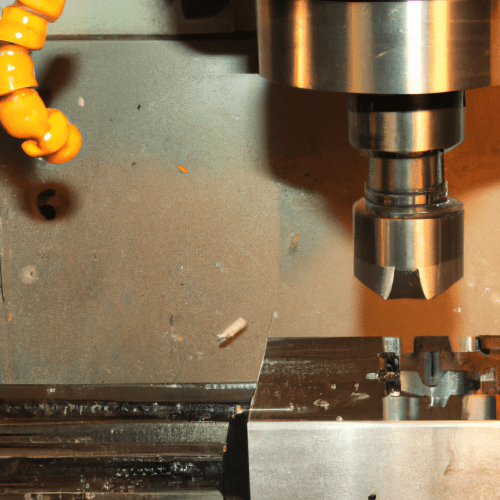
A finger mill, in the context of precision machining, refers to a specialized type of end mill characterized by its relatively small diameter and often extended length-to-diameter ratio. These tools are engineered for intricate material removal, enabling the creation of fine features, tight radii, and complex geometries that larger cutters cannot access. Their design prioritizes accuracy and surface finish in demanding applications.
Understanding the Precision Finger Mill
Precision finger mills are essential for operations requiring high detail and tight tolerances. Unlike general-purpose end mills, these tools are specifically designed to minimize deflection and maintain cutting stability even at small diameters. Tool material, geometry, and coating are critical factors influencing their performance and longevity in various materials.
Minimizing tool deflection is paramount when working with small-diameter cutters. Deflection occurs when cutting forces cause the tool to bend, leading to dimensional errors, poor surface finish, and premature tool wear or breakage. Strategies to mitigate this include using the shortest possible tool stickout, employing rigid workholding, and optimizing cutting parameters to reduce cutting forces.
Modern finger mills often feature advanced coatings like AlTiN for increased lubricity and wear resistance, particularly in challenging materials. Their flute geometry is optimized for efficient chip evacuation, which is crucial in deep or confined cuts to prevent chip recutting and heat buildup. High spindle speeds, often exceeding 20,000 RPM, are common to achieve adequate surface feet per minute (SFM) with small diameters, especially in micro-milling applications.
Precision Slotting and Keyway Creation
| Parameter | Standard Tolerance | Tight Tolerance | Precision Tolerance |
|---|---|---|---|
| CNC Milling (Linear) | ±0.005″ (±0.127 mm) | ±0.002″ (±0.050 mm) | ±0.001″ (±0.025 mm) |
| Aluminum (6061) SFM (Carbide) | 600-1200 SFM | 700-1000 SFM | 1200-1800 SFM (for optimal finish) |
| Mild Steel (1018) SFM (Carbide) | 350-600 SFM | 400-500 SFM | N/A (Focus on tool life/rigidity) |
Finger mills are indispensable for machining precise slots and keyways, which are critical for mechanical connections and torque transmission in various assemblies. Their ability to maintain tight dimensional accuracy ensures proper fit and function of mating components. Keyway milling cutters, a specific type of finger mill, often feature two symmetrical cutting edges to balance radial forces, enhancing stability and accuracy during axial plunging.
Achieving accurate slot dimensions requires careful consideration of tool diameter, runout, and cutting parameters. Standard tolerances for alignment or sliding fits in slots can be as tight as ±0.02mm, while secure positioning might require ±0.05mm. Modern practices emphasize using standard end mill sizes (e.g., 1/8″, 1/4″, 3/8″) to avoid the increased cost and lead time associated with custom tooling.
For keyway milling, proper workpiece clamping is essential to prevent movement and ensure consistent dimensions. Parallel-jaw vices are suitable for small to medium-short shafts, while V-shaped frames offer superior stiffness for longer, thicker shafts. Aligning the milling cutter precisely with the workpiece’s center is crucial for keyway symmetry. Starting with light cuts helps define the keyway profile and minimizes the risk of tool breakage.
Intricate Internal Profiling and Pocketing
Creating complex internal profiles and pockets in tight spaces is a primary application for finger mills. These tools excel at generating curved edges, 2D and 3D contours, and precision surfaces within confined areas. Multi-axis CNC machines, particularly 5-axis systems, are frequently employed to maintain optimal tool contact angles and achieve complex geometries in a single setup.
Profile milling operations typically involve multiple stages: roughing, semi-finishing, finishing, and super-finishing, each with specific goals for material removal and surface quality. For roughing, techniques like trochoidal milling are effective, as they involve smaller, circular cuts that reduce the force on the tool, thereby minimizing deflection and improving tool life. Finishing passes require reduced stepovers and optimized feeds and speeds to achieve the desired surface finish, often with axial depths around 0.5 mm.
Effective chip evacuation is critical during internal profiling and pocketing, especially in deep cavities. Coolant, air blast, or mist systems are used to clear chips and manage heat, preventing chip packing and tool welding, particularly in materials like aluminum. The choice of tool geometry, such as polished split faces, can also improve chip evacuation and reduce galling.
Milling Small Channels and Fine Features
Finger mills are fundamental to micro-milling, a specialized technique for manufacturing small, intricate components with exceptional accuracy. This involves using end mills with diameters typically 1 mm or smaller, capable of producing features ranging from 0.1 mm to 10 mm. Industries such as aerospace, electronics, and medical devices heavily rely on micro-milling for parts demanding tight tolerances and fine detail.
High spindle speeds, often ranging from 20,000 to 60,000 RPM, are common in micro-milling to achieve appropriate cutting speeds for these tiny tools. However, these high speeds, combined with small tool diameters, make tools highly susceptible to vibration and deflection. Machinists must implement rigid setups, use balanced tools, and take shallow cuts to maintain precision and surface finish.
Compensating for tool deflection in miniature milling tools (diameter < 1 mm) is an advanced practice. Techniques involve predicting cutting forces, calculating tool deflection, and creating a new tool path to eliminate the error, potentially reducing errors from 20-50 µm to 2-5 µm. This level of precision is vital for components like microfluidic devices, micro-optics, and miniature molds.
Advanced Die and Mold Machining
The die and mold industry relies heavily on finger mills for creating the intricate cavities and features required for injection molding, die casting, and forging tools. These applications demand extremely high precision, excellent surface finishes, and the ability to machine a wide range of materials, including pre-hardened and hardened steels up to 66 HRC, as well as aluminum for prototype molds.
High-speed machining (HSM) with finger mills, often at 20,000–40,000 RPM, is a modern engineering practice that significantly reduces cycle times for complex 3D mold cavities. This approach enables direct hard milling of hardened steels, thereby decreasing the reliance on electrical discharge machining (EDM) and improving surface finishes, which in turn reduces subsequent polishing time.
Surface finish is a critical requirement in die and mold work, directly impacting the quality and appearance of the final molded or cast product. Finger mills with optimized geometries and coatings contribute to achieving superior surface finishes, minimizing ‘scallop’ marks on 3D contours and ensuring the integrity of the mold cavity. The overall quality of the mold or die directly influences the expected tool life, with Class 101 molds designed for over 1,000,000 cycles.