
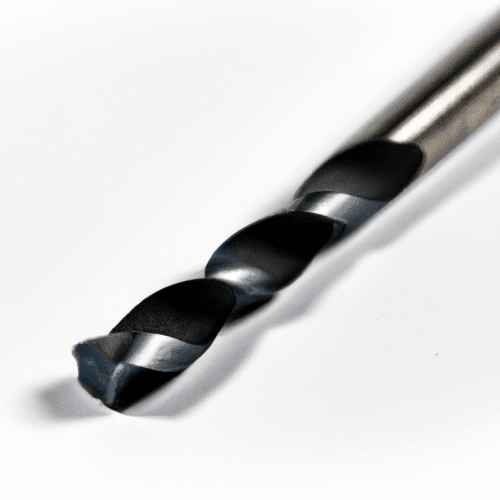
Cobalt drill bits represent a significant advancement over conventional high-speed steel (HSS) tooling, particularly in challenging machining environments. Their enhanced performance stems from the integration of cobalt into the steel alloy, rather than a surface coating. This fundamental material difference ensures that the drill’s superior properties are maintained throughout its life, even after multiple resharpenings.
These specialized drill bits are engineered to address the limitations of standard HSS, which often struggles with heat generation and abrasive materials. The alloying process creates a tool that retains its hardness and cutting edge integrity at elevated temperatures, making it indispensable for modern manufacturing.
Superior Heat Resistance
Drilling operations inherently generate substantial friction, which translates directly into heat at the cutting edge. Standard HSS bits begin to lose their hardness around 600°F (315°C), leading to rapid dulling and premature tool failure. Cobalt drill bits, however, are designed to withstand significantly higher thermal stress, maintaining their edge hardness at temperatures exceeding 1,000°F (538°C), with some M42 grades tolerating up to 1,616°F (880°C).
This exceptional ‘red hardness’ is a direct result of the cobalt content, typically 5% for M35 grade and 8% for M42 grade, which is uniformly distributed throughout the steel alloy. Unlike coated bits, where the protective layer can wear off, the cobalt in these drills ensures consistent heat resistance even as the bit is sharpened. This characteristic is vital for sustained performance in aggressive cutting applications.
The ability to operate at higher temperatures without softening allows for more aggressive feeds and speeds, directly contributing to increased material removal rates and reduced cycle times. This thermal stability is a primary reason for their adoption in industrial settings where efficiency is paramount.
Drilling Stainless Steel
| Property | HSS (M2 Grade) | Cobalt (M35 Grade) | Cobalt (M42 Grade) |
|---|---|---|---|
| Cobalt Content | 0% | ~5% | ~8% |
| Hardness (HRC) | 62-65 | ~66 | ~68-70 |
| Max Operating Temp | ~600°F (315°C) | >1,000°F (538°C) | >1,500°F (815°C) |
| Primary Application | Mild steel, aluminum, wood | Stainless steel, cast iron, medium-hard alloys | Hardened steel, titanium, Inconel, superalloys |
| Cost Multiplier (vs. HSS) | 1x | ~1.5-2x | ~2-3x |
Stainless steel presents unique challenges due to its ‘work-hardening’ properties; it becomes harder as it is cut. Standard HSS drills often struggle to penetrate this hardened layer, leading to glazing, excessive heat buildup, and rapid dulling. Cobalt drills, with their inherent rigidity and superior heat resistance, effectively cut through the work-hardened zone, preventing premature wear.
When drilling stainless steel, proper technique is as critical as the tool itself. Operators should employ slower speeds and firm, consistent pressure to ensure the bit continuously cuts rather than rubs. Using a quality cutting fluid or paste is also essential to reduce friction, dissipate heat, and prevent further work-hardening of the material.
For optimal results in stainless steel, a 135-degree split point geometry is often recommended. This design helps reduce ‘walking’ on the workpiece surface and minimizes the thrust force required for penetration, ensuring a cleaner start and improved hole accuracy.
High Hardness Alloys
Machining high hardness alloys, such as heat-treated steels, titanium, and Inconel, demands tooling that can withstand extreme conditions. Cobalt drill bits, particularly M42 grades with 8% cobalt, are specifically engineered for these demanding applications. Their elevated hardness (typically 68-70 HRC for M42) and exceptional wear resistance enable them to maintain cutting performance where other drill types fail.
These materials often exhibit poor thermal conductivity, meaning heat generated during cutting does not dissipate quickly from the workpiece. Cobalt drills excel here by retaining their cutting edge integrity even when the cutting zone reaches very high temperatures. This prevents thermal softening of the tool, which is a common failure mode in less robust drill bits.
Modern engineering practices for drilling high hardness alloys emphasize rigid machine setups, precise feed and speed control, and the generous application of appropriate cutting fluids. These measures collectively maximize tool life and ensure consistent hole quality in these challenging materials.
Extended Tool Life
The primary benefit of utilizing cobalt drill bits is their significantly extended tool life compared to standard HSS. This longevity is attributed to their superior heat resistance and hardness, which allows them to endure prolonged cutting cycles in abrasive and high-temperature materials without rapid degradation.
Because cobalt is alloyed throughout the bit, its performance characteristics are not diminished by wear or resharpening. This intrinsic property means that a cobalt drill bit can be reground multiple times, restoring its cutting edge and extending its usable lifespan, which translates to considerable cost savings over time.
Proper operational parameters, including optimized feeds and speeds, adequate lubrication, and stable machine conditions, are crucial for maximizing the lifespan of cobalt drills. Avoiding excessive pressure and allowing the bit to cool periodically also contribute to preventing premature failure.
Reduced Drill Bit Dulling
The inherent ‘red hardness’ of cobalt drill bits directly contributes to a substantial reduction in drill bit dulling. When a cutting edge overheats, it softens and loses its ability to shear material effectively, leading to rubbing rather than cutting. Cobalt’s ability to resist thermal softening ensures the cutting edge remains sharp for longer periods.
This sustained sharpness is particularly advantageous when drilling materials prone to work-hardening, such as stainless steel. A sharp cobalt bit can continuously penetrate the newly hardened layer, preventing the material from glazing and further accelerating tool wear.
Maintaining optimal cutting parameters, such as appropriate RPM and feed rates, along with consistent lubrication, is vital to fully leverage the anti-dulling properties of cobalt drills. These practices minimize friction and heat buildup, preserving the integrity of the cutting edge.