
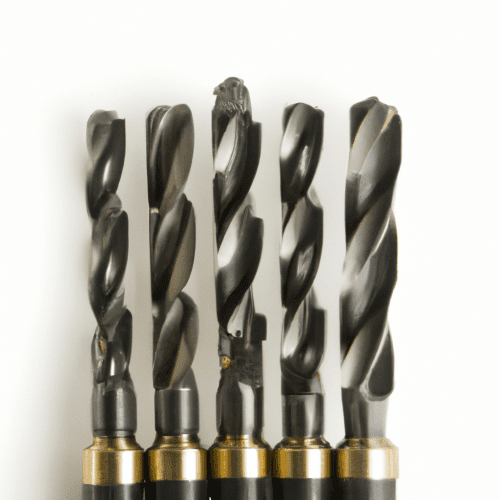
Choosing an appropriate drill bit set is fundamental for achieving precision and efficiency in any machining operation. The right set ensures material compatibility, extends tool life, and ultimately impacts the quality of the finished workpiece. Modern engineering demands drill bits that offer versatility across various materials, superior tip geometry, and organized storage for quick access and protection.
A comprehensive drill bit set is more than just a collection of sizes; it represents a strategic investment in tooling. Factors such as material composition, tip design, and the range of sizes included directly influence performance and cost-effectiveness. Understanding these technical specifications is crucial for both professional machinists and serious hobbyists.
Material Versatility and HSS-Cobalt Options
Drill bit material composition dictates its resilience, heat resistance, and cutting ability across diverse workpieces. High-Speed Steel (HSS) remains a cost-effective choice for general-purpose drilling in softer materials like wood, plastics, aluminum, and mild steel. HSS bits offer good flexibility, making them less prone to chipping compared to harder alternatives. However, their heat tolerance is limited, typically to around 1,100°F (600°C), which restricts cutting speeds in harder materials.
For more demanding applications, HSS-Cobalt (HSS-Co) drill bits are a superior option. These bits incorporate 5% to 8% cobalt alloyed throughout the steel, providing significantly higher heat resistance, often up to 1,580–1,616°F (860–880°C). This inherent heat resistance means the cutting edge retains its hardness even after resharpening, unlike coated bits where the protective layer can wear off. Cobalt bits excel in drilling tough materials such as stainless steel, cast iron, hardened steel, and titanium alloys, where standard HSS bits would quickly dull or fail.
While cobalt bits are harder and more wear-resistant than HSS, they are also slightly more brittle, requiring steady pressure and appropriate speeds to prevent chipping. M35 cobalt, containing 5% cobalt, offers a good balance of heat resistance and toughness for general metal drilling, including stainless steel. M42 cobalt, with 8% cobalt, provides even greater hardness and heat resistance for extremely challenging materials.
The Advantage of Split-Point Tip Design
| Drill Bit Material | Hardness (HRC) | Max Operating Temp (°C) | Primary Application | Key Characteristics |
|---|---|---|---|---|
| HSS (High-Speed Steel) | 62-65 | 540 (1000°F) | Aluminum, mild steel, wood, plastics | Cost-effective, versatile, flexible |
| Cobalt (M35/M42) | 64-67 | 600 (1100°F) | Stainless steel, cast iron, hardened steel, titanium | High heat resistance, longer tool life in metals, more brittle than HSS |
| Carbide | >70 | >1150 (2100°F) | Hardened metals, ceramics, composites, concrete | Extreme hardness, wear resistance, high heat tolerance, very brittle, higher cost |
The tip geometry of a drill bit profoundly impacts its starting accuracy and cutting efficiency. Standard 118-degree point angles are common for general-purpose HSS jobber drills, working well in mild steel and softer materials. However, they often require a center punch to prevent ‘walking’ or wandering upon initial contact, as the chisel edge at the center scrapes rather than cuts material.
Split-point drill bits, typically featuring a flatter 135-degree point angle, offer significant advantages, particularly in precision machining and drilling harder materials. This design incorporates two additional edges ground into the chisel edge, effectively eliminating it and creating secondary cutting edges. This modification dramatically reduces the axial force required to start a hole, often by 50-70%, and provides superior self-centering capabilities.
The self-centering characteristic of split-point bits eliminates the need for pilot holes in many applications, saving time and improving hole location accuracy. They penetrate various materials faster, reduce resistance, and efficiently remove debris, which minimizes heat generation and extends tool life. For CNC machining, split-point drills are considered the default due to their accuracy and reduced need for spot drilling operations.
Comprehensive Size Coverage and Standard Tolerances
A truly good drill bit set provides a wide range of sizes to accommodate diverse applications, from small pilot holes to larger through-holes. Common sets typically include fractional inch sizes (e.g., 1/16″ to 1/2″ in 1/64″ increments), metric sizes (e.g., 1.0mm to 13.0mm in 0.5mm or 0.1mm increments), and sometimes number (#1-#80) or letter (A-Z) gauge sizes for specific tapping or reaming operations. A 21-piece or 29-piece imperial set, or a 19-piece or 25-piece metric set, often provides sufficient coverage for most professional needs.
Achieving precise hole dimensions requires adherence to standard machining tolerances. For general CNC machining, a standard tolerance of ±0.005″ (±0.127 mm) is common for most linear dimensions. For tighter fits, such as bearing bores or dowel pin holes, tolerances of ±0.002″ (±0.050 mm) are often specified. Precision applications, like press-fit bores, may demand tolerances as tight as ±0.001″ (±0.025 mm), though these significantly increase machining costs due to slower speeds and more rigorous inspection.
Material properties also influence achievable tolerances. Aluminum alloys and brass generally allow for tighter tolerances, around ±0.05 mm, while steel alloys typically achieve ±0.08 mm. Stainless steel, being more difficult to machine, often requires wider tolerances of ±0.10 mm. Engineering plastics, due to thermal sensitivity and flexibility, may necessitate tolerances of ±0.15 mm to ±0.25 mm.
Optimizing Feeds, Speeds, and Index Case Organization
Proper feeds and speeds are critical for maximizing drill bit performance and longevity. For HSS-Cobalt bits drilling steel, general guidelines suggest peripheral cutting speeds (SFM) ranging from 60-120 SFM, with feed rates (IPR) varying based on diameter, typically from 0.002-0.008 IPR for smaller bits to 0.008-0.015 IPR for larger diameters. Aluminum generally allows for higher SFM (200-400+) and slightly higher IPR. These parameters must be adjusted based on material hardness, machine rigidity, and coolant application to prevent premature wear or breakage.
Effective organization of drill bits is essential for workflow efficiency and tool protection. A drill index, a storage case or holder, organizes bits by size, allowing for quick identification and access. These cases are typically made from durable metal or high-impact plastic, featuring clearly labeled slots for each bit. This prevents bits from getting chipped, dulled, or lost, thereby extending their service life.
Modern index cases often include features like rotating clear caps for easy bit selection or designs compatible with modular storage systems, such as Milwaukee’s Packout. Some combination indexes even consolidate drill bits with matching taps, streamlining hole-making and threading operations. Proper organization minimizes downtime and supports inventory control in busy workshop environments.