
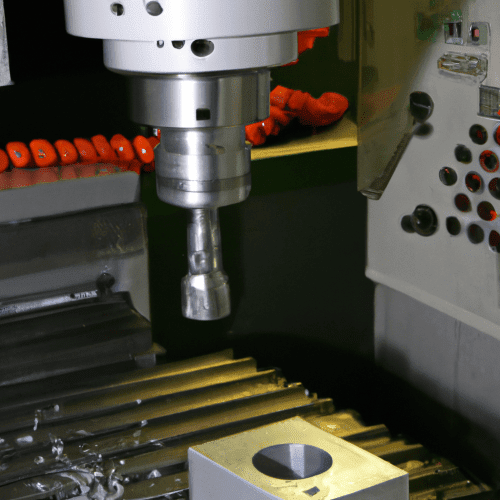
Milling machines, fundamental to subtractive manufacturing, rely heavily on robust and consistent power delivery for precision and efficiency. The term ‘phase milling machine’ primarily refers to a milling machine powered by a multi-phase electrical system, most commonly three-phase power. This electrical configuration is crucial for driving the high-performance motors found in industrial CNC equipment.
Multi-Phase Spindle Drives
Industrial milling machines utilize multi-phase spindle drives to achieve the necessary torque and speed control for diverse machining operations. These drives typically employ three-phase alternating current (AC) motors, which offer superior power density and smoother operation compared to single-phase alternatives. The balanced power delivery minimizes vibration and extends motor lifespan.
Modern CNC milling machines often integrate Variable Frequency Drives (VFDs) with their multi-phase spindle motors. VFDs precisely control motor speed and torque by adjusting the frequency and voltage of the AC power supplied to the motor. This allows for optimal cutting conditions across a wide range of materials and tooling, enhancing both productivity and surface finish.
The design of these spindle drives prioritizes rapid acceleration and deceleration, essential for complex contouring and tapping operations. High-performance drives can achieve spindle speeds exceeding 20,000 RPM in some applications, demanding sophisticated control algorithms and robust electrical components.
High-Power Electrical Requirements
| Feature | Single-Phase Power (Typical) | Three-Phase Power (Typical) |
|---|---|---|
| Voltage (Common) | 120V, 240V | 208V, 240V, 480V, 600V |
| Motor Type | Single-phase AC | Three-phase AC |
| Power Delivery | Pulsating | Smooth, continuous |
| Efficiency | Lower | Higher |
| Torque | Lower starting torque | High starting torque |
| Cost (Infrastructure) | Lower for residential | Higher for industrial |
| Suitability for CNC | Light-duty, hobby | Industrial, high-precision |
| Phase Converter Needed? | Yes, for 3-phase machines | No |
Industrial milling machines, especially those with large work envelopes or high material removal rates, demand significant electrical power. A typical medium-sized CNC mill might require a spindle motor ranging from 2.2 kW to over 10 kW (approximately 3 to 13+ HP) depending on the materials and cutting intensity. Auxiliary systems, including coolant pumps, servo motors for axes, and control electronics, further contribute to the overall power demand.
Supplying this power necessitates robust electrical infrastructure, often involving dedicated three-phase circuits with appropriate circuit breakers and wiring gauges. Undersized wiring or inadequate power supply can lead to voltage drops, motor overheating, and compromised machine performance or damage. Proper grounding is also paramount for safety and to prevent electrical noise interference with sensitive CNC controls.
Electrical service for industrial facilities is typically rated in kilovolt-amperes (kVA) and must be sufficient to handle the peak demand of all connected machinery. For a facility with multiple CNC machines, a comprehensive electrical load analysis is essential to ensure stable and reliable operation. Overcurrent protection devices are critical for safeguarding equipment and personnel.
Industrial Machining Setup
Setting up an industrial milling machine involves more than just placing the equipment; it requires careful consideration of its electrical, pneumatic, and environmental needs. The machine’s foundation must be stable and level to maintain geometric accuracy during machining, often requiring reinforced concrete pads. Proper vibration isolation is also crucial for precision work.
Electrical connections must adhere strictly to local codes and manufacturer specifications, typically involving hardwiring the machine to a dedicated three-phase disconnect switch. This switch provides a safe means of isolating power for maintenance or emergencies. Cable management systems protect wiring from damage and maintain a tidy, safe workspace.
Coolant systems, chip conveyors, and dust collection units are integral parts of a complete industrial machining setup. These ancillary systems also draw power and must be integrated into the facility’s electrical plan. Ergonomics and safety features, such as emergency stop buttons and interlocked guards, are standard requirements for modern industrial environments.
Phase Converter Usage
Many smaller workshops or home-based machinists may only have access to single-phase utility power, yet need to operate three-phase milling machines. A phase converter transforms single-phase power into three-phase power, enabling the use of industrial equipment. The two primary types are static phase converters and rotary phase converters.
Static phase converters are generally less expensive and suitable for lighter loads, but they often do not provide a true balanced three-phase output, potentially reducing motor efficiency and torque. They are typically used for motors that run at a constant speed and are not ideal for sensitive CNC applications requiring precise speed control.
Rotary phase converters (RPCs) are preferred for CNC machinery due to their ability to generate a more balanced and robust three-phase output. An RPC uses an idler motor to create the third phase, providing a stable power source that closely mimics utility three-phase power. This ensures optimal performance for VFDs and servo systems, crucial for precision milling.
Three-Phase Motor Efficiency
Three-phase motors are inherently more efficient than single-phase motors of comparable size and power output. Their design allows for a smoother, more continuous rotating magnetic field, which reduces energy losses and generates less heat. This translates to lower operating costs and a longer service life for the motor.
The efficiency of a three-phase motor is often expressed as a percentage, indicating how much of the electrical input power is converted into mechanical output power. Modern ‘premium efficiency’ (IE3 or IE4 rated) three-phase motors are designed to minimize energy consumption, aligning with global energy conservation standards. These motors are standard in new industrial milling machines.
Maintaining optimal motor efficiency involves proper sizing, regular maintenance, and ensuring a stable power supply. Overloading a motor, operating it outside its design parameters, or supplying unbalanced phases can significantly reduce its efficiency and lead to premature failure. VFDs also contribute to efficiency by allowing motors to operate at their most efficient speed for a given load.
Technical Parameters for CNC Milling
Standard Tolerances in CNC Milling
- General machining tolerances for CNC milling typically range from ±0.005 inches (±0.127 mm) for less critical features to ±0.001 inches (±0.025 mm) for precision components.
- High-precision aerospace or medical applications can demand tolerances as tight as ±0.0002 inches (±0.005 mm) or even finer, requiring advanced machine kinematics and environmental control.
Typical Feeds and Speeds for Common Materials
- For aluminum (e.g., 6061-T6) with a 1/2-inch 3-flute carbide end mill, typical spindle speeds range from 8,000 to 12,000 RPM, with feed rates between 40 and 80 IPM. Radial depth of cut might be 0.050-0.100 inches, and axial depth 0.500-0.750 inches.
- When machining mild steel (e.g., 1018) with a 1/2-inch 4-flute end mill, recommended spindle speeds are often 1,500 to 3,000 RPM, and feed rates from 10 to 25 IPM. Radial depth of cut typically falls between 0.020-0.040 inches, with axial depths of 0.250-0.500 inches.
- These are general guidelines; specific values depend heavily on tooling material, coating, machine rigidity, and the effective application of coolant.