
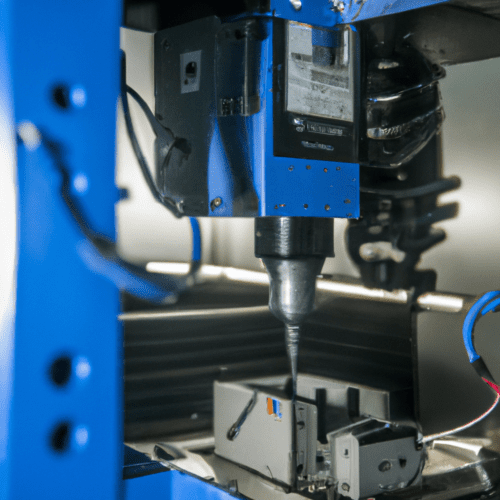
India’s manufacturing sector increasingly relies on advanced Vertical Machining Centers (VMCs) for precision component production. The market for VMC machines in India is experiencing steady growth, driven by initiatives like ‘Make in India’ and rising domestic demand for high-precision equipment. This growth has fostered a competitive environment, with both established domestic players and international brands contributing to technological advancements.
VMCs are crucial for flexible manufacturing, enabling efficient milling, drilling, and tapping operations. They are widely utilized across diverse industries, including automotive, aerospace, electronics, and mold making, due to their ability to produce consistent dimensions and complex geometries.
Haas Automation’s Strategic Presence in India
Haas Automation, a prominent American machine tool builder, maintains a significant presence in the Indian market through a robust network of Haas Factory Outlets (HFOs). Headquartered in Ahmedabad, Haas India serves various critical sectors such as aerospace, automotive, mold & die, electrical, and energy.
The company offers a comprehensive portfolio of CNC machines, including vertical (VF series), horizontal, and 5-axis machining centers, alongside turning centers and rotary tables. Haas machines are recognized for their user-friendliness, global-level precision, and competitive pricing, making them suitable for both entry-level and advanced tool rooms.
Haas Automation emphasizes quality and customer service, providing extensive spare parts, factory-trained service personnel, and local training. Their machines are often integrated with Industry 4.0-ready controls, facilitating smart manufacturing adoption and optimizing productivity.
Lakshmi Machine Works (LMW) – a Domestic Powerhouse
| Parameter | Haas (VF Series) | LMW (JV Series) | Jyoti (VMC Performance) | BFW (High-Speed VMC) |
|---|---|---|---|---|
| Spindle Speed (RPM) | Up to 12,000 (standard) | 6,000 – 10,000 (JV 55, JV 30) | 8,000 – 12,000 (premium models) | 10,000 – 40,000 (Omega Series) |
| Positional Accuracy | High precision (global standard) | ~9-10 microns (0.009-0.010 mm) | High precision, fast rapids | Up to ±0.02 mm |
| Rapid Traverse (m/min) | Up to 35.6 (VF-2) | 48 (X, Y, Z for JV 40) | Up to 30 (medium to large VMC) | Fast feed rates |
| Tool Change Time (sec) | Fast (model dependent) | 3 (tool-to-tool for JV 40) | 1 (LMW JG50, similar class) | Rapid (model dependent) |
Lakshmi Machine Works (LMW) stands as a dominant name in the Indian machine tool industry, known for its robust manufacturing capabilities and commitment to precision. Based in Coimbatore, LMW is India’s largest manufacturer of textile machinery and has diversified significantly into CNC machine tools.
LMW produces a wide range of CNC turning centers, machining centers, and machine subsystems, catering to both domestic and export markets. The company’s VMCs, such as the JV series (e.g., JV 30, JV 40, JV 55), are known for their compact design, high accuracy, and efficiency, with some models offering spindle speeds up to 10,000 RPM.
In a notable collaboration, LMW commenced manufacturing the CMX 600 Vi Vertical Machine Center for DMG Mori for the Indian market, highlighting its capability to produce advanced, high-rigidity machines. LMW’s own foundry supplies castings for its machines, ensuring integrated quality control.
Ace Micromatic Group – Comprehensive Solutions
The Ace Micromatic Group is a leading and highly influential entity in the Indian CNC machine tool industry, recognized for its extensive product range and strong after-sales service. The group comprises several companies, including Ace Designers and Micromatic Machine Tools, offering diverse machining solutions.
Ace Micromatic’s VMCs are celebrated for their stability, precision, and reliability, suitable for applications ranging from small workshops to large-scale production units. Their machines, like the 850V, are particularly well-regarded for die & mold and aerospace applications, demanding perfect surface finish and high precision.
The 850V VMC features direct-driven spindles capable of 8,000 to 15,000 RPM, facilitating superior surface quality. The group also offers 5-axis VMCs, enabling simultaneous 5-axis motion for machining complex, contoured geometries with high precision, crucial for aerospace structural parts and medical implants.
Jyoti CNC Automation – Innovation and Scale
Jyoti CNC Automation, based in Rajkot, Gujarat, has emerged as one of India’s fastest-growing and technologically advanced machine manufacturers. The company boasts a wide array of high-performance CNC machines, including turning centers, VMCs, HMCs, and 5-axis machines.
Jyoti’s VMC product range is extensive, featuring series like Tachyon, Mill Tap, PX nvu, RX/RAX, RDX, and VMC Performance, catering to various industrial demands. These machines are known for high precision, fast rapids, and wide controller compatibility, making them popular in both domestic and international markets.
The company is also at the forefront of integrating Industry 4.0 features, such as IoT-enabled monitoring, into its machines. Jyoti CNC’s commitment to innovation is evident in its diverse portfolio, including advanced 5-axis machining centers like the Tachyon Beta, designed for high-speed operations.
Bharat Fritz Werner (BFW) – Legacy and Modernization
Bharat Fritz Werner (BFW) is a pioneering and established name in the Indian machine tool industry, with a legacy dating back to 1961. BFW, a flagship company of the Kothari Group, provides comprehensive manufacturing solutions, including vertical and horizontal machining centers, turning centers, and 5-axis machines.
BFW’s VMCs are designed for reliability and accuracy, with models such as High-Speed VMC, Fixed-Column VMC, Double Column VMC, and Rotary Pallet VMCs. Their machines are capable of achieving high accuracy, typically up to ±0.02 mm, depending on the model and operating conditions.
The company’s high-speed VMCs, like the Omega Series, can achieve spindle speeds ranging from 10,000 to 40,000 RPM, facilitating faster cutting and reduced machining time. BFW machines are trusted by global companies and are crucial for sectors requiring tight tolerances, such as aerospace and automotive.
Technical Parameters and Modern Machining Practices
Selecting a VMC involves evaluating critical technical parameters that directly impact machining quality and efficiency. Key considerations include machine rigidity, spindle specifications, axis travel, and control system compatibility. High-quality VMCs are built on robust foundations to resist cutting forces and vibrations.
Positional accuracy, which refers to how closely a machine can move to a specified coordinate, is paramount for precision parts. Modern VMCs often achieve positioning accuracy around ±0.005mm, with some high-accuracy machines reaching 6µm after compensation. Repeatability, the ability to return to a previously commanded position, is often even tighter.
Spindle accuracy is another defining factor, with high-performance VMC spindles typically achieving radial runout values of ≤ 0.003 mm at the spindle nose. This precision is vital for dimensional accuracy, surface finish quality, and tool life. Thermal stability and effective cooling systems are also crucial to maintain accuracy during prolonged operations.
Modern VMC operations increasingly integrate Industry 4.0 technologies, including IoT, AI, and big data analytics, to create ‘smart factories’. These integrations enable real-time data monitoring, predictive maintenance, and optimized machining parameters, leading to enhanced productivity and reduced downtime.
Typical feeds and speeds vary significantly based on material and tooling. For instance, milling aluminum 6061 often uses surface speeds of 600-800 SFM (120-240 m/min), while mild steel requires slower speeds, typically 200-350 SFM. Feed rates for aluminum can be higher, around 0.004-0.006 inches per tooth, compared to 0.003-0.005 inches per tooth for steel.
Surface finish tolerances are critical for functional and aesthetic requirements. Roughness Average (Ra) is a common metric, with values like Ra 0.8 indicating a smooth finish and Ra 3.2 representing a finer sandpaper-like texture. Achieving specific surface finishes often requires careful selection of cutting parameters and post-machining treatments.