
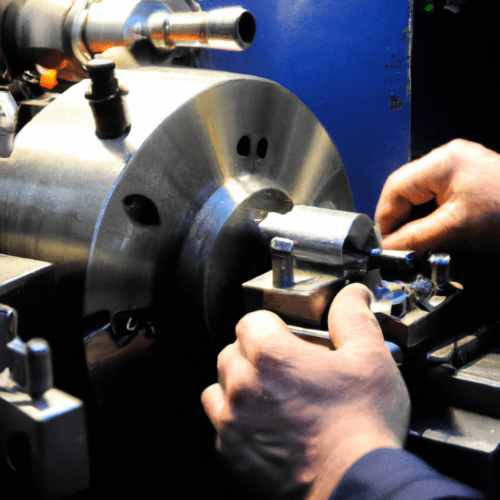
The global landscape of CNC machine manufacturing is characterized by continuous innovation, with several key players consistently pushing the boundaries of precision, automation, and efficiency. As of 2026, manufacturers demand machines that not only deliver exceptional accuracy but also integrate seamlessly into smart factory ecosystems. This requires robust hardware, advanced control systems, and comprehensive support infrastructure.
Selecting the appropriate CNC machine involves evaluating factors beyond mere specifications, encompassing aspects like uptime, repeatability, service response, control ecosystem, and readiness for automation. Leading brands distinguish themselves through their commitment to these critical operational elements, ensuring consistent part flow and long-term value for diverse industries.
Haas Automation: Accessibility and Value
Haas Automation, an American manufacturer, is widely recognized for providing accessible and user-friendly CNC machines, particularly popular in job shops and educational institutions. Their product line emphasizes a balance of performance and affordability, making advanced machining technology attainable for a broader market.
The Haas control system, developed in-house since 1988, prioritizes ease of use and operational simplicity. It offers features such as 1 GB of program memory, Ethernet connectivity, Dynamic Work Offsets, and HaasConnect for remote machine monitoring, ensuring operators can transition smoothly between different Haas machines.
Recent introductions, such as the updated VF-2SSYT and VF-4SS vertical machining centers (VMCs) for 2026, feature a 12,000 RPM inline spindle and high-speed rapids, suitable for high-speed milling and high-mix production. The new SB-28Y box way lathe, designed for heavy turning, incorporates Y-axis and C-axis capabilities with live tooling for multi-operation turning in a single setup.
Haas also offers integrated automation solutions, including Robotic Pallet Loaders (RPL) that combine a 25 kg robot with a loading station, light curtain, and zero-point pallets. This system facilitates automated pallet loading and unloading, supporting unattended operation and consistent throughput in high-mix environments.
DMG Mori: Premium Precision and Digital Integration
| Manufacturer | Key Strength | Typical Spindle Speed (VMC/HMC) | Control System | Common Tolerance Achieved |
|---|---|---|---|---|
| Haas Automation | Value, User-Friendly Controls | 8,100 – 15,000 RPM (40-taper) | Haas Control | ±0.005″ (±0.127 mm) standard |
| DMG Mori | Premium 5-Axis, Digital Integration | 8,000 – 20,000+ RPM (HSK-A63) | CELOS, Siemens, Fanuc | ±0.0001″ (±2.54 µm) for critical features |
| Mazak Corporation | Multi-Tasking, High Productivity | 8,000 – 18,000 RPM (various tapers) | MAZATROL Smooth Series | ±0.0002″ (±5 µm) for precision turning |
| Okuma | Rigidity, In-House OSP Control | 15,000 RPM (VMC) | OSP-P500 | ±0.0001″ (±2.54 µm) for critical features |
| Doosan (DN Solutions) | Robust Performance, Heavy-Duty | 3,000 – 3,500 RPM (Turning Centers) | Fanuc i Series, Doosan controls | ±0.005″ (±0.127 mm) standard |
DMG Mori, a German-Japanese collaboration, stands as a leader in premium 5-axis and mill-turn solutions, with a strong focus on digital integration and advanced automation. Their machines are frequently employed in demanding sectors such as aerospace, medical, and mold manufacturing, where extreme precision is paramount.
The company’s ‘Machining Transformation’ (MX) strategy integrates process integration, automation, Digital Transformation (DX), and Green Transformation (GX). This holistic approach combines multiple operations like turning, milling, grinding, and measuring into a single machine, reducing cycle times and improving part accuracy.
DMG Mori’s technology cycles, such as ‘gearMILL’ software and ‘Adaptive Drilling Control’ (ADC), enhance process reliability and quality. ADC, for instance, actively controls deep hole drilling by adjusting coolant pressure and flow based on sensor data, leading to increased tool life and energy savings.
Integrated measurement solutions, like optical gear tooth measurement using a laser scanner directly during machining, achieve high accuracy (over 80% of measurement points within ±2 µm). This significantly reduces process steps and total process time compared to conventional methods.
Mazak Corporation: Multi-Tasking and Productivity
Mazak Corporation, a Japanese manufacturer, is renowned for its multi-tasking machines and high-productivity solutions, serving industries from general machining to aerospace and energy. Their ‘DONE IN ONE’ concept aims to complete parts in a single setup, minimizing handling and non-cut time.
The flagship INTEGREX series, including the new INTEGREX i-NEO Multi-Tasking machining centers, integrates turning, milling, and grinding capabilities. This allows for reduced cycle times, improved surface finish, and enhanced dimensional accuracy.
Mazak’s automation offerings include the Multi Pallet Pool (MPP) system, which supports horizontal machining centers like the HCN-5000 NEO with expanded pallet storage capacity in a compact footprint. Their MAZATROL SmoothEz digital solution simplifies operation and supports advanced programming.
The SYNCREX series of Swiss-type production turning machines, built on High Damping Composite Casting (HDCC) bases, ensures rigidity, reduced thermal distortion, and superior surface finishes for high-speed production of small, precise parts.
Okuma: Rigid Machines and In-House Controls
Okuma, another prominent Japanese manufacturer, is distinguished by its robust, rigid machines and proprietary OSP control systems. These machines are favored in aerospace, energy, and heavy industry for their reliability and precision.
The OSP-P500 CNC control system, a next-generation offering, provides increased processing power, intuitive smart operations, and robust security. It features a ‘Digital Twin’ technology that allows operators to virtually verify machining programs, tool displacement, and potential interferences before physical cutting.
Okuma’s MULTUS U2000 multitasking machine combines a broad working area with a compact footprint, supporting complex 5-axis machining and two-saddle simultaneous turning. Its ‘Turn-Cut’ function enables turning outside the rotation axis, enhancing cutting stability.
The company’s ‘Thermo-Friendly Concept’ actively compensates for temperature fluctuations during production, while the ‘Collision Avoidance System’ and ‘Machining Navi’ (for low-vibration machining) contribute to consistent machining conditions and process stability.
Doosan (DN Solutions): Robust Performance and Value
Doosan, now operating as DN Solutions, is a South Korean manufacturer known for offering a strong balance of price and performance with robust machine castings. Their equipment is widely used in general manufacturing and energy sectors.
The PUMA series of turning centers, such as the PUMA V400, PUMA 600/700/800 II, and PUMA 1000, are designed for heavy-duty machining operations. The PUMA V400, for instance, features box guideway construction for rigidity and a high-performance 3,000 RPM spindle, ideal for tough machining conditions.
DN Solutions’ machines emphasize continuous production and easy maintenance, with features like spindle cartridges and rotating tool holders designed for quick servicing. The PUMA GT series offers high-performance spindles and large work areas, providing high-productivity turning solutions.
Their larger PUMA 1000 series is specifically engineered for machining large, heavy, and complex workpieces, with models capable of handling turning diameters up to 1000 mm and lengths up to 2040 mm, including pipe machining solutions with large bore spindles.
Technical Parameters and Modern Practices
Standard CNC machining tolerances typically range from ±0.005 inches (±0.127 mm) for most milling and turning operations, providing sufficient accuracy for general applications. However, aerospace and medical industries often demand significantly tighter tolerances, reaching ±0.0001 inches (2.54 micrometers) or better for critical components.
Achieving these tight tolerances requires specialized techniques, advanced machine rigidity, and thermal stability. Materials like aluminum and steel can maintain tolerances of ±0.05 mm to ±0.08 mm, while engineering plastics typically require wider tolerances of ±0.15 mm to ±0.25 mm due to thermal sensitivity.
Feeds and speeds are critical parameters, directly influencing efficiency, tool life, and part quality. For aluminum, typical spindle speeds range from 8,000–12,000 RPM with feed rates of 40–80 IPM. Harder materials like carbon fiber require higher RPM (12,000–18,000) but slower feeds (30–60 IPM) to prevent fraying.
Modern engineering practices in CNC machining increasingly incorporate digital twins, AI, and hybrid manufacturing. Digital twins simulate the entire machining process, integrating design, engineering, and inspection to reduce setup errors and lead times. AI optimizes cut paths and predicts tool failure, while hybrid additive/subtractive platforms reduce material waste and enable complex geometries.