
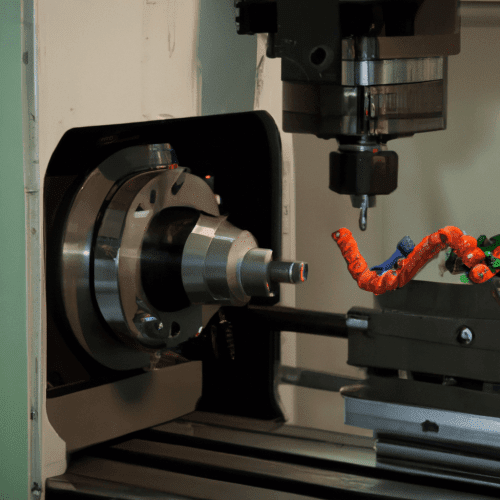
Selecting the appropriate CNC grinding machine is a critical decision for any precision manufacturing operation. These advanced machines are designed to achieve exceptionally tight tolerances and superior surface finishes, often surpassing the capabilities of conventional milling or turning processes. Understanding the nuances of different grinding technologies and their supporting systems is essential for optimizing production efficiency and part quality.
Surface and Cylindrical Grinding Fundamentals
Grinding machines are broadly categorized by the geometry of the workpiece they process. Surface grinders are engineered to produce flat and parallel surfaces on components such as dies, plates, and precision blocks. They typically employ a rotating abrasive wheel that traverses across a stationary or reciprocating workpiece, ensuring flatness and parallelism.
Cylindrical grinders, conversely, specialize in creating precise roundness, concentricity, and diameter control on rotational parts like shafts, spindles, and pins. These machines rotate the workpiece about its central axis while a grinding wheel removes material from its outer diameter (OD) or inner diameter (ID). Universal cylindrical grinders offer versatility, handling external diameters, internal bores, and complex shoulders within a single setup.
Creep feed grinding, a specialized technique applicable to both surface and cylindrical operations, removes the full depth of cut in a single pass. This method can significantly reduce manufacturing time, sometimes by as much as 50%, though it often requires machines specifically designed for this high-material-removal-rate process.
Achieving Micron-Level Accuracy in Grinding
| Parameter | Standard CNC Milling/Turning | Precision CNC Grinding |
|---|---|---|
| Dimensional Tolerance | ±0.005″ (±0.127 mm) to ±0.001″ (±0.025 mm) | ±0.0001″ (±0.0025 mm) |
| Surface Finish (Ra) | 3.2 µm (125 µin) to 0.8 µm (32 µin) | 0.1–1.6 µm (4–63 µin) |
| Roundness (Cylindrical) | N/A | Typically 0.25 to 2.5 microns |
Precision grinding operations routinely achieve dimensional tolerances measured in microns, which are one-millionth of a meter or approximately 0.00004 inches. This level of accuracy is paramount in industries such as aerospace, medical, and automotive, where even minute deviations can lead to functional failure or safety risks.
Standard CNC machining tolerances for milling and turning typically range from ±0.005 inches (±0.127 mm) to ±0.001 inches (±0.025 mm) for precision applications. Grinding, however, pushes these limits significantly further. High-precision CNC grinding machines can achieve tolerances as tight as ±0.0001 inches (±0.0025 mm) under controlled conditions.
Surface finish, often quantified by Ra (arithmetic average roughness), is another critical parameter where grinding excels. While standard CNC milling might achieve Ra values of 3.2 µm (125 µin), surface grinding typically produces Ra values between 0.2–1.6 µm (8–63 µin). Cylindrical OD grinding can achieve even finer finishes, often in the range of 0.1–0.8 µm (4–32 µin), with optimized conditions allowing for results below 0.2 µm.
Optimizing Grinding Wheel Selection
Choosing the correct grinding wheel is fundamental to achieving desired material removal rates, surface finishes, and tool life. Grinding wheels consist of abrasive grains bonded together, with the abrasive material being the primary cutting agent.
Conventional abrasives like aluminum oxide and silicon carbide are widely used. Aluminum oxide wheels are effective for softer metals such as aluminum and bronze, as well as carbon, alloy, and high-speed steels. Silicon carbide, with its superior cutting ability, is better suited for harder materials like cast iron and hard alloys.
Superabrasives, including diamond and cubic boron nitride (CBN), represent advanced grinding technology. Diamond wheels are ideal for grinding very hard, non-ferrous materials such as ceramics and cemented carbides. CBN wheels are specifically recommended for ferrous materials with hardness exceeding 40 HRC, as CBN does not react with iron.
Bond types also significantly influence wheel performance. Resin bonds, made from superheated resins and fillers, offer versatility for various applications. Vitrified bonds, composed of unique clays that vitrify during processing, provide excellent form retention and are suitable for aggressive, hard-to-grind materials. Electroplated wheels, where grit is melded to the wheel with a bonding matrix like nickel, are known for their durability.
Advanced Coolant Filtration Systems
Maintaining coolant quality is paramount in CNC grinding to ensure consistent surface finish, extend tool life, and reduce machine downtime. Coolant filtration systems continuously remove contaminants such as metallic particles, grinding dust, tramp oil, and biological growth from the metalworking fluid.
Various filtration technologies are available, each suited to specific applications. Paper bed filters effectively handle continuous fine particle loads, with fresh media automatically advancing as debris accumulates. Magnetic separators are highly efficient for ferrous grinding operations, capturing fine magnetic particles without requiring consumable media.
Modern systems often integrate multiple filtration methods and can be configured as stand-alone units, centralized plants, or machine-specific systems. Some advanced solutions, like the PV50 Filtration System, are purpose-built for high-speed gear grinding and polishing, managing swarf removal, maintaining clarity, and delivering clean fluid at precise pressure and flow.
Precision CNC Axis Control for Grinders
CNC axis control is the backbone of modern grinding machines, enabling the complex, multi-dimensional movements required for high-precision part production. These systems utilize computer numerical control to execute grinding operations with fine detailing and exceptional repeatability, minimizing human intervention.
Grinders commonly feature 3-axis control for basic surface or cylindrical operations, but advanced applications frequently demand more axes. Five-axis CNC grinding machines are increasingly prevalent, offering the capability to produce complex geometries such as spheres, aspheres, freeform surfaces, and intricate cutting tools.
Closed-loop linear scale feedback systems are critical for achieving and maintaining high precision, especially on axes like the X-axis, which controls workhead movement. These systems, combined with anti-backlash AC direct drives and linear motors, ensure rapid, accurate contouring and exceptional repeat accuracy in positioning and axis motion.