
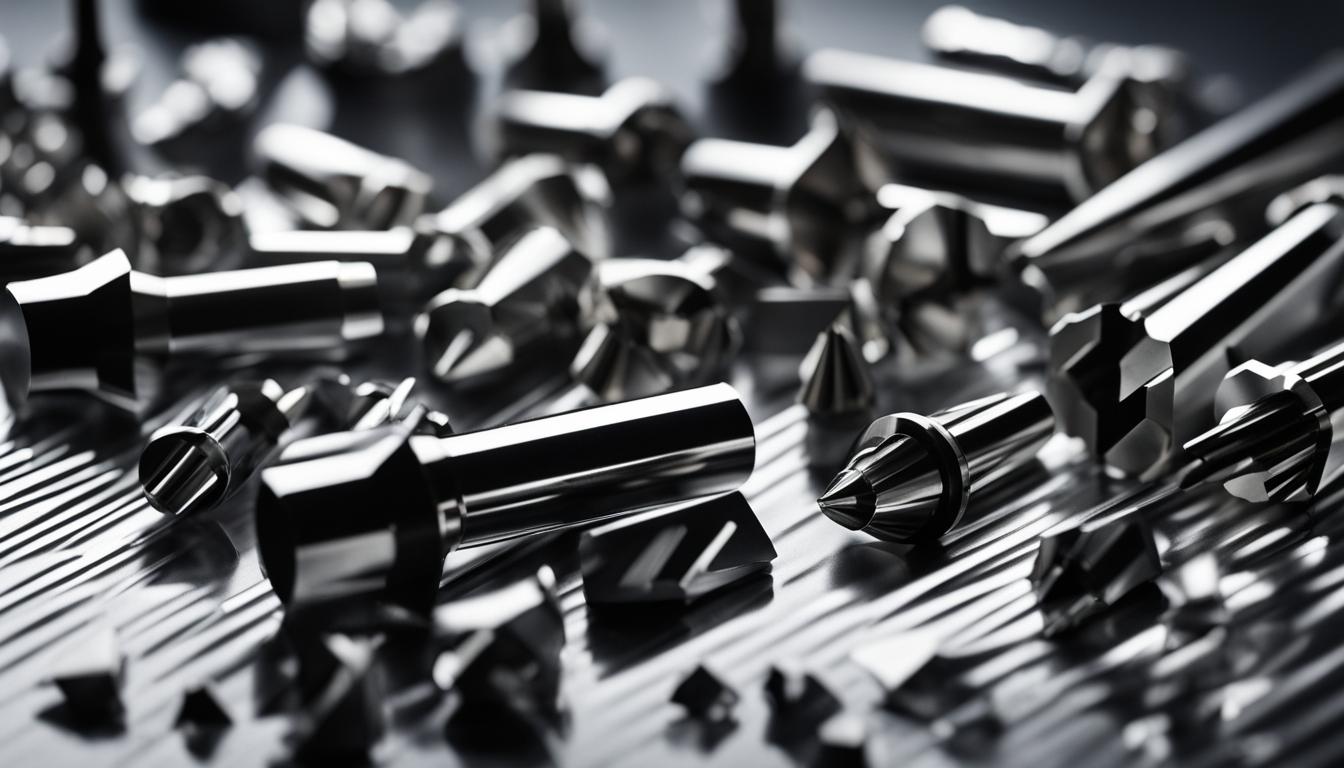
Selecting the appropriate CNC bit is fundamental for achieving precision, efficiency, and optimal surface finish in any machining operation. The vast array of available cutting tools, each with unique geometries and material compositions, directly impacts the quality of the final workpiece. Understanding these distinctions is critical for both novice and experienced machinists aiming to maximize their CNC machine’s potential.
This guide delves into the technical specifications and practical applications of various CNC bits, covering everything from fundamental end mill types to specialized engraving tools and crucial compatibility considerations. Proper tool selection minimizes material waste, extends tool life, and ensures consistent, high-quality results across diverse materials.
Flat End Mills versus Ball Nose End Mills
Flat end mills, often referred to as square end mills, feature a flat bottom and sharp corners, making them ideal for creating 2D or 2.5D features. These tools excel at machining slots, flat-bottom pockets, straight side walls, square shoulders, and keyways. Their geometry ensures a defined bottom-to-wall transition, which is essential for many prismatic parts.
Conversely, ball nose end mills possess a hemispherical cutting tip, resembling a ball. This rounded geometry is specifically designed for machining curved surfaces, 3D contours, fillets, and complex geometries. They are indispensable for applications like 3D contour milling, mold cavity finishing, and creating smooth, sculpted shapes, particularly in industries such as aerospace and medical device manufacturing.
The choice between a flat end mill and a ball nose end mill hinges on the desired geometry and surface finish. Flat end mills are preferred for sharp corners and flat surfaces, while ball nose end mills are crucial for achieving smooth, blended transitions and intricate 3D forms, often reducing the need for secondary finishing operations.
Upcut versus Downcut Spiral Flutes
| Feature | Upcut Spiral Flutes | Downcut Spiral Flutes |
|---|---|---|
| Chip Direction | Upward, away from workpiece | Downward, into the cut |
| Top Surface Finish | Fair (potential tear-out) | Excellent (clean edge) |
| Bottom Surface Finish | Excellent | Fair (potential fraying) |
| Chip Evacuation | Excellent | Limited (chip packing risk) |
| Ideal Cut Depth | Medium to deep | Shallow |
| Material Holding | Can lift thin material | Helps hold material down |
The spiral direction of a CNC bit’s flutes significantly influences chip evacuation, surface finish, and how the material interacts with the tool. Upcut spiral bits feature flutes that pull chips upward and out of the cut. This design provides excellent chip evacuation, which is beneficial for deep slotting and pocketing operations, especially in hard or dense materials, and helps keep the cutting area cooler.
Downcut spiral bits, in contrast, push chips downward into the cut. This action compresses the material, resulting in a very clean top edge with minimal fraying or splintering. Downcut bits are particularly effective for shallow cuts, laminates, veneers, and fine detail work where a pristine top surface is paramount. However, they can lead to chip packing in deeper cuts, potentially causing heat buildup and premature tool wear.
Compression end mills combine both upcut and downcut flute geometries. The lower portion of the bit has an upcut spiral, while the upper portion features a downcut spiral. This hybrid design is ideal for cutting sheet goods like plywood and MDF, as it compresses the material from both the top and bottom, yielding clean edges on both surfaces in a single pass.
Carbide Bit Coating Types
Carbide end mills are frequently enhanced with specialized coatings to improve their performance, extend tool life, and optimize them for specific materials and cutting conditions. These coatings reduce friction, increase wear resistance, and enhance thermal stability, allowing for higher cutting speeds and feeds.
Titanium Nitride (TiN) is a common, gold-colored coating suitable for general-purpose machining of ferrous materials, aluminum, and cast iron. It offers good hardness and thermal stability up to approximately 600°C (1112°F), improving wear resistance and reducing friction.
Titanium Carbonitride (TiCN) is an upgrade from TiN, incorporating carbon to increase hardness and wear resistance, particularly for high-speed machining and harder materials. It also provides better lubricity than TiN.
Aluminum Titanium Nitride (AlTiN) and Aluminum Chromium Nitride (AlCrN) coatings are designed for high-temperature applications, especially in dry or semi-dry machining. AlTiN forms a protective aluminum oxide layer at high temperatures, offering superior thermal stability up to 700-900°C and excellent oxidation resistance, making it ideal for hardened steels, stainless steels, and nickel-based alloys. AlCrN, with chromium instead of titanium, provides even better hardness and oxidation resistance.
Diamond-like Carbon (DLC) coatings are highly effective for abrasive non-ferrous materials like aluminum with high silica content, graphite, and carbon fiber. DLC offers exceptional hardness and lubricity, preventing material adhesion and built-up edge formation, which is crucial for achieving fine finishes in these challenging materials.
V-Carve Bits for Engraving
V-carve bits, characterized by their pointed tips and specific angles, are indispensable tools for engraving, chamfering, and creating intricate details on various materials. The angle of the bit, commonly ranging from 15 to 90 degrees, dictates the width and depth of the engraved line. A smaller angle produces finer, more intricate details, while larger angles create broader lines and deeper cuts.
These bits are widely used for carving text, logos, and decorative designs into wood, plastics, and soft metals. The depth of cut directly influences the width of the V-groove, allowing for variable line widths within a single toolpath. This capability enables the creation of complex 3D effects and precise chamfers, making them versatile for signage, artistic pieces, and decorative elements.
Shank Diameter Compatibility
The shank diameter of a CNC bit is the non-cutting portion that clamps into the machine’s collet. Ensuring compatibility between the bit’s shank and the collet is paramount for safe and accurate machining. Common shank sizes include 1/8 inch (3.175 mm), 1/4 inch (6.35 mm), and 1/2 inch (12.7 mm), with some machines also accommodating 3mm, 4mm, 6mm, 8mm, and 12mm.
Using an incorrectly sized shank can lead to significant issues, including excessive runout, tool slippage, vibration, and premature tool breakage. A collet that is too large will not securely hold the tool, while one that is too small will prevent proper insertion, potentially damaging both the tool and the collet.
For optimal performance, the shank should fit snugly into the collet, minimizing any concentricity errors. While adapters exist to use smaller shank bits in larger collets, they can introduce additional runout and are generally not recommended for high-precision or heavy-duty applications. Always verify your machine’s collet capabilities before selecting tooling.
Achieving precise cuts requires careful consideration of feeds and speeds, which are highly dependent on the material, bit type, and machine rigidity. For instance, milling 6061 aluminum with carbide end mills typically involves cutting speeds between 200-500 m/min and chip loads of 0.05-0.15 mm/tooth.
For dense hardwoods, recommended spindle speeds often range from 6,000–8,000 RPM with feed rates of 60–100 IPM. It is crucial to start with conservative parameters and adjust based on chip formation, sound, and surface finish to prevent tool breakage or material burning.
Standard tolerances for CNC milling operations typically range from ±0.05 mm to ±0.13 mm for most metal parts. High-precision milling can achieve tighter tolerances, sometimes down to ±0.01 mm, but these require controlled conditions and specialized tooling. Specifying overly tight tolerances when not functionally necessary can significantly increase manufacturing costs.