
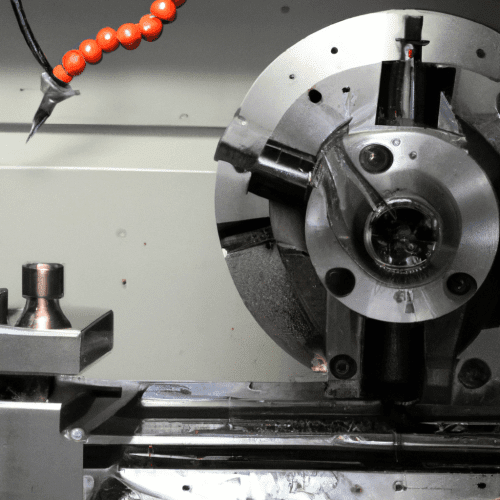
The foundational design of a Computer Numerical Control (CNC) machine dictates its rigidity, accuracy, and overall operational lifespan. Precision machining operations demand a robust and stable platform, meticulously engineered from the ground up. Every component, from the base frame to the safety enclosure, contributes to the machine’s ability to hold tight tolerances and produce high-quality parts.
Understanding the intricate construction details provides insight into the capabilities and limitations of various CNC platforms. Engineers prioritize stability, thermal management, and dynamic response to ensure consistent performance across diverse manufacturing tasks.
Cast Iron Frame Structure
Machine tool frames are predominantly constructed from high-grade grey cast iron, specifically Meehanite or similar proprietary blends, due to its exceptional vibration damping characteristics. This material’s graphite flakes within its microstructure effectively absorb and dissipate kinetic energy generated during cutting, minimizing chatter and enhancing surface finish.
The casting process for these frames involves intricate mold designs to incorporate internal ribbing and strategically placed mass. This internal architecture maximizes static and dynamic stiffness, crucial for maintaining geometric accuracy under varying cutting loads. After casting, frames undergo stress-relieving heat treatments to prevent distortion over time, ensuring long-term dimensional stability.
Achieving precise geometric alignment is paramount for the machine’s accuracy. Modern CNC machine frames typically maintain flatness tolerances within 0.005 to 0.010 mm over a meter, and parallelism tolerances for critical mounting surfaces often fall within 0.003 to 0.008 mm. These tight specifications are verified through advanced metrology techniques like laser interferometry and electronic levels.
Linear Motion Guide Rails
| Feature | Ball Type Linear Guide | Roller Type Linear Guide |
|---|---|---|
| Load Capacity | Medium to High | Very High |
| Rigidity | High | Very High |
| Friction | Low | Low |
| Accuracy | Excellent (P5/P3 grades common) | Excellent (P5/P3 grades common) |
| Typical Applications | General machining, high-speed applications | Heavy-duty machining, large machines |
Precise linear motion is fundamental to CNC machining, achieved through sophisticated guide rail systems. Recirculating ball or roller linear guides are the industry standard, offering low friction, high rigidity, and excellent load-carrying capacity. These systems consist of a hardened steel rail and a carriage containing precision-ground balls or rollers.
Preloading the linear guides is a critical step during assembly, where a slight compressive force is applied to the rolling elements. This eliminates backlash, increases stiffness, and improves positioning accuracy and repeatability. Proper lubrication, often through automated systems, is essential for minimizing wear and maintaining smooth, consistent motion over the machine’s lifespan.
The selection of linear guides depends heavily on the machine’s intended application and required load capacity. Larger machines utilize wider rails and more robust roller-type guides for increased stiffness and load distribution, while smaller, high-speed machines might opt for compact ball-type guides. Mounting surfaces for these guides are meticulously scraped or ground to ensure perfect coplanarity, preventing binding and premature wear.
Here is a comparison of common linear motion guide characteristics:
Spindle Headstock Assembly
The spindle headstock is the heart of any CNC machine, housing the rotating tool or workpiece. Modern spindles are often integrated ‘cartridge’ designs, featuring precision ceramic or hybrid ceramic bearings for high speed and thermal stability. These bearings are typically preloaded and lubricated with oil-air mist or grease for optimal performance and longevity.
Spindle speeds vary dramatically based on application, ranging from a few thousand RPM for heavy milling to over 100,000 RPM for high-speed machining (HSM) of light alloys. Power ratings can extend from a few kilowatts for small machines to over 50 kW for large, heavy-duty applications. Tool interfaces like BT, CAT, and HSK provide robust and repeatable tool clamping, with HSK offering superior rigidity and accuracy at high speeds.
Thermal management within the spindle is critical, as heat generation can lead to expansion and loss of precision. Integrated cooling jackets circulate chilled fluid around the spindle housing, maintaining a stable operating temperature. Dynamic balancing of the spindle assembly minimizes vibration at high RPMs, ensuring superior surface finishes and extended tool life. Spindle runout, a key indicator of precision, is typically held to less than 0.003 mm at the tool taper.
Servo Motor Drives and Motion Control
CNC machine axes are driven by sophisticated servo motor systems, providing precise and dynamic control over position, velocity, and acceleration. These closed-loop systems utilize feedback devices, primarily rotary or linear encoders, to continuously monitor the actual position of the axis and compare it to the commanded position. Any deviation is immediately corrected by the servo drive.
AC synchronous servo motors, often brushless DC designs, are favored for their high torque density, excellent dynamic response, and maintenance-free operation. Encoders with resolutions ranging from 17-bit to 24-bit are common, allowing for extremely fine positional feedback, often down to sub-micron levels. This high resolution translates directly into the machine’s ability to achieve tight tolerances.
Motion is typically transmitted from the servo motor to the linear guides via precision ground ball screws, which convert rotary motion into linear motion with high efficiency and minimal backlash. For ultra-high precision and speed, linear motors are sometimes employed, offering direct drive without mechanical transmission elements, eliminating backlash entirely and providing exceptional acceleration.
The combination of high-resolution encoders, powerful servo motors, and rigid mechanical components enables modern CNC machines to achieve positioning accuracies of ±0.005 mm and repeatability of ±0.003 mm or better, depending on the machine class. Advanced control algorithms within the CNC controller further optimize motion profiles for smooth, accurate, and efficient machining.
Enclosure Safety Casing
The enclosure safety casing serves multiple critical functions beyond mere aesthetics. Its primary role is to protect operators from moving machine components, flying chips, coolant splash, and noise. Robust sheet metal panels, often reinforced, form the main structure, with large viewing windows made from impact-resistant polycarbonate or laminated safety glass.
Integrated safety interlocks on all access doors prevent machine operation when opened, immediately halting motion to protect personnel. Emergency stop buttons, strategically placed around the machine, provide immediate shutdown capabilities in critical situations. These features comply with international safety standards such as ISO 23125 and ANSI B11.1.
Beyond physical protection, the enclosure manages the machining environment. It contains coolant and chips, directing them to filtration and recycling systems, maintaining a cleaner shop floor. Integrated mist collectors extract airborne oil mist and fumes, improving air quality. The enclosure also significantly reduces noise levels generated during machining, contributing to a more comfortable and compliant work environment.