
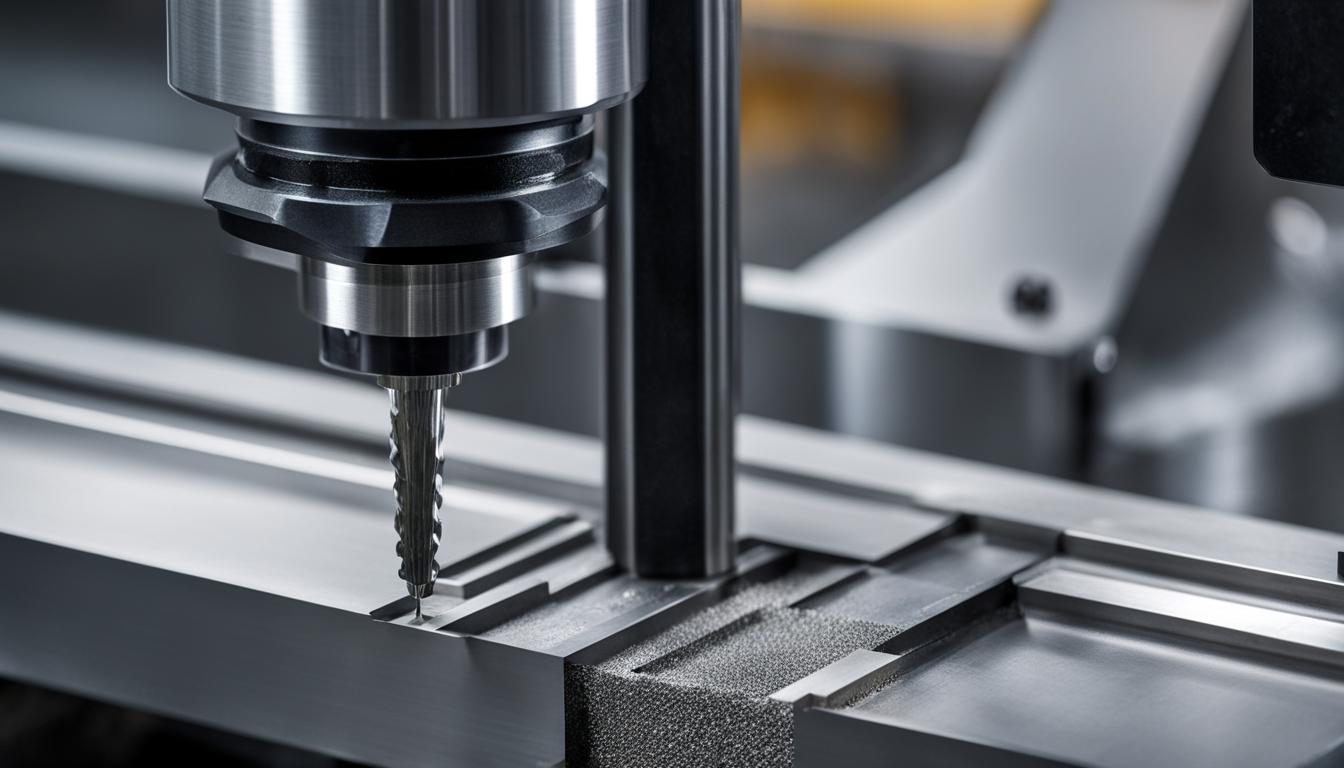
Computer Numerical Control (CNC) milling has become an indispensable technology in modern manufacturing, offering significant advantages over traditional machining methods. This subtractive manufacturing process utilizes computer-controlled tools to precisely remove material from a workpiece, ensuring high accuracy and repeatability across diverse applications. The benefits extend from intricate part creation to streamlined production workflows, fundamentally transforming how components are engineered and produced.
CNC milling machines operate by following programmed instructions, translating digital designs into physical parts with exceptional fidelity. This automation minimizes manual intervention, leading to consistent quality and enhanced operational efficiency. Understanding the core benefits of this process is crucial for any engineer or manufacturer aiming for optimal production outcomes.
Achieving High Repeatability Tolerances
CNC milling machines are renowned for their ability to maintain exceptionally tight tolerances, a critical factor for interchangeable parts and complex assemblies. Standard CNC machining tolerances typically range around ±0.005 inches (±0.127 mm) for most metals, which is achievable with conventional tooling and setups.
For applications demanding greater precision, such as aerospace or medical components, CNC milling can reliably hold tolerances of ±0.001 to ±0.002 inches (±0.025 to ±0.051 mm). High-precision machines, particularly those incorporating grinding or wire EDM, can even achieve tolerances as tight as ±0.0001 inches (±0.0025 mm) under controlled conditions.
Geometric Dimensioning and Tolerancing (GD&T), governed by standards like ASME Y14.5 and ISO 1101, provides a universal language for specifying these allowable variations in form, orientation, and location. This ensures that design intent is clearly communicated and consistently met, preventing issues with part fit and function. Softer materials like aluminum often machine to tight tolerances more easily than harder materials such as stainless steel or titanium.
ISO 2768-1 defines general tolerances for linear and angular dimensions, categorized into fine (f), medium (m), coarse (c), and very coarse (v) classes. For most engineering applications, ISO 2768-m (medium) is a common general-purpose default, while ISO 2768-f (fine) is reserved for precision-critical features.
Enabling Complex 3D Contour Capability
| Parameter | Aluminum 6061 | Mild Steel | Titanium |
|---|---|---|---|
| Cutting Speed (m/min) | 200-400 | 80-150 | 30-70 |
| Feed Rate (mm/min) | 300-500 | 200-400 | 80-150 |
| Spindle Speed (RPM) | 8,000-20,000 | 6,000-9,000 | (Varies, often lower) |
| Typical Surface Finish (Ra µm) | 1.6-3.2 (as-machined) | 3.2-6.3 (as-machined) | 3.2-6.3 (as-machined) |
CNC milling excels at producing parts with intricate geometries, curved surfaces, and complex contours that would be challenging or impossible with traditional manual methods. Multi-axis machining, particularly 5-axis CNC, is pivotal in this capability.
A 5-axis machine adds two rotational axes to the standard X, Y, and Z linear axes, allowing the cutting tool to approach the workpiece from multiple angles in a single setup. This eliminates the need for multiple setups and manual repositioning, significantly reducing the risk of misalignment and cumulative errors.
Complex components like turbine blades, engine parts, and orthopedic implants benefit immensely from 5-axis machining’s ability to create intricate features with enhanced precision and improved surface finishes. Optimal tool orientation maintained by simultaneous 5-axis movement reduces deflection, vibration, and heat, leading to smoother surfaces and smaller feature-to-feature variation.
Automated Continuous Production
Automation is a cornerstone of modern CNC milling, enabling continuous, unattended production and maximizing machine uptime. Automated systems connect machine tools, workpiece handling, tooling systems, and production control into an integrated manufacturing process.
This allows for ‘lights-out manufacturing,’ where machines operate autonomously for extended periods, even during non-operational hours, significantly increasing production capacity without additional shifts. Robotic machine tending systems automatically load raw material and unload finished parts, performing repetitive tasks with speed and consistency.
Intelligent process control and real-time monitoring, often enhanced by AI and digital twin technologies, further improve reliability and efficiency. These advancements predict tool failure, optimize cut paths, and adapt to changes in vibration or temperature, ensuring consistent quality and fewer production halts.
Reduced Human Labor Errors
CNC automation dramatically minimizes the potential for human error inherent in manual machining processes. Manual data entry, adjustments, and operations are prone to mistakes, even from skilled technicians, leading to inconsistencies and costly reworks.
Once a machining program is validated, the CNC system executes the same instructions repeatedly with high precision, eliminating variability caused by manual feed adjustments or subjective decision-making. This consistent execution is crucial for maintaining quality across large production runs.
Beyond quality, automation also improves safety by reducing direct human interaction with dangerous cutting operations. This allows skilled professionals to focus on optimization and problem-solving rather than repetitive manual tasks, enhancing overall shop floor efficiency and safety.
Flexible Design Modifications
CNC milling offers unparalleled flexibility for design modifications and rapid prototyping, accelerating product development cycles. Digital CAD files, which drive CNC machines, can be quickly adjusted and updated, allowing for fast iterations and refinements of prototypes.
This capability means engineers and designers can test new ideas rapidly, reducing the time between prototype versions without incurring the high costs associated with traditional tooling or molds. CNC machining can produce a prototype in just a few hours, a significant advantage for accelerating time-to-market.
The process supports a wide range of materials, including various metals and engineering plastics, further enhancing design freedom. This material versatility, combined with the ability to directly manufacture parts from a digital model, makes CNC milling an ideal choice for iterative design and low-volume production runs.
Typical CNC Milling Parameters and Achievable Finishes
Optimizing CNC milling operations involves careful consideration of feeds, speeds, and tool selection, which vary significantly based on the material. Modern CAM software often incorporates AI-based feature recognition and toolpath simulation to predict material removal and stress, further refining these parameters.
These values represent general guidelines; actual optimal parameters depend on specific machine rigidity, tool geometry, and desired chip load. For instance, aluminum often requires higher RPMs due to its softer nature, while harder materials like steel necessitate slower speeds to prevent excessive tool wear.
Achievable surface finishes in CNC milling typically range from 6.3-1.6 µm Ra for general milling, with standard ‘as-machined’ finishes often around 3.2 µm Ra (125 µin). Finer finishes below 1 µm Ra are possible with optimized processes, tooling, and potentially secondary operations.