
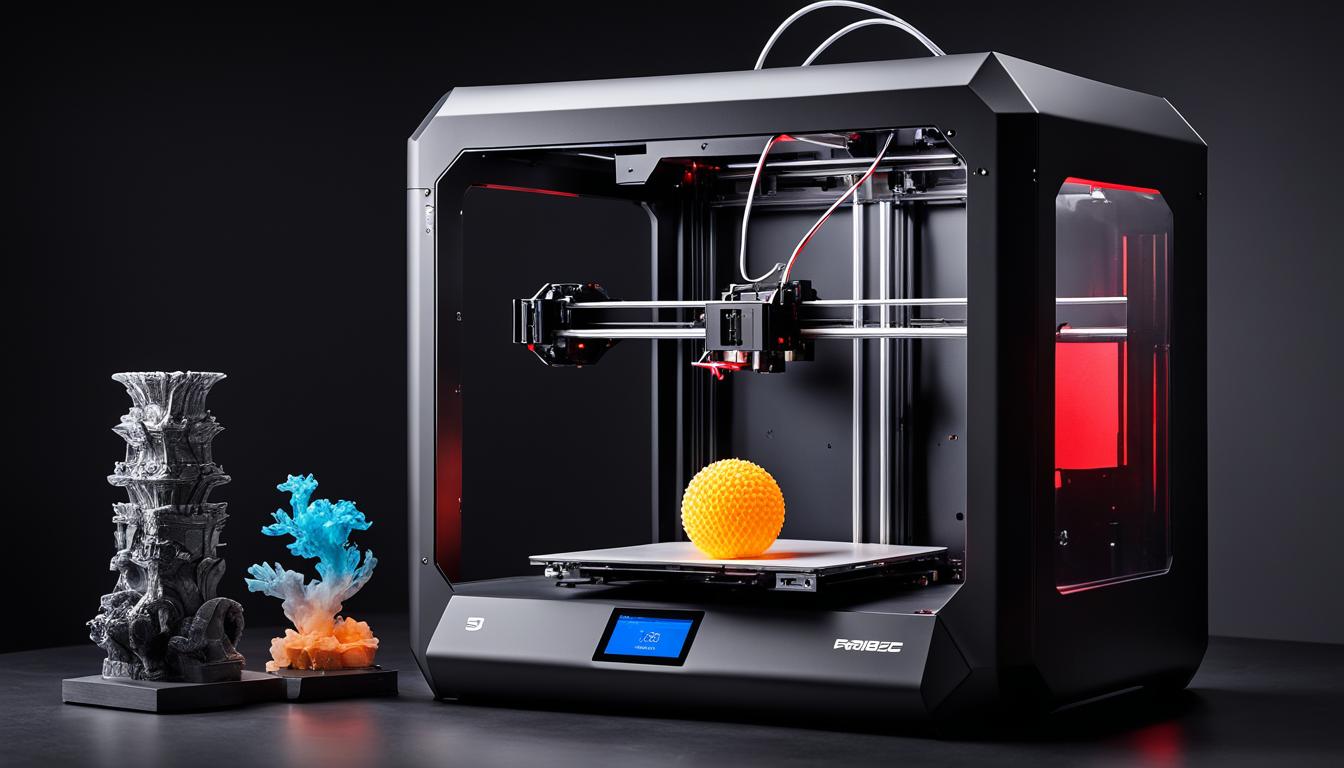
Industrial 3D printing demands precision, reliability, and the ability to handle advanced materials for functional prototyping and end-use parts. Raise3D printers, particularly the Pro series, address these requirements through robust hardware, sophisticated software, and support for high-performance filaments. These systems are engineered for consistent operation in demanding manufacturing environments.
Integrating large format capabilities with independent dual extrusion (IDEX) technology significantly enhances productivity and design flexibility. This combination allows for the creation of complex geometries and multi-material components, which are critical for modern industrial applications. The ecosystem provided by Raise3D streamlines the entire additive manufacturing workflow.
The Power of Large Format Dual Extrusion
Large format 3D printers offer substantial advantages for industries requiring life-sized prototypes, large-scale models, or numerous smaller parts in a single print job. Their expanded build volumes reduce the need for part segmentation and subsequent assembly, saving significant time and labor. This capability is particularly beneficial in automotive, aerospace, and architectural sectors.
Dual extrusion technology further amplifies these benefits by enabling multi-material or multi-color printing within a single build. Independent Dual Extrusion (IDEX) systems, like those found in Raise3D printers, allow two print heads to operate independently, preventing cross-contamination and enabling advanced printing modes such as duplication and mirror.
Using dissolvable support materials with dual extrusion simplifies post-processing for intricate designs, eliminating the need for manual removal and preventing surface blemishes. This approach is crucial for parts with internal channels or complex overhangs. Printing with different nozzle sizes simultaneously can also optimize parts for strength and speed.
Raise3D Pro Series: Engineering for Production
| Feature | Raise3D Pro3 | Raise3D Pro3 Plus | Raise3D E2CF |
|---|---|---|---|
| Build Volume (Single Extruder) | 300 × 300 × 300 mm | 300 × 300 × 605 mm | 330 × 240 × 240 mm |
| Build Volume (Dual Extruder) | 255 × 300 × 300 mm | 255 × 300 × 605 mm | 295 × 240 × 240 mm |
| Max Nozzle Temperature | 300 °C | 300 °C | 300 °C |
| Max Build Plate Temperature | 120 °C | 120 °C | 110 °C |
| Print Head Travel Speed | 15-350 mm/s (Pro3 HS: up to 300mm/s) | 15-350 mm/s (Pro3 HS: up to 300mm/s) | 30-150 mm/s |
| Filament Diameter | 1.75 mm | 1.75 mm | 1.75 mm |
| Filter | HEPA Filter with Activated Charcoal | HEPA Filter with Activated Charcoal | HEPA Filter with Activated Charcoal |
The Raise3D Pro series, including the Pro3, Pro3 Plus, and E2CF, represents a significant advancement in industrial FDM printing. These machines are designed for high precision, large build sizes, and stable, round-the-clock operation. They are suitable for both rapid prototyping and large-scale production requirements.
The Pro3 and Pro3 Plus models feature a dual-head system with an electronic lifting mechanism, supporting a wide range of materials from standard PLA to engineering-grade composites. The Pro3 offers a build volume of 300 × 300 × 300 mm, while the Pro3 Plus extends this to 300 × 300 × 605 mm for single extrusion prints.
The E2CF is specifically optimized for carbon fiber-reinforced filaments, offering high durability nozzles and a mechanically enhanced feeding setup for extended use. This printer is ideal for applications demanding high strength-to-weight ratios, such as in the aviation and automotive industries. It maintains a build volume of 295 x 240 x 240 mm in dual extrusion mode.
The Pro3 HS Series, an upgrade to the Pro3, incorporates Hyper FFF® technology, enabling printing speeds up to 300 mm/s for various composite filaments. This series features a high-flowrate hot end, an active vibration reduction algorithm, and an upgraded motion control system with closed-loop stepper motors for enhanced precision and accuracy.
Mastering Advanced Slicing with IdeaMaker
ideaMaker is Raise3D’s proprietary slicing software, offering a comprehensive suite of tools for optimizing 3D print jobs. Its intuitive interface provides access to advanced settings, allowing engineers to fine-tune parameters for specific materials and complex geometries. This software is crucial for maximizing the capabilities of Raise3D hardware.
For dual extrusion, ideaMaker provides specialized settings to manage multiple filaments, including independent temperature control for each extruder and precise ooze control. Users can assign different parts of a model, or support structures, to specific extruders, which is essential for multi-material prints or using soluble supports.
The software includes advanced support editing tools, enabling automatic generation of support structures with options for manual refinement. This flexibility allows for the creation of stable, easy-to-remove supports, including PVA support. ideaMaker also features automatic optimization algorithms that compute ideal slicing settings for layer height, infill, and support, reducing manual parameter inspection.
Additional features like ‘Relative Extrusion’ and ‘X/Y-axis compensation’ allow for precise control over filament flow and dimensional accuracy, addressing potential mechanical deviations. The ability to stop printing wipe walls or towers when only one extruder is active further optimizes print time and material consumption.
Industrial Prototyping with FDM Technology
Fused Deposition Modeling (FDM) is a highly cost-effective and rapid method for industrial prototyping, enabling quick design iterations and functional testing. Engineers can produce physical prototypes within hours, significantly accelerating product development cycles. This reduces reliance on external suppliers and associated lead times.
FDM technology is practical for creating durable, functional parts, though it is not considered a precision technology in the same vein as CNC machining. Typical dimensional tolerances for industrial FDM range from ±0.15% (with a lower limit of ±0.2 mm) to ±0.5% (with a lower limit of ±0.5 mm) for features smaller than 100 mm. Larger parts may exhibit greater absolute variation.
Designing for FDM requires attention to specific guidelines to ensure part integrity and print success. Minimum wall thickness should generally be at least 0.75-1.00 mm, or three times the nozzle diameter, to prevent warping and fragility. Features like holes often print undersized and may require oversizing in the design by 2% to 4% or post-processing.
Part orientation significantly impacts strength and surface quality. FDM parts are weakest along the Z-axis due to layer adhesion limitations, so brittle features should be oriented parallel to the build platform for maximum strength. Optimizing orientation also minimizes the need for support structures and improves surface finish.
High-Temperature Material Printing for Demanding Applications
Printing with high-temperature materials like PEEK, PEI (ULTEM), and PPSU is essential for creating functional parts that must withstand extreme conditions, including high heat, aggressive chemicals, and significant mechanical stress. These advanced thermoplastics are increasingly in demand across aerospace, automotive, and medical industries.
Successful high-temperature printing necessitates specialized printer capabilities, such as enclosed build chambers to maintain stable temperatures and prevent warping, along with hotends capable of reaching and sustaining temperatures up to 300°C or higher. Raise3D printers, with their robust construction and high-temperature components, are designed to handle these demanding filaments.
PEEK (Polyether Ether Ketone) offers exceptional thermal resistance, maintaining mechanical properties up to 260°C, along with excellent strength-to-weight ratio and chemical resistance. PEI (Polyetherimide), often known by its trade name ULTEM, provides high thermal resistance up to 170°C and good strength. PPSU (Polyphenylsulfone) is noted for its high toughness, thermal stability, hydrolytic stability, and chemical resistance, operating effectively up to 180°C.
General printing parameters for these materials often involve higher nozzle temperatures (e.g., 350-450°C for PEEK, 370-410°C for PEI, 360-400°C for PPSU on specialized machines), and heated beds typically above 100°C, sometimes up to 180°C or 200°C, to ensure proper adhesion and minimize thermal stress. Print speeds are generally moderate, often in the range of 40-60 mm/s, to ensure optimal layer adhesion and part quality.