
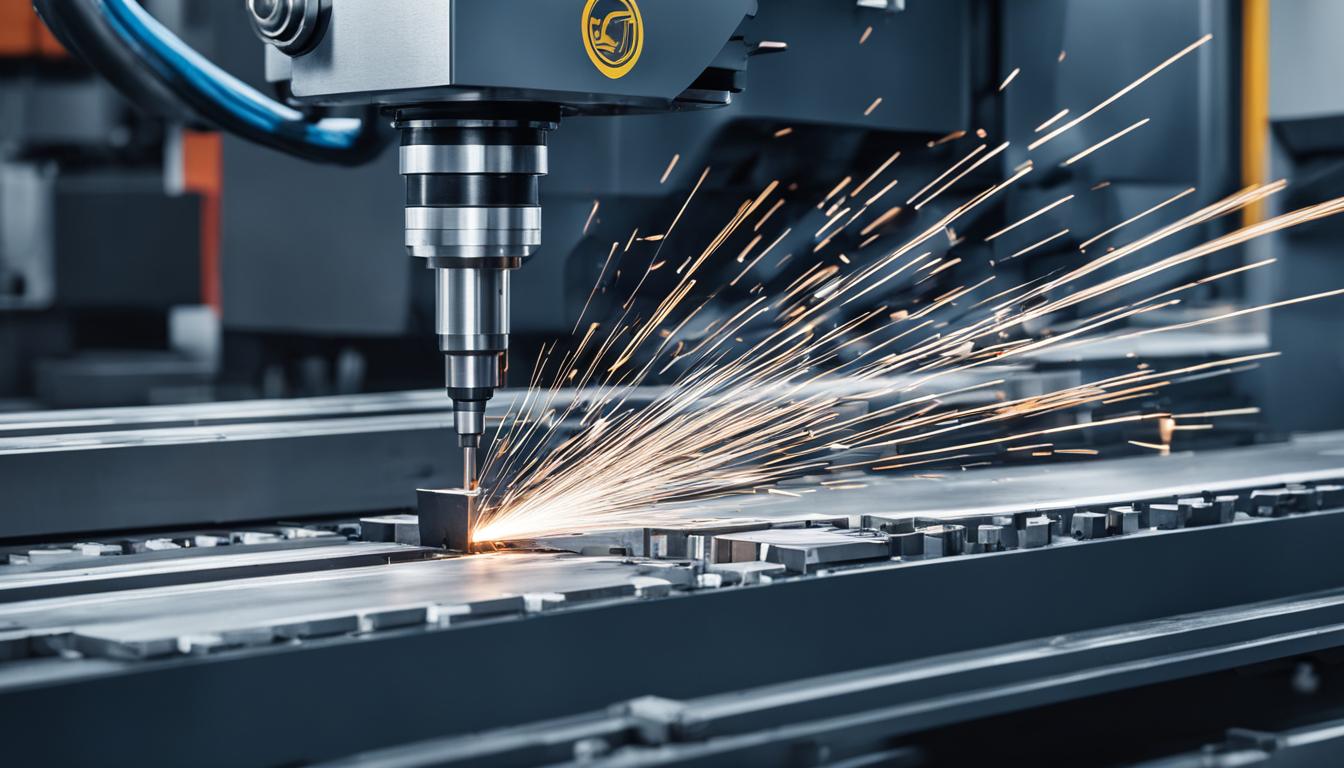
Computer Numerical Control (CNC) bending machines are indispensable in modern metal fabrication, providing unparalleled precision and efficiency. These advanced systems transform flat sheet metal into intricate, three-dimensional components with remarkable consistency. By integrating robust hydraulic force with sophisticated computerized control, CNC bending machines deliver accurate and repeatable bending results at high production speeds.
The core function of a CNC bending machine, often a press brake, involves deforming sheet metal into desired angles and shapes. This process is critical across diverse industries, from automotive and aerospace to construction and electronics manufacturing. The technology significantly reduces manual labor, enhances safety, and ensures superior product quality.
Automated Press Brake Bending Fundamentals
Automated press brake bending utilizes a punch and die system, driven by hydraulic cylinders, to apply controlled force to a workpiece. The CNC system precisely manages the ram’s position, bending angle, and back gauge location, executing complex bending sequences automatically. This automation is a cornerstone of modern metal fabrication, enabling high-volume production with minimal operator intervention.
Key advantages of automated press brake systems include substantial increases in productivity and consistent, repeatable quality. These machines bend at the same speed and distance every time, eliminating variability inherent in manual operations. Furthermore, they contribute to reduced labor costs and a safer workplace by minimizing manual handling of heavy materials and exposure to pinch points.
The bending process begins with an operator loading a flat sheet against the back gauge stops. Once initiated, the ram descends to a programmed depth, which, combined with the chosen die opening and material spring-back compensation, forms the target angle. For multi-bend parts, the back gauge automatically repositions the sheet for subsequent bends, streamlining the entire operation.
CNC Backgauge Systems: Precision Positioning
| Parameter | Typical Range / Specification | Notes |
|---|---|---|
| Angular Tolerance | ±0.5° to ±1° (Standard) | Can achieve ±0.1° to ±0.2° under optimal conditions with advanced CNC. |
| Linear Tolerance | ±0.25 mm to ±0.5 mm (Standard) | Positional accuracy often within ±0.01mm for backgauge systems. |
| Backgauge Axes | 2 to 6+ axes (X, R, Z1, Z2, X1, X2) | Enables complex part positioning and asymmetrical bends. |
| Bending Force (Tonnage) | 40T to 1000T+ | Varies significantly based on material thickness and bend length. |
| Ram Speed (Approach) | Typically 100-200 mm/s | Reduced to a safe bending speed (e.g., <10 mm/s) near the workpiece. |
| Bend Radius (Min.) | Dependent on material thickness and type | Typically 1.5x material thickness for galvanized steel to prevent cracking. |
| Controller Types | Delem, Cybelec, ESA | Offer 2D/3D graphical programming, collision detection, offline software. |
A CNC press brake’s backgauge system is a critical component for achieving precise and repeatable bends. This adjustable positioning tool, located behind the bending area, accurately places the sheet metal before each bending operation. Consistent positioning is paramount for maintaining exact flange dimensions and overall part repeatability.
Modern backgauges feature multi-axis configurations, significantly enhancing their versatility. Basic systems typically control the X-axis (depth), while advanced setups incorporate R-axis (vertical positioning) and Z1/Z2 axes (lateral movement of individual gauge fingers). This multi-axis capability allows the machine to handle complex, asymmetrical parts and varying flange dimensions with exceptional accuracy.
High-precision drive systems are integral to backgauge accuracy. Servo-driven axes, coupled with components like ball screws and linear guides, ensure controlled and repeatable movement within fractions of a millimeter. This robust mechanical design minimizes positioning variations, contributing directly to consistent bend quality.
Dynamic compensation and auto-calibration functions further enhance backgauge performance. These features continuously monitor and adjust for minor deviations, maintaining the system’s accuracy throughout extended production runs. A properly calibrated backgauge provides the CNC controller with a reliable reference for precise gauge finger movement.
Sheet Metal Angle Folding and Multi-Radius Bending
Sheet metal angle folding, often referred to as press brake folding, is the process of creating accurate bends, angles, and formed sections from flat material. A press brake uses a punch and die to apply controlled force, pushing the material into the desired shape. This method offers greater accuracy and consistency compared to manual bending techniques.
Two primary bending methods are ‘air bending’ and ‘bottom bending’. Air bending, the more common modern technique, forms the metal without fully pressing it into the die, allowing for a wide range of angles with a single die. Bottom bending, conversely, presses the material completely into the die, offering superior control over tight angular tolerances, particularly for older equipment or specific precision requirements.
Multi-radius bending focuses on achieving smooth, controlled curvatures rather than sharp angular folds. This process is crucial for applications like architectural panels or industrial casings that demand flawless aesthetics without surface marks. Specialized tooling, such as rolling dies or urethane pads, is often employed to ensure smooth curvature and prevent material marring.
While larger radii can be achieved through ‘step bending’ (multiple small bends with regular tooling), dedicated radius tools provide faster, more accurate, and smoother results. These specialized tools are available in various radii, often up to 50mm, and are designed to minimize springback and improve surface quality.
Hydraulic Bending Technology and Precision Metal Forming
Hydraulic press brakes rely on hydraulic cylinders to drive the upper beam, or ram, downward onto the workpiece. Proportional hydraulic valves, controlled by the CNC system, provide precise ram velocity and pressure throughout the stroke. This controlled force application ensures uniform pressure across the entire bend length, which is critical for achieving consistent angles, even on long workpieces.
The CNC control system acts as the machine’s brain, managing numerous parameters such as bend angle, material thickness, and tool selection. Advanced controllers, like those from Delem or Cybelec, offer graphical programming interfaces, bend sequence calculation, and real-time adjustments, significantly enhancing operational consistency and accuracy.
Precision metal forming demands tight tolerances. Standard angular tolerances for press brake bending typically range from ±0.5 to ±1 degree, with linear positioning tolerances of ±0.25 mm to ±0.5 mm. Under optimal conditions, utilizing advanced CNC technology and high-quality tooling, angular accuracy can reach ±0.1-0.2 degrees, and positional accuracy can be as tight as ±0.01mm.
Achieving these tight tolerances depends on several factors, including material properties like springback and thickness variation, tooling wear, and machine calibration. Modern systems incorporate dynamic crowning and real-time laser angle measurement to compensate for these variables, ensuring consistent bend quality across production runs.
Modern Engineering Practices and Safety
Modern engineering practices in CNC bending emphasize advanced control features to optimize production. This includes 2D and 3D graphical programming, automated bend sequence calculation, and sophisticated collision detection. Offline programming software allows engineers to develop and simulate bending programs concurrently with production, reducing setup times and verifying tooling before physical parts are run.
Emerging trends in press brake automation include the integration of Artificial Intelligence (AI) and cloud connectivity. AI-powered systems can optimize bending sequences and predict maintenance needs, while cloud-based platforms enable remote monitoring and programming, enhancing overall operational flexibility and efficiency.
Safety remains a paramount concern in press brake operations, with hand and finger crushing being common injuries. Essential safety measures include the deployment of light curtains or two-hand controls, strict lockout/tagout procedures during die changes, and comprehensive operator training. These protocols are critical for preventing accidents and ensuring a safe working environment.
Contemporary press brakes incorporate advanced safety circuits and adhere to industry standards such as ANSI B11.3-2022. These standards establish requirements for machine guarding and safe distances, actively addressing point-of-operation risks. Continuous training and adherence to these guidelines are vital for maintaining a secure fabrication shop.