
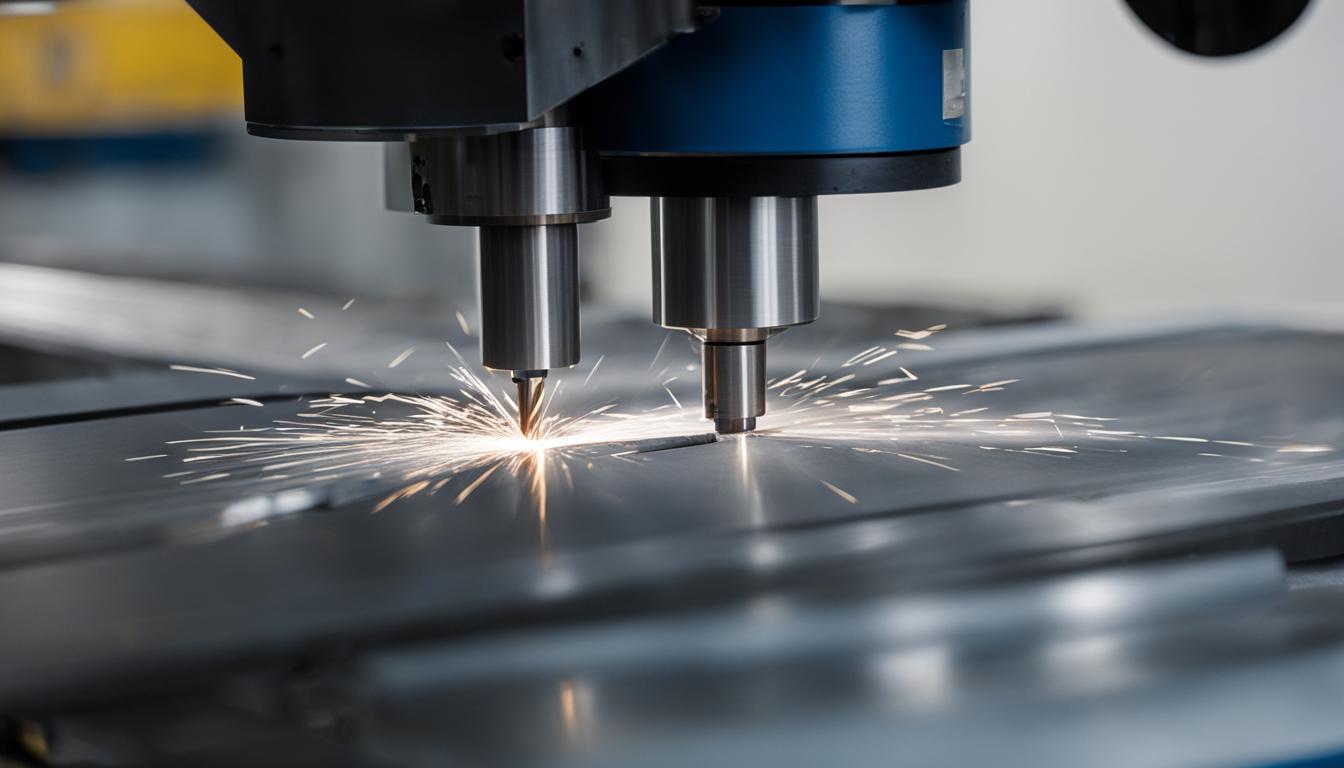
A tabletop CNC milling machine represents a compact, computer numerical control (CNC) system engineered to perform subtractive manufacturing operations on a smaller scale. These machines are designed to fit on a desk or workbench, making them ideal for environments with limited space, such as small workshops, educational institutions, and home-based prototyping labs.
These smaller mills operate on the same fundamental principles as their industrial counterparts, utilizing multi-axis control to precisely remove material from a workpiece with a rotating cutting tool. They translate digital designs into physical parts, offering high precision and repeatability for various applications.
Compact Benchtop Footprint and Design
Tabletop CNC milling machines are specifically engineered for a compact benchtop footprint, typically occupying a space comparable to a standard office printer. This design philosophy prioritizes space efficiency without significantly compromising machining capability for smaller parts.
Typical machine dimensions can range, with some models having a footprint around 42 inches by 36 inches, while others are designed to fit on a 24-inch countertop. The work envelope, or maximum cutting area, on these machines is proportionally smaller, often in the range of 4.3 x 5.0 x 3.5 inches for a 5-axis desktop mill, or larger for 3-axis models.
Despite their reduced size, many tabletop mills feature robust construction, often incorporating cast-iron frames and tables to ensure stability and minimize vibration during machining. This sturdy build contributes to the machine’s ability to achieve precise cuts and maintain tight tolerances.
Small Metal and Plastic Milling Capabilities
| Parameter | Typical Range for Tabletop CNC Mills | Notes |
|---|---|---|
| Axis Travel (X/Y/Z) | X: 4.5-12 in (110-300 mm)Y: 5-8 in (125-200 mm)Z: 3.5-6 in (90-150 mm) | Determines maximum workpiece size. |
| Spindle Speed | 2,000 – 24,000 RPM | Higher speeds for smaller tools and softer materials. |
| Spindle Motor Power | 200W – 1.5 kW (0.25 – 2 HP) | Influences material removal rate and material hardness capability. |
| Positional Accuracy | ±0.001 – ±0.002 inches (25-50 microns) | Precision for intricate details and tight tolerances. |
| Repeatability | ±0.0005 – ±0.001 inches (12.5-25 microns) | Consistency in producing identical parts. |
| Power Requirements | 110V-120V single-phase (for controller/router)220V single-phase (for higher power spindles) | Hobbyist machines often use standard outlets. |
| Motor Types (Axes) | Stepper Motors, Closed-loop Steppers, Servo Motors | Stepper motors common for cost-effectiveness and precision in small machines. |
Tabletop CNC milling machines are highly versatile, capable of machining a wide array of materials, including various plastics and softer metals. Common materials processed include aluminum, brass, and copper, alongside engineering plastics such as ABS, Delrin (POM), polycarbonate, and PEEK.
Aluminum, particularly alloys like 6061 and 7075, is a popular choice due to its excellent strength-to-weight ratio and ease of machining. While some desktop mills can handle softer steels, harder materials like stainless steel and titanium require slower feeds and sharp tools, often pushing the limits of smaller machines.
For plastics, the choice depends on the desired properties, with acrylic being suitable for transparent parts and Delrin for low-friction components. Proper feeds and speeds are critical for both metals and plastics to prevent tool wear, achieve good surface finish, and avoid material deformation or melting.
Enclosed Desktop Machine for Safety and Cleanliness
Many modern tabletop CNC milling machines incorporate a full safety enclosure around the work area. This enclosure serves multiple critical functions, primarily containing dust, chips, and noise generated during the milling process.
The enclosed design significantly enhances operator safety by preventing accidental contact with moving parts and flying debris. It also contributes to a cleaner workspace, simplifying cleanup and reducing airborne particulate matter, which is particularly beneficial in educational or office environments.
Enclosures often feature wide windows and integrated task lighting, allowing for clear observation of the machining process while maintaining a safe barrier. Some advanced models even include automatic tool changers within the enclosure, further streamlining workflow and reducing the need for manual intervention.
USB Controller Connectivity and Modern Practices
USB controller connectivity is a standard feature for most tabletop CNC milling machines, facilitating straightforward communication between the machine’s control board and a host computer. This eliminates the need for older parallel port connections, offering improved compatibility and user experience.
Many desktop CNC systems utilize open-source firmware like GRBL, which runs on microcontrollers such as Arduino boards. GRBL interprets G-code commands and translates them into precise motion control signals for stepper or servo motors, enabling real-time control of the machine’s axes and spindle.
While USB offers simplicity, proper electrical grounding and control box design are crucial to prevent communication issues like USB disconnects, which can arise from electromagnetic interference (EMI) generated by motor drivers and spindles. Some controllers also offer Ethernet connectivity for enhanced reliability and network integration.
Hobbyist Prototype Tool and Engineering Practices
Tabletop CNC milling machines are invaluable tools for hobbyists, educators, and engineers engaged in prototyping and small-scale manufacturing. Their accessibility and precision enable rapid iteration of designs, transforming digital models into physical parts with high accuracy.
These machines are frequently used for creating intricate jewelry pieces, detailed engravings, and functional components across various industries, including medical, aerospace, and automotive. The ability to produce complex geometries that would be challenging or impossible with manual methods makes them a cornerstone of modern prototyping.
Modern engineering practices with tabletop CNCs emphasize optimizing feeds and speeds, which are critical parameters controlling spindle rotation and tool movement. Incorrect settings can lead to poor surface finish, tool damage, or material deformation. Starting with manufacturer recommendations and adjusting based on chip formation and cutting sound is a common approach.
Technical Specifications and Parameters
Understanding key technical specifications is essential for selecting and operating a tabletop CNC milling machine effectively. These parameters directly influence the machine’s performance, capabilities, and suitability for specific projects.
Feeds and speeds are calculated based on factors like cutting speed (SFM), tool diameter, number of flutes, and chip load. For instance, machining aluminum with a 1/4-inch, 3-flute carbide end mill at 900 SFM might require around 13,752 RPM with a chip load of 0.003-0.005 inches per tooth, resulting in a feed rate of 124-206 IPM. These are aggressive but standard values for modern CNC machines with adequate spindle power.
For softer materials like plastics, higher cutting speeds (300-600 m/min) and feed rates (500-800 mm/min) are generally recommended, while harder materials such as steel require significantly slower parameters. Proper chip evacuation and coolant systems are also crucial to manage heat and maintain surface quality.